Skip to content
Briefings are running a touch slower this week while we rebuild the foundations.See roadmap
European Energy Markets
8MAY

Storage 34.3 as 12 May test nears; Hammerfest silent

3 min read
11:12UTC

EU gas storage hit 34.3% on 7 May, an injection pace of 0.248 percentage points per day, just below the 0.257 floor needed for 80% by 1 November. Equinor closed Q1 without naming a Hammerfest LNG return date. ACER named Hungary and Slovakia in its first formal derogation list at TurkStream entry. TTF held EUR 43-47/MWh through Project Freedom's collapse.

Key takeaway

Four systems simultaneously underperforming their design assumptions is a structural signal, not a coincidence.

This briefing mapped
Loading map…
Economic
Infrastructure
Regulatory

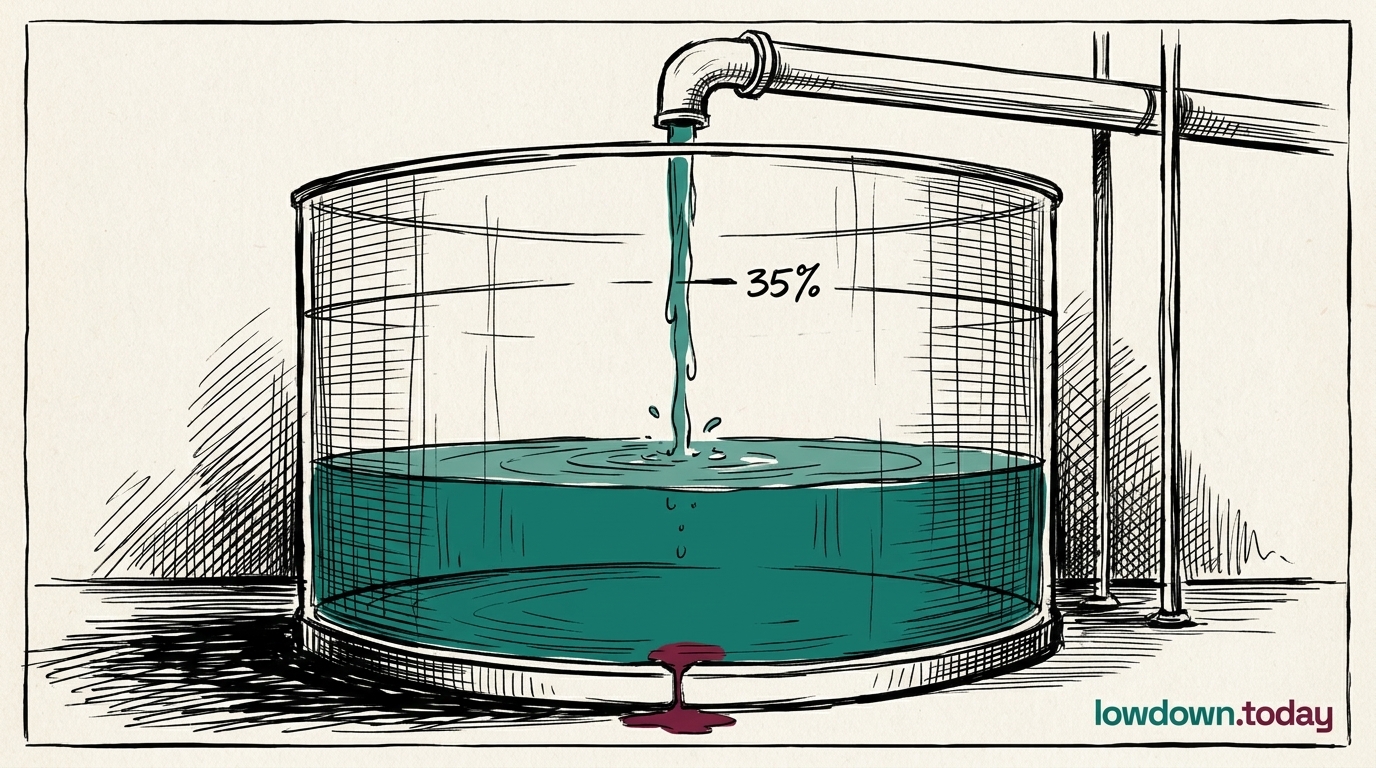
EU aggregate gas storage reached 34.3% on 7 May, an injection pace of 0.248 pp/day that sits 0.009 pp/day below the 0.257 pp/day floor needed for 80% by 1 November.

Sources profile:This story draws on neutral-leaning sources

EU gas storage reached 34.3% on 7 May at an implied pace of 0.248 percentage points per day, fractionally below the 0.257 floor required to reach 80% by 1 November.

The 35% threshold lands on 10-11 May at current pace. A holiday-weekend deceleration or any aggregate slip pushes the 12 May WATCH FOR test into failure, and the gap compounds rather than resolves from that point. 

Equinor's Q1 2026 earnings call passed on 6 May without any Hammerfest LNG return-date guidance, the most natural disclosure venue between the 22 April maintenance entry and the 15 May threshold left unused.

Sources profile:This story draws on neutral-leaning sources

Equinor's Q1 2026 earnings call on 6 May passed without any guidance on when Hammerfest LNG will return from its 22 April maintenance outage. The call was the most natural disclosure window before the 15 May threshold set in earlier coverage.

The 2025 Hammerfest maintenance cycle entered on the same calendar date, targeted 19 July, and slipped twice to early August. A clean 10 July 2026 restart prices the lower-probability outcome from that empirical record. 

Sources:Equinor

Germany's gas storage reached 27.2% on 5 May after a season-strong 959 GWh net injection, but the average pace since 13 April projects roughly 52% fill by 1 November.

Sources profile:This story draws on neutral-leaning sources

Germany's gas storage reached 27.2% on 5 May. The average daily injection rate since 13 April is 0.179 percentage points per day, well below the roughly 0.27 needed for a 75% target by November.

At the current average, Germany will land near 52% on 1 November. Germany runs the EU's largest storage estate, so its shortfall is not a national problem: it pulls the bloc-level aggregate down from inside. 

Equinor brought the Eirin gas field into production on 5 May, routing 27.6 mmboe of recoverable resources via Gina Krog and Sleipner A into the Gassled pipeline to Continental markets.

Sources profile:This story draws on neutral-leaning sources

Equinor brought the Eirin gas field online on 5 May, routing 27.6 million barrels of oil equivalent (mostly gas) via the Gassled pipeline system to European markets. The development also extends the Gina Krog platform's life to 2036.

No daily flow rate was published at first production. Norway's Offshore Directorate publishes official monthly figures around the 20th of the following month, so Eirin's contribution will not appear in confirmed data until the April release expected around 20 May. 

Sources:Equinor

ACER's 6 May derogation opinions covered seven national regulators, and named Hungary and Slovakia among the EU member states most exposed at the TurkStream entry ahead of the 5 August code-application date.

Sources profile:This story draws on neutral-leaning sources

ACER published opinions on 6 May covering derogation requests from seven national regulators on EU gas network codes at third-country entry points from 5 August 2026. Hungary and Slovakia, which together handle roughly 41 mcm/day of TurkStream flow, are named in the opinions.

Final decisions rest with the European Commission. If derogations are granted, EU balancing and transaction-reporting standards will not bind at TurkStream's EU entry from August, adding a regulatory gap on top of existing supply risk. 

Sources:ACER

TTF front-month settled at EUR 44.84/MWh on 7 May and traded at EUR 44.21/MWh on 8 May, holding the EUR 43-47/MWh band through Project Freedom's collapse and Iran's new permit system.

Sources profile:This story draws on neutral-leaning sources

TTF front-month held EUR 43-47/MWh through US Operation Project Freedom's launch on 4 May, its two-day collapse to a 6 May pause, and Iran's announcement of a new Hormuz permit system on 7 May. The benchmark settled at EUR 44.84/MWh on 7 May.

None of those events moved the price. Markets have priced Hormuz-closed as the equilibrium, not the exception, so any genuine reopening would be a downside surprise for sellers rather than upside relief for buyers. 

The France-Germany day-ahead spread compressed to EUR 37.47/MWh on 7 May from EUR 55.75 on 28 April, but only because both markets rose sharply in absolute terms.

Sources profile:This story draws on neutral-leaning sources

The France-Germany day-ahead power spread compressed from EUR 55.75/MWh on 28 April to EUR 37.47/MWh on 7 May. But both countries' absolute prices rose sharply: Germany hit EUR 136.03/MWh, France EUR 98.56/MWh.

Spread narrowing here does not mean less gas exposure. It means gas peakers now set the marginal clearing price across more EU borders simultaneously, raising the floor on which the entire Continental power map trades. 

Bruegel's 5 May tracker update put total EU+UK fiscal commitments above EUR 11 billion, with Spain at EUR 5 billion (~45%) and 72% of the spend untargeted general VAT and excise cuts.

Sources profile:This story draws on centre-leaning sources from Belgium
Belgium
LeftRight

Bruegel's 5 May fiscal tracker puts EU and UK consumer-shielding commitments above EUR 11 billion. Spain accounts for EUR 5 billion, roughly 45% of the total, despite clearing the cheapest day-ahead power in the EU on 7 May. Over 72% of the total spend is untargeted VAT and excise cuts.

Spain's outsized cost reflects Iberian Exception generator compensation, not household poverty relief. The fiscal burden is landing unevenly across member states at the same moment the storage-pace gap is accumulating. 

Sources:Bruegel
Closing comments

The trajectory is sideways-to-deteriorating. The 12 May storage test is the first observable checkpoint: failure to cross 35% confirms the pace gap is structural, and the forward curve will reprice accordingly. The Hammerfest silence calcifies into August risk if no guidance arrives before 15 May. On Hormuz, TTF's non-reaction to both Project Freedom's launch and its collapse signals the market will only respond to a confirmed, sustained reopening; a formal US-Iran negotiated framework is the single event that could generate material downside in European gas. The ACER-TurkStream derogation creates a discrete dated risk on 5 August: if derogations are granted without conditions, Hungarian and Slovak hubs become REMIT-reporting gaps on the only active Russian gas route into central Europe. If refused, Hungary faces the political choice between EU code compliance and continued Russian gas imports. Either path creates a Q3 regulatory flashpoint. Fiscal escalation risk is real but slower: Spain's EUR 5bn shielding commitment at 45% of EU+UK total is politically unsustainable if wholesale prices rise from the current EUR 86-136/MWh range into a Q3 heat-demand spike.

Different Perspectives
Bruegel
Bruegel
Bruegel's EUR 26bn refill model, the operative policy reference at EUR 45/MWh TTF, assumes 0.257 pp/day injection; this week's 0.248 pp/day average means the cost estimate is now an undercount if pace does not recover. Bruegel's own fiscal tracker shows the shielding approach the Commission chose is landing with extreme asymmetry across member states.
Equinor
Equinor
Equinor reported USD 9.77bn adjusted operating income in Q1 2026 and confirmed a second USD 375m share buyback, but passed its most natural disclosure opportunity without issuing any Hammerfest LNG return-date guidance. The company's institutional pattern, silence until restart, leaves market positions priced against a July return the empirical record does not support.
ACER
ACER
ACER's 6 May derogation opinions formalise the structural limit of EU network code enforcement: where Russian and Turkish TSOs are counterparties, EU standards bind only to the EU border, and Hungary and Slovakia bear the derogation exposure. The Commission, not ACER, holds the final decision on whether to grant the derogations ahead of 5 August.
European Commission (DG Energy)
The Commission's AccelerateEU decision on 22 April, confirmed at the Cyprus summit, chose untargeted consumer relief over any storage injection mechanism. At 0.248 pp/day, that choice is producing the outcome Bruegel's model did not stress-test: the EUR 26bn bill may buy 73% rather than 80% without a pace instrument.
Iran / IRGC
Iran / IRGC
Iran converted Hormuz operational control into a codified permit system on 7 May, formalising the wartime gain through a named institution, the Persian Gulf Strait Authority, and fee-charging arrangements. TTF's non-reaction to both Project Freedom's launch and its 48-hour collapse confirms markets treat Iran's Hormuz position as structural, not temporary.
Asian LNG buyers (China, Japan, South Korea)
With JKM sitting USD 2.90-3.30/MMBtu above TTF and European buyers below the cargo-diversion breakeven by USD 0.95-1.25/MMBtu, flexible Atlantic LNG cargoes continue routing east. Asian buyers are the primary beneficiaries of any reopening dividend until the JKM-TTF spread compresses below the diversion threshold.