Skip to content
You can now search across every topic, entity and event.What's new
European Energy Markets
31JUL

OPEC+ adds barrels it won't pump

2 min read
09:44UTC

OPEC+ approved a fourth straight 188,000 b/d rise for August on 5 July, with Saudi Arabia and Russia each taking 62,000 b/d, yet actual group output stays capped by Hormuz and field constraints.

EconomicDeveloping
Key takeaway

OPEC+ added August barrels on paper for a fourth month while actual output stays constrained.

OPEC+, the expanded producer alliance of OPEC members and partners led by Saudi Arabia and Russia, approved a fourth consecutive 188,000 b/d output increase for August on 5 July, holding the pace it set the previous three months. World Oil reported the seven-member subgroup made no move toward an accelerated unwind and fixed its next review for 2 August. 1

The vote resolved a decision the subgroup had scheduled a few days earlier , and it caught no desk off guard. The per-country split was mechanical: Saudi Arabia and Russia each took 62,000 b/d, Iraq 26,000, Kuwait 16,000, Kazakhstan 10,000, Algeria 6,000 and Oman 5,000. 2

Actual OPEC+ output has run well below quota for months on Hormuz and field constraints, so the fourth identical increment adds barrels on paper more than to the market. Al Jazeera relayed analyst Fabien Yip's reading of the hikes as a formality while the physical constraint holds. 3 The group also kept its standing hedge that increases "could be accelerated, paused or reversed if necessary", carrying that optionality into the 2 August review. 4

With the number already discounted, the flat price barely moved and the repricing ran through the Brent-WTI spread instead, which widened sharply in the first session after the vote.


Deep Analysis

In plain English

OPEC+ is a group of oil-producing countries, including Saudi Arabia and Russia, that meets regularly to agree how much crude oil each member can pump. On 5 July they agreed to let members add another 188,000 barrels a day of production in August, the fourth month in a row they have added roughly that amount. This sounds like more oil hitting the market, but it may not work out that way. Several members, including Iraq, are already producing more than their agreed limit, while others struggle to reach theirs at all. So the headline number can rise on paper without much extra crude actually reaching buyers, which is one reason the announcement barely moved oil prices.

Deep Analysis
Root Causes

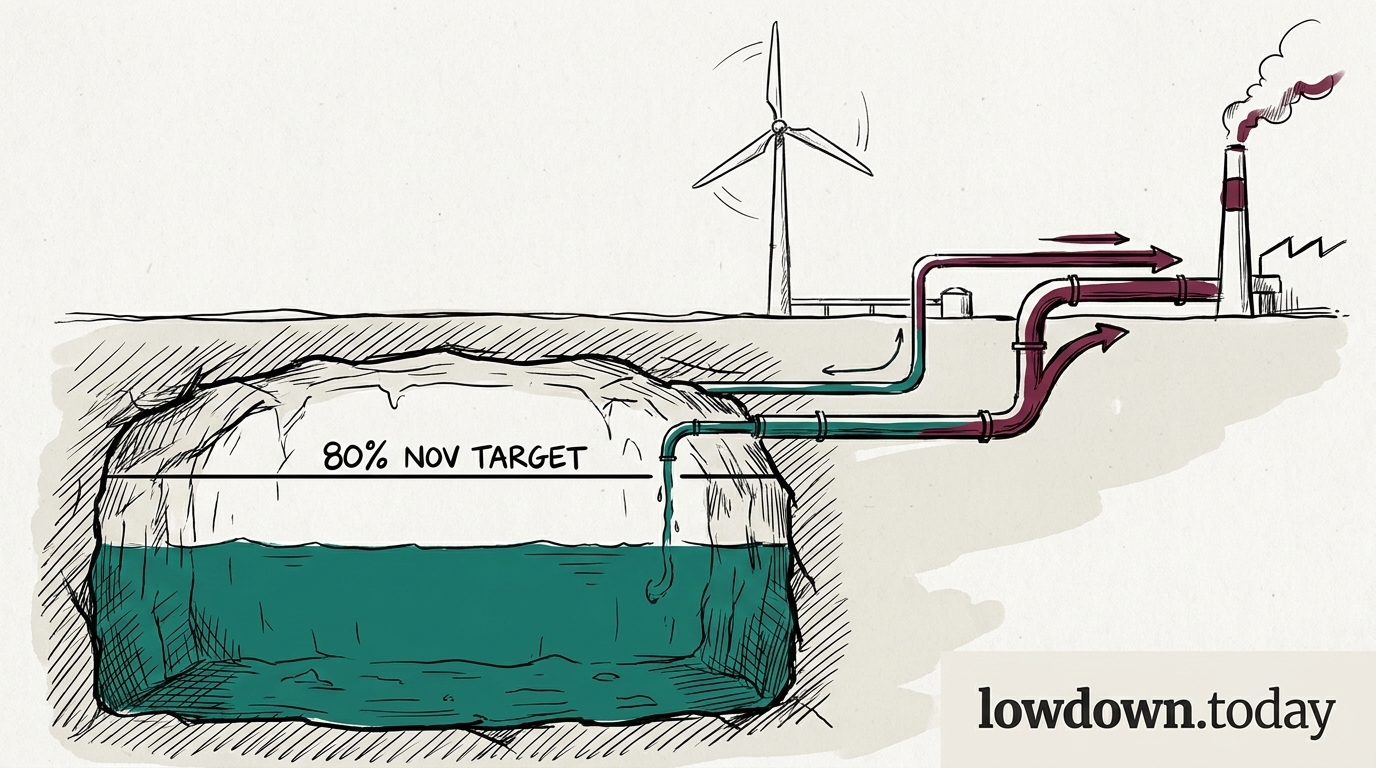
OPEC+'s spare capacity sits overwhelmingly with Saudi Arabia, not spread evenly across the group. Iraq and Kazakhstan already pump above their formal allocations most months, leaving little room for them to add real barrels under the new quota. Adding 188,000 b/d to a group already short of its combined target mostly reallocates headroom Riyadh already holds, rather than creating new supply.

Saudi Arabia's own fiscal breakeven sits near $108-111 a barrel, far above the current Brent price, which keeps pressure on Riyadh to hold group discipline even while nominally raising output. The 188,000 b/d figure lets Riyadh signal cohesion without testing whether the rest of the group can actually deliver it.

What could happen next?
  • Consequence

    If Iraq and Kazakhstan keep overproducing while Saudi Arabia holds the group's true spare capacity, the August allocation is unlikely to add much real seaborne supply, whatever the headline 188,000 b/d figure implies.

First Reported In

Update #14 · Brent-WTI blows out as the hike lands priced

World Oil· 6 Jul 2026
Read original
Different Perspectives
Spain's LNG terminal operators
Spain's 9,145 GWh terminal inventory is the largest single stock in the EU LNG network, an option value that can reroute cargoes wherever the winter strip pays best rather than a cavern gas obligation tied to a fixed date. That flexibility matters more as Germany's cavern shortfall pushes more of the winter security question onto import infrastructure.
European Commission
European Commission
Brussels holds the bloc to 90% on a flexible window while Germany, holding roughly a quarter of EU storage capacity, tracks toward missing its own lower 80% figure by 21 points. A national shortfall this size in the anchor market matters more to bloc security than the flexible timetable alone can absorb.
French power exporters and CRE
French day-ahead rose in step with Germany but by less, reopening a EUR 7-17 premium that makes northward export flows commercially attractive again after the EUR 43.09 discount evaporated in days. CRE separately authorised RTE and Enedis to buy flexibility locally, betting the coming winter's binding constraint is grid congestion rather than a shortage of firm capacity.
TTF trading desk
TTF trading desk
A visible national shortfall like Germany's 21-point gap is a directional signal, not noise, for a desk holding the summer-winter spread. TTF's flat EUR 58-60 range through this week's German price swings says the market has not yet chosen to reprice refill risk into the front of the curve.
German cavern and CCGT operators
German caverns kept buying prompt gas at TTF near EUR 58-60 through the inversion; the wind collapse to 2.4 GW then flipped the spark spread to plus EUR 29 and put turbines back in the same queue. Every day turbines win that bid, injection at a third of the 877 GWh/day pace needed falls further behind.
Slovakia
Slovakia
Slovakia says it dropped its hold-out on the 21st sanctions package only after Ursula von der Leyen personally signed written gas-price and supply guarantees. The Council of the European Union's own 17,238-character release on the package names neither Slovakia nor any guarantee, leaving Bratislava's account unconfirmed by the institutional record.



