Skip to content
You can now search across every topic, entity and event.What's new
European Energy Markets
31JUL

OPEC+ weighs a fourth August hike

2 min read
09:44UTC

The eight-member OPEC+ group meets on Sunday 5 July to set August quotas, with the market expecting a fourth straight hike of roughly 188,000 barrels a day.

EconomicDeveloping
Key takeaway

OPEC+ is expected to vote a fourth 188,000-barrel hike on Sunday, a market-share signal not deliverable supply.

The eight-member OPEC+ subgroup is due to meet on Sunday 5 July to set August quotas, with the market expecting a fourth consecutive rise of roughly 188,000 barrels a day after some 800,000 barrels a day added across April to July. OPEC+, the producer alliance of OPEC states plus Russia and other partners that controls about 37% of global crude, has not yet decided; the vote lands after this briefing publishes. 1

Group output sat near a 37-year low in June even as the alliance ratified its July hike , so any August barrels are nominal quota rather than deliverable crude. Delegates signal the increase, and it reads as a claim on future market share, not oil that reaches the water next month.

Onto a falling crude tape with products already lagging, a paper increase widens the flat-versus-structure split this desk trades. Ministers either approve the hike or pause the unwind at the weekend, and the desk trades the result on Monday.


Deep Analysis

In plain English

OPEC+ is a group of oil-producing countries, led by Saudi Arabia and Russia, that meets regularly to decide how much oil its members are allowed to pump. On Sunday 5 July, eight of those countries will vote on next month's production limit. Most traders expect them to raise output again, the fourth increase in a row, adding to roughly 800,000 barrels a day already added since April. More oil pumped generally pushes prices down, but the group is choosing to prioritise winning back market share over propping up prices for now.

Deep Analysis
Root Causes

The eight-member subgroup, Saudi Arabia, Russia, Iraq, the UAE, Kuwait, Kazakhstan, Algeria and Oman, holds monthly discretion over tranche size under the Declaration of Cooperation framework. The structural pressure to keep hiking despite a falling price is market-share defence: pausing now would reward Iraq and Kazakhstan, both chronic quota over-producers, for cheating rather than compliance.

That pressure sits awkwardly against OPEC's own June Monthly Oil Market Report, which trimmed 2026 demand growth for a third consecutive month; hiking supply while cutting demand forecasts is a market-share bet, not a balanced-market call, and if Saudi Arabia unilaterally throttles back while other members keep pumping above their allotted share, group discipline erodes further.

What could happen next?
  • Risk

    A confirmed fourth hike into a sub-$71 Brent tape raises the odds of a pause or reversal at the following month's meeting if prices keep falling.

First Reported In

Update #13 · Distillate deficit eases; the crack won't

Oil & Gas 360· 3 Jul 2026
Read original
Different Perspectives
Spain's LNG terminal operators
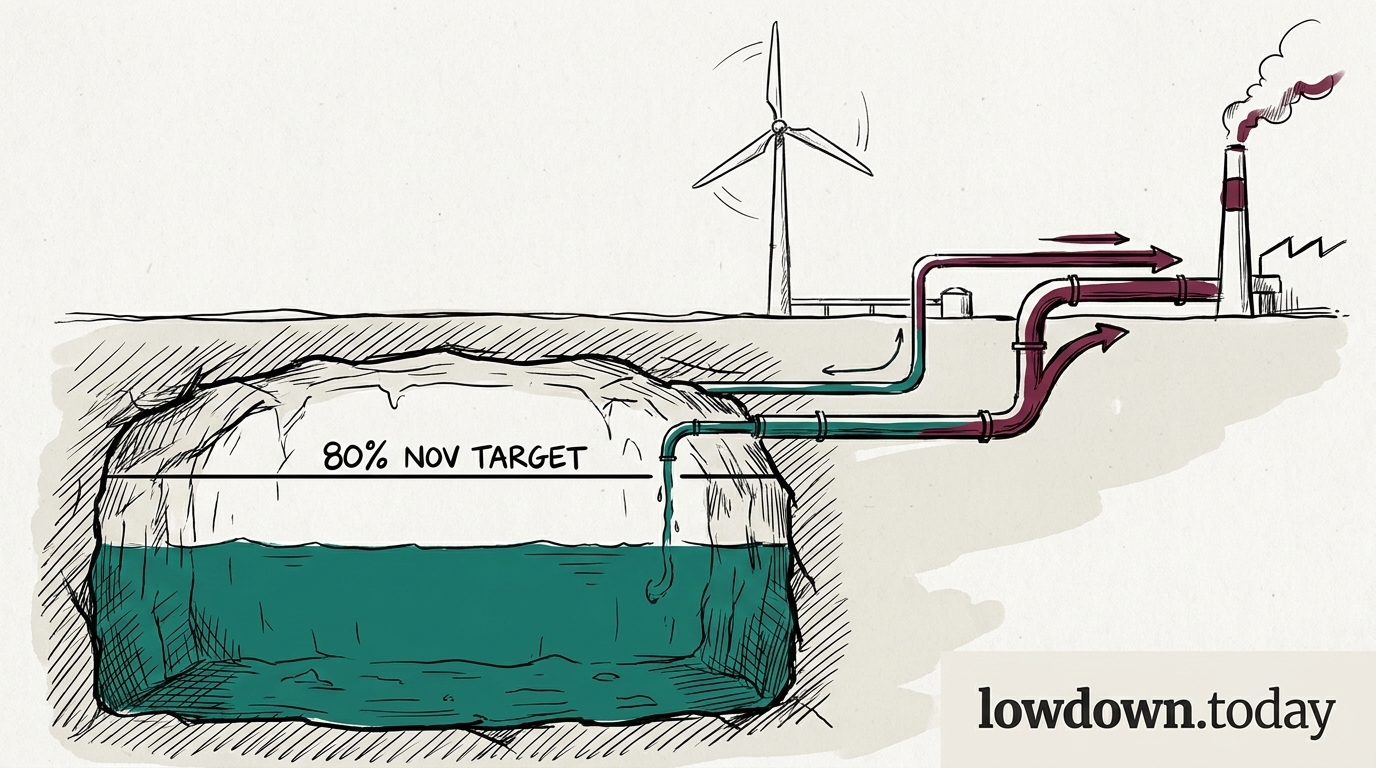
Spain's 9,145 GWh terminal inventory is the largest single stock in the EU LNG network, an option value that can reroute cargoes wherever the winter strip pays best rather than a cavern gas obligation tied to a fixed date. That flexibility matters more as Germany's cavern shortfall pushes more of the winter security question onto import infrastructure.
European Commission
European Commission
Brussels holds the bloc to 90% on a flexible window while Germany, holding roughly a quarter of EU storage capacity, tracks toward missing its own lower 80% figure by 21 points. A national shortfall this size in the anchor market matters more to bloc security than the flexible timetable alone can absorb.
French power exporters and CRE
French day-ahead rose in step with Germany but by less, reopening a EUR 7-17 premium that makes northward export flows commercially attractive again after the EUR 43.09 discount evaporated in days. CRE separately authorised RTE and Enedis to buy flexibility locally, betting the coming winter's binding constraint is grid congestion rather than a shortage of firm capacity.
TTF trading desk
TTF trading desk
A visible national shortfall like Germany's 21-point gap is a directional signal, not noise, for a desk holding the summer-winter spread. TTF's flat EUR 58-60 range through this week's German price swings says the market has not yet chosen to reprice refill risk into the front of the curve.
German cavern and CCGT operators
German caverns kept buying prompt gas at TTF near EUR 58-60 through the inversion; the wind collapse to 2.4 GW then flipped the spark spread to plus EUR 29 and put turbines back in the same queue. Every day turbines win that bid, injection at a third of the 877 GWh/day pace needed falls further behind.
Slovakia
Slovakia
Slovakia says it dropped its hold-out on the 21st sanctions package only after Ursula von der Leyen personally signed written gas-price and supply guarantees. The Council of the European Union's own 17,238-character release on the package names neither Slovakia nor any guarantee, leaving Bratislava's account unconfirmed by the institutional record.



