Skip to content
Welcome, thoughtbot's Giant Robots listeners!Start here
European Energy Markets
22JUN

Qatar mediates in Beijing, files at UN

3 min read
13:56UTC

Qatar's foreign ministry said on 8 September it was working with China to restart negotiations, and in the same briefing rejected Iran's account of what its missiles hit.

EconomicAssessed
Key takeaway

Doha is banking a documentary record against the failure of the talks it is convening.

Qatar's Ministry of Foreign Affairs said at its weekly briefing on 8 September, a Tuesday, that Doha was coordinating with regional and international partners, including China during the prime minister and foreign minister's visit to Beijing, to restart negotiations, and called the immediate and unconditional reopening of the Strait of Hormuz a priority⁠1.

The same briefing rejected Iran's account of its own targeting. Doha said hundreds of Qatari letters to the United Nations document direct Iranian hits on Qatari civilian and economic facilities, against Tehran's claim that it struck only US military sites⁠2. Qatar joined the United Arab Emirates and Saudi Arabia in condemning Iranian attacks on their neighbours on 2 September. This is the first time it has answered the targeting claim with a documentary record rather than a condemnation.

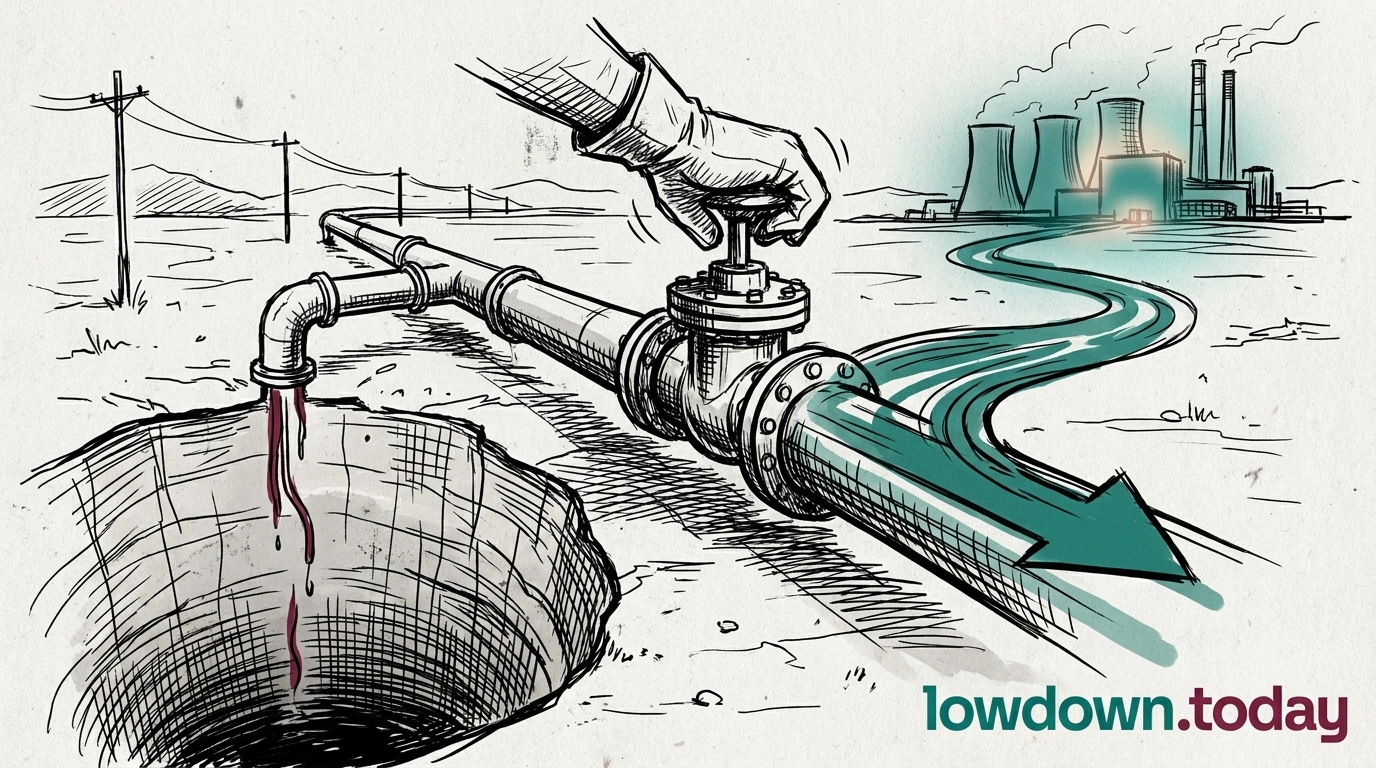
A letter to the Security Council becomes a United Nations document with a symbol and a date, and Doha has filed hundreds of them. Mediation can collapse in an afternoon; the filings outlive it. A claims commission or a tribunal reads it years later, when the ministry that filed it may want compensation rather than a ceasefire. A filed letter cannot be withdrawn, which means Doha is banking evidence against the very outcome it says it is working to prevent.

Qatar's position explains the caution. It hosts US Central Command's forward headquarters at Al Udeid Air Base and shares the world's largest gas field with Iran, so it can afford a rupture with neither Washington nor Tehran. Choosing Beijing as the venue fits the same logic: China buys most of Iran's exported crude and is the one major power Tehran cannot simply ignore. That is why the paperwork is doing the work the rhetoric cannot.


Deep Analysis

In plain English

Qatar is a small, gas-rich Gulf state that hosts the largest US military base in the Middle East while also maintaining a channel to Iran, giving it an unusual role as a go-between in this war. This week Qatar's foreign ministry said it was working with China, during a visit to Beijing, to help restart stalled negotiations to end the conflict. At the same time, it pushed back publicly on Iran's own account of the war, saying hundreds of Qatari letters filed at the United Nations document direct Iranian strikes on Qatari civilian and economic sites, contradicting Iran's account that its strikes hit only US military facilities. Doing both at once, mediating and formally objecting, shows how difficult Qatar's position is: it needs Iran to trust it enough to negotiate, while also needing the world to know it has itself been a target.

What could happen next?
  • Meaning

    Qatar is running mediation and formal grievance in parallel rather than choosing between them, a sign that neither track alone has been enough to move talks forward.

First Reported In

Update #177 · 23 to 3: Iran goes to the Security Council

Qatar Ministry of Foreign Affairs· 11 Sept 2026
Read original →
Different Perspectives
Cross-border power traders
The France-Germany day-ahead spread flipped from a EUR 17.20 German premium on 1 August to a EUR 4.15 French premium on 3 August, the same day French curtailment peaked. They cannot yet attribute the flip to curtailment alone, since a like-for-like overnight comparison shows French nuclear output rising while wind fell and demand returned on the weekday step.
EDF
EDF
River-cooling limits took 7.6 GW, 12 per cent of its fleet, offline on 3 August, the highest curtailment since the heatwave began, with an easing forecast to 4.3 GW on 4 August and 3 GW after. It manages the cut as a recurring seasonal constraint, expecting it to lift with river temperature, not repair.
Gasunie
Gasunie
TTF, the Dutch hub it operates, drifted to roughly EUR 55 to 58 per MWh across the window, staying inside its recent range through both the German spark reversal and the French curtailment. It reads a flat hub price as evidence that neither event this window carried enough weight to move the fuel leg on its own.
German gas-fired generators
Record German solar of 18,761 MW on 2 August pushed the clean spark spread to minus 18.48 EUR/MWh, a loss-making day, before it returned to plus 16.20 on 3 August. They now price dispatch against post-solar residual load rather than wind alone, since the sign flipped inside 48 hours on unchanged fuel and carbon costs.
European Commission (DG Energy)
Its implementing-measures register logged transposition notices from only Portugal and Slovakia against Wednesday's Article 94 deadline for Directive (EU) 2024/1788, with 25 states silent. It expects the register to fill only gradually, since filing routinely lags legislating and any infringement track against non-notifying states runs on a slower clock than the deadline itself.
Spain's LNG terminal operators
Spain's 9,145 GWh terminal inventory is the largest single stock in the EU LNG network, an option value that can reroute cargoes wherever the winter strip pays best rather than a cavern gas obligation tied to a fixed date. That flexibility matters more as Germany's cavern shortfall pushes more of the winter security question onto import infrastructure.
