Skip to content
Welcome, thoughtbot's Giant Robots listeners!Start here
European Energy Markets
22JUN

Pezeshkian meets Abu Dhabi's crown prince in Delhi

2 min read
13:56UTC

Masoud Pezeshkian met Abu Dhabi Crown Prince Sheikh Khaled bin Mohamed bin Zayed Al Nahyan on the BRICS sidelines in New Delhi on Saturday 12 September, their first publicly known meeting since the war began.

EconomicDeveloping

Iran's President Masoud Pezeshkian met Abu Dhabi Crown Prince Sheikh Khaled bin Mohamed bin Zayed Al Nahyan on the sidelines of the 18th BRICS summit in New Delhi on Saturday 12 September 2026, their first publicly known face-to-face since the war began on 28 February⁠1. The Emirati state readout says the two stressed the importance of efforts to "ease tensions, promote de-escalation and strengthen regional stability"⁠2. It names no nuclear file, no sanctions, no tanker campaign and no war.

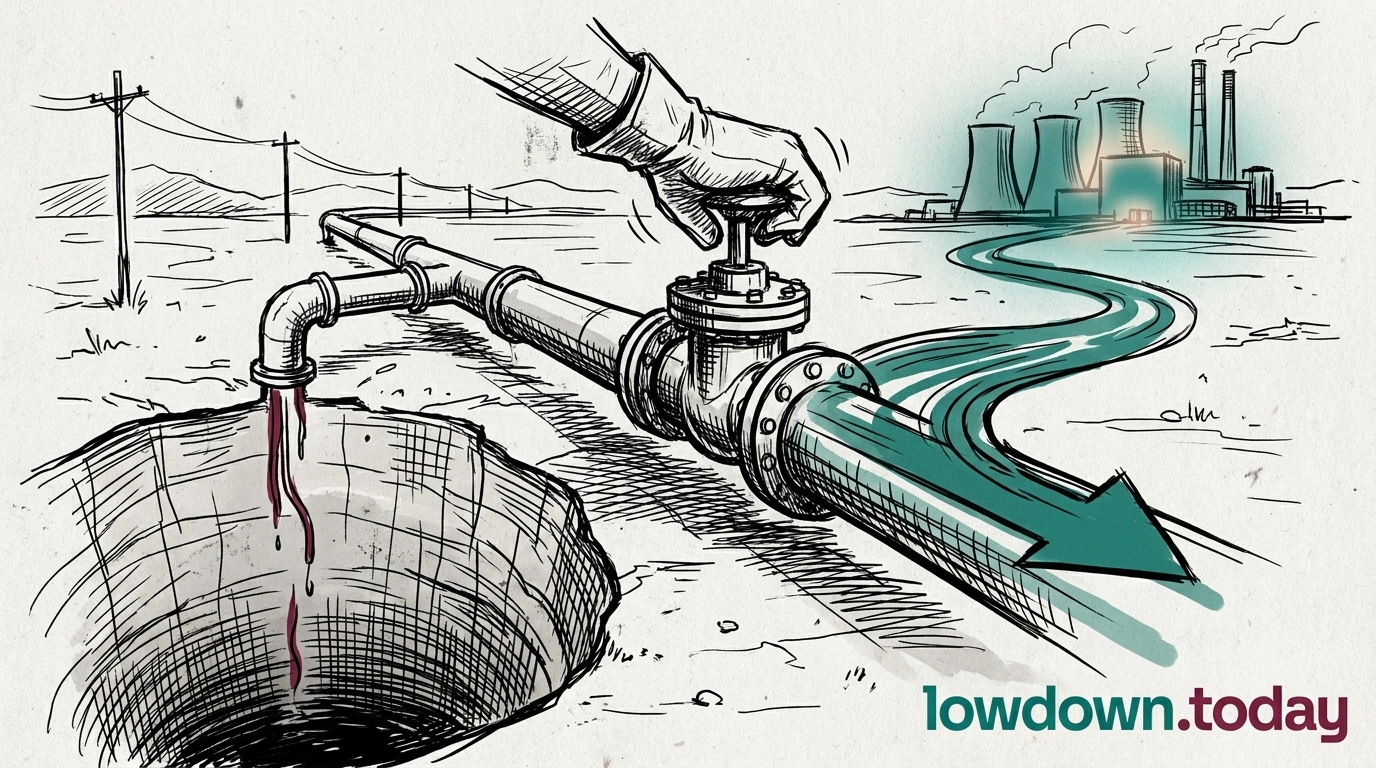
The United Arab Emirates halted all trade, commercial exchange and financial transactions with Iran on 18 August. Abu Dhabi has therefore priced Iran out of its banking system and sat down with its president inside four weeks, and it wanted the meeting on the record while wanting no part of describing what was in it.

Qatar has been running a version of the same split, mediating through Beijing to restart negotiations while filing hundreds of letters at the United Nations documenting Iranian strikes on Qatari facilities. Neither capital has reversed anything. A Gulf state can cut the payment channel and keep the conversation, because the two instruments answer different questions, and the second costs nothing that the first has not already spent.


Deep Analysis

In plain English

Iran and the United Arab Emirates are on opposite sides of this war in practice, though the Emirates is not formally fighting. In August, Abu Dhabi cut off all trade and money transfers with Iran. On Saturday 12 September, Iran's President Masoud Pezeshkian met Sheikh Khaled bin Mohamed bin Zayed Al Nahyan, the crown prince of Abu Dhabi, at an international summit in New Delhi. It is the first time the two are publicly known to have met since fighting started on 28 February. The Emirati account of the meeting says almost nothing: the two talked about calming the region. Neither side announced an agreement, and nothing has changed on the ground.

Deep Analysis
Root Causes

Abu Dhabi runs two positions at once, because its exposure runs two ways. It has priced Iran out of its banking system, and it sits across a narrow strait from Iranian shore batteries with its own tankers in the water.

A summit solves the sequencing problem that direct contact creates. Requesting a meeting concedes something; attending one at a venue a third country arranged concedes nothing, which is why the first publicly known contact of this war happened in New Delhi rather than in Muscat or Doha.

Qatar has been running the same split for weeks, mediating through Beijing while filing letters at the United Nations documenting Iranian strikes on Qatari facilities . Neither Gulf capital has reversed an instrument to hold a conversation.

Escalation

Down, marginally. A first face-to-face restores a channel that had gone unused since February, and no instrument on either side has been withdrawn to accompany it.

What could happen next?
  • Meaning

    A Gulf state can hold the payment channel shut and the conversation open, because the two instruments answer different questions.

    Immediate · Assessed
  • Opportunity

    A restored head-of-state channel gives Abu Dhabi a route for a message that does not have to travel through Muscat or Doha.

    Short term · Suggested
  • Risk

    A readout that names nothing lets both governments describe the meeting to their own publics however they choose.

    Immediate · Assessed
First Reported In

Update #178 · Saudi bypass hit, and Riyadh holds fire

Business Standard· 13 Sept 2026
Read original →
Causes and effects
Different Perspectives
Cross-border power traders
The France-Germany day-ahead spread flipped from a EUR 17.20 German premium on 1 August to a EUR 4.15 French premium on 3 August, the same day French curtailment peaked. They cannot yet attribute the flip to curtailment alone, since a like-for-like overnight comparison shows French nuclear output rising while wind fell and demand returned on the weekday step.
EDF
EDF
River-cooling limits took 7.6 GW, 12 per cent of its fleet, offline on 3 August, the highest curtailment since the heatwave began, with an easing forecast to 4.3 GW on 4 August and 3 GW after. It manages the cut as a recurring seasonal constraint, expecting it to lift with river temperature, not repair.
Gasunie
Gasunie
TTF, the Dutch hub it operates, drifted to roughly EUR 55 to 58 per MWh across the window, staying inside its recent range through both the German spark reversal and the French curtailment. It reads a flat hub price as evidence that neither event this window carried enough weight to move the fuel leg on its own.
German gas-fired generators
Record German solar of 18,761 MW on 2 August pushed the clean spark spread to minus 18.48 EUR/MWh, a loss-making day, before it returned to plus 16.20 on 3 August. They now price dispatch against post-solar residual load rather than wind alone, since the sign flipped inside 48 hours on unchanged fuel and carbon costs.
European Commission (DG Energy)
Its implementing-measures register logged transposition notices from only Portugal and Slovakia against Wednesday's Article 94 deadline for Directive (EU) 2024/1788, with 25 states silent. It expects the register to fill only gradually, since filing routinely lags legislating and any infringement track against non-notifying states runs on a slower clock than the deadline itself.
Spain's LNG terminal operators
Spain's 9,145 GWh terminal inventory is the largest single stock in the EU LNG network, an option value that can reroute cargoes wherever the winter strip pays best rather than a cavern gas obligation tied to a fixed date. That flexibility matters more as Germany's cavern shortfall pushes more of the winter security question onto import infrastructure.
