Skip to content
You can now search across every topic, entity and event.What's new
European Energy Markets
15JUN

US bombs Qeshm, first strike since deal

3 min read
12:23UTC

CENTCOM bombed missile and drone storage on Iran's Qeshm Island on 26 June, the first US strike on Iranian soil since Trump signed the Islamabad memorandum ten days earlier.

EconomicDeveloping
Key takeaway

The deal Trump signed is now defended by airstrikes, not by anything the deal itself created.

US Central Command (CENTCOM), the American military command for the Middle East, bombed Iranian missile and drone storage on Qeshm Island and coastal radar sites near Sirik on 26 June. It was the first American strike on Iranian soil since Donald Trump signed the Islamabad memorandum, the US-Iran understanding agreed on 16 June. CENTCOM said the raid answered Iran's drone attack on commercial shipping the day before.

CENTCOM's release was blunt: "The unwarranted aggression against commercial shipping by Iranian forces clearly violated the ceasefire." 1 The command put out video of the strikes. Trump called the drone attack that triggered the raid a "foolish violation" of the deal. The Islamic Revolutionary Guard Corps (IRGC), Iran's ideological military force, claimed counter-strikes against US installations; CENTCOM acknowledged no such attack and no independent confirmation has emerged. 2

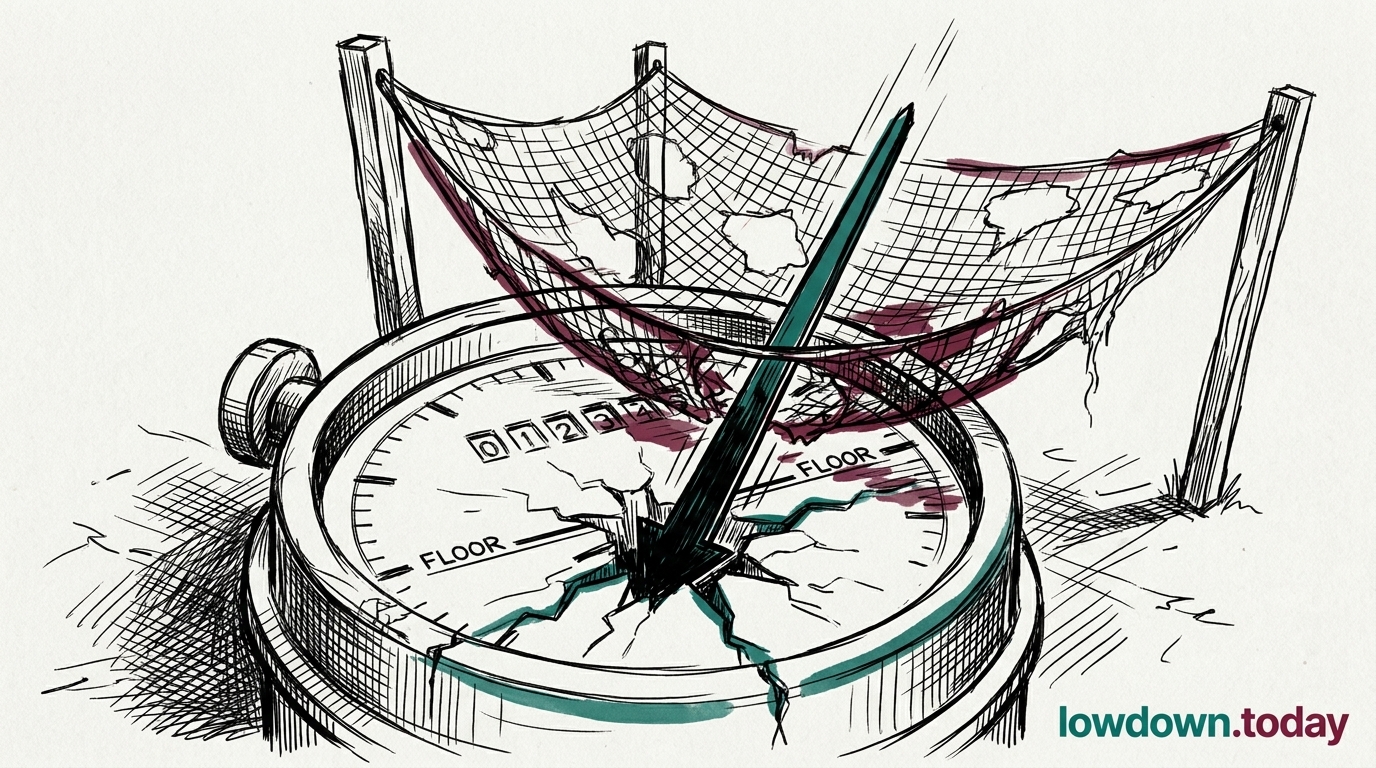
For four months the war ran on unsigned paper and social-media posts. The bombs on Qeshm Island are the first irreversible act any party has taken since the memorandum was signed. The raid was run under CENTCOM's standing authority, with no fresh presidential directive behind it. The only signed US instrument on Iran is still General Licence X , the 22 June sanctions authorisation, and no executive order, escrow directive or nuclear annex has joined it since. 3

So the memorandum Trump signed is now defended with airstrikes, not with anything the memorandum itself created.


Deep Analysis

In plain English

The US military bombed Iranian weapons storage on Qeshm Island, a large island sitting in the Strait of Hormuz, on 26 June. It also hit radar stations on the nearby Iranian coastline near a town called Sirik. This was the first time US forces had struck Iranian territory since the two countries signed a deal in Islamabad ten days earlier that was meant to pause the fighting. The reason for the strike was that Iran's Revolutionary Guards had attacked a container ship with a drone the day before. The US military said that attack violated the ceasefire agreement. Iran's Guards claimed they fired back at US bases, but US military command denied any such attack took place.

Deep Analysis
Root Causes

Qeshm Island occupied a structural ambiguity that pre-dates this conflict. Iran designated it a free trade zone in 1991, giving IRGC Navy installations a civilian economic wrapper that complicated US targeting decisions for years. The same island hosts light manufacturing and civilian shipping alongside missile and drone storage, ensuring any strike carries a dual-use liability.

The Islamabad MOU's ceasefire clause contains no inspection or enforcement mechanism. Compliance rests entirely on US military deterrence rather than any agreed verification framework, making CENTCOM's standing authority the only operative sanction for Iranian violations. That structural gap, a political agreement with no legal teeth, forced the military to substitute for diplomacy on 26 June.

Escalation

The Qeshm strike represents a controlled escalatory step rather than a strategic shift. CENTCOM struck storage and radar, not operational IRGC command or naval vessels, keeping the door open for the diplomatic track. The IRGC's false counter-strike claim functions as domestic face-saving rather than genuine military action, suggesting Tehran does not want kinetic escalation either.

What could happen next?
  • Consequence

    CENTCOM's use of standing authority without a presidential directive creates a gap between military enforcement and diplomatic cover: the MOU's ceasefire is now sustained by deterrence rather than any agreed legal mechanism, and the next IRGC maritime attack will face the same response with no clearer US legal position.

    Short term · Assessed
  • Risk

    The IRGC's fabricated counter-strike claim lowers the domestic political cost of absorbing the Qeshm raid, which in turn lowers the threshold for the next maritime attack: Tehran can absorb punitive strikes without acknowledging them.

    Immediate · Assessed
  • Precedent

    A punitive strike on Iranian soil executed under existing theatre authority, with no presidential executive order, sets a template where CENTCOM can respond to MOU violations independently of White House diplomatic sequencing, creating a parallel military track that future Iranian negotiators will need to account for.

    Long term · Reported
First Reported In

Update #140 · US bombs Iran, and the oil market shrugs

US Central Command· 28 Jun 2026
Read original
Different Perspectives
Spain's LNG terminal operators
Spain's 9,145 GWh terminal inventory is the largest single stock in the EU LNG network, an option value that can reroute cargoes wherever the winter strip pays best rather than a cavern gas obligation tied to a fixed date. That flexibility matters more as Germany's cavern shortfall pushes more of the winter security question onto import infrastructure.
European Commission
European Commission
Brussels holds the bloc to 90% on a flexible window while Germany, holding roughly a quarter of EU storage capacity, tracks toward missing its own lower 80% figure by 21 points. A national shortfall this size in the anchor market matters more to bloc security than the flexible timetable alone can absorb.
French power exporters and CRE
French day-ahead rose in step with Germany but by less, reopening a EUR 7-17 premium that makes northward export flows commercially attractive again after the EUR 43.09 discount evaporated in days. CRE separately authorised RTE and Enedis to buy flexibility locally, betting the coming winter's binding constraint is grid congestion rather than a shortage of firm capacity.
TTF trading desk
TTF trading desk
A visible national shortfall like Germany's 21-point gap is a directional signal, not noise, for a desk holding the summer-winter spread. TTF's flat EUR 58-60 range through this week's German price swings says the market has not yet chosen to reprice refill risk into the front of the curve.
German cavern and CCGT operators
German caverns kept buying prompt gas at TTF near EUR 58-60 through the inversion; the wind collapse to 2.4 GW then flipped the spark spread to plus EUR 29 and put turbines back in the same queue. Every day turbines win that bid, injection at a third of the 877 GWh/day pace needed falls further behind.
Slovakia
Slovakia
Slovakia says it dropped its hold-out on the 21st sanctions package only after Ursula von der Leyen personally signed written gas-price and supply guarantees. The Council of the European Union's own 17,238-character release on the package names neither Slovakia nor any guarantee, leaving Bratislava's account unconfirmed by the institutional record.



