Skip to content
You can now search across every topic, entity and event.What's new
European Energy Markets
15JUN

OPEC+ to vote barrels it can't pump

4 min read
12:23UTC

OPEC+ is expected to wave through a 188kbd July hike at Sunday's ministerial even as actual group output has collapsed 9.58mbd on Hormuz delivery constraints, and Saudi breakeven sits above the market price.

EconomicDeveloping
Key takeaway

OPEC+ is voting July barrels the Gulf cannot ship while needing prices its own votes suppress.

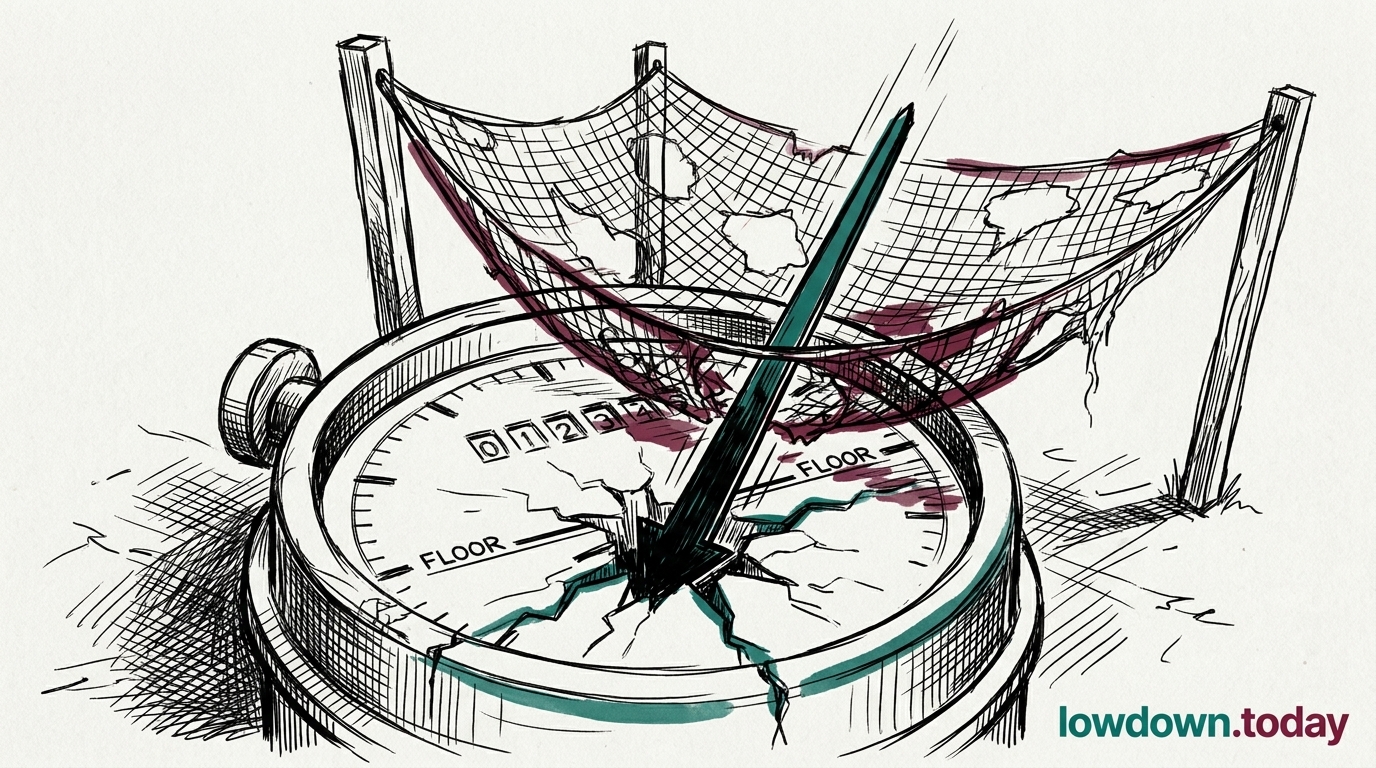
OPEC+ is expected to approve a 188kbd July output increase at its 41st ministerial on Sunday 07 June, four sources told Reuters. 1 Treat that as expected, not decided; the ministers do not sit until Sunday. OPEC+ is the producer alliance of OPEC and partners including Russia and Kazakhstan, controlling roughly 40% of global crude output, with Saudi Arabia as de facto leader. The number is close to noise: actual group output ran 33.19mbd in April against 42.77mbd in February, a 9.58mbd involuntary collapse on Hormuz delivery constraints. 2

The headline rewards members that can still ship and disguises the ones that cannot. Saudi Arabia is producing around 7.25mbd against a 10.291mbd quota; Russia is overproducing 200-500kbd on Baltic and pipeline routes that bypass the Gulf; Kazakhstan is 322kbd long on Tengiz via the CPC line; Iraq stays chronically non-compliant. This continues the paper-versus-physical split first logged when the seven voluntary-cut members approved the June 188kbd hike on 03 May, the first decision taken without the UAE after Abu Dhabi's exit . A trader reading 188kbd as added supply misreads the meeting.

The fiscal squeeze sharpens the read. Saudi breakeven sits at $108-111 against Brent near $97, per House of Saud, so Riyadh keeps sanctioning hikes it needs higher prices to fund and cannot physically deliver. 3 A pause would be the rational move. The pre-positioning into Sunday points the other way.


Deep Analysis

In plain English

OPEC+ is a club of oil-producing countries that coordinate how much oil they pump each month. When they vote to increase production, that normally means more oil on the market and lower prices. But this Sunday's expected vote to pump an extra 188,000 barrels a day is largely symbolic. The reason: the countries that would normally supply that oil , Saudi Arabia, Iraq, Kuwait, and the UAE , cannot ship it because of the Hormuz situation blocking the main exit route from the Gulf. Meanwhile, Russia and Kazakhstan are already pumping above their limits via routes that bypass the Gulf. So the cartel is voting to increase a supply that can't physically increase, while some members quietly exceed their quotas anyway. The key number to watch isn't the vote itself but Saudi Arabia's fiscal breakeven of $108-111 per barrel , well above the current $97 price. That gap means Riyadh is losing money on every barrel it sells right now.

Deep Analysis
Root Causes

The paper-physical bifurcation has three structural causes. First, Hormuz delivery constraints have removed the Gulf members' ability to physically execute quota hikes, so the vote is decoupled from the barrel.

Second, OPEC+'s compliance architecture relies on self-reporting and secondary-source monitoring (Reuters, Platts, Argus); it has no enforcement mechanism for members who overproduce. Russia (200-500kbd above quota), Kazakhstan (+322kbd), and Iraq (chronically over) face no penalty, creating a permanent cheating equilibrium above the official line.

Third, Saudi Arabia's fiscal breakeven at $108-111 sits $11-14 above current Brent, meaning Riyadh needs higher prices to fund Vision 2030 but is approving hikes that the market reads as supply increases. The self-defeating fiscal dynamic , cutting revenue to preserve political credibility inside the alliance , is a structural feature of OPEC's design, not a one-off error .

What could happen next?
  • Risk

    Saudi Arabia's $11-14/bbl deficit against its fiscal breakeven argues for a production cut or pause within 60 days if Brent stays below $100, which would reverse the supply-increase narrative established by the Sunday vote.

    Short term · Suggested
  • Consequence

    Kazakhstan's Tengiz +322kbd overage sets a cartel precedent for treating infrastructure-driven overproduction as exempt from compensatory cuts, weakening quota discipline permanently.

    Medium term · Assessed
  • Precedent

    If the 07 June ministerial approves a seventh consecutive 188kbd hike despite a 9.58mbd physical gap between quota and production, the mechanism formalises paper-quota voting as a price signal divorced from physical deliverability.

    Long term · Assessed
First Reported In

Update #5 · Sixth straight draw, the flat price won't say

Khaleej Times (Reuters)· 4 Jun 2026
Read original
Different Perspectives
Spain's LNG terminal operators
Spain's 9,145 GWh terminal inventory is the largest single stock in the EU LNG network, an option value that can reroute cargoes wherever the winter strip pays best rather than a cavern gas obligation tied to a fixed date. That flexibility matters more as Germany's cavern shortfall pushes more of the winter security question onto import infrastructure.
European Commission
European Commission
Brussels holds the bloc to 90% on a flexible window while Germany, holding roughly a quarter of EU storage capacity, tracks toward missing its own lower 80% figure by 21 points. A national shortfall this size in the anchor market matters more to bloc security than the flexible timetable alone can absorb.
French power exporters and CRE
French day-ahead rose in step with Germany but by less, reopening a EUR 7-17 premium that makes northward export flows commercially attractive again after the EUR 43.09 discount evaporated in days. CRE separately authorised RTE and Enedis to buy flexibility locally, betting the coming winter's binding constraint is grid congestion rather than a shortage of firm capacity.
TTF trading desk
TTF trading desk
A visible national shortfall like Germany's 21-point gap is a directional signal, not noise, for a desk holding the summer-winter spread. TTF's flat EUR 58-60 range through this week's German price swings says the market has not yet chosen to reprice refill risk into the front of the curve.
German cavern and CCGT operators
German caverns kept buying prompt gas at TTF near EUR 58-60 through the inversion; the wind collapse to 2.4 GW then flipped the spark spread to plus EUR 29 and put turbines back in the same queue. Every day turbines win that bid, injection at a third of the 877 GWh/day pace needed falls further behind.
Slovakia
Slovakia
Slovakia says it dropped its hold-out on the 21st sanctions package only after Ursula von der Leyen personally signed written gas-price and supply guarantees. The Council of the European Union's own 17,238-character release on the package names neither Slovakia nor any guarantee, leaving Bratislava's account unconfirmed by the institutional record.



