Skip to content
You can now search across every topic, entity and event.What's new
European Energy Markets
15JUN

OPEC adds 188kbd into 37-year output low

3 min read
12:23UTC

OPEC+ voted on Sunday 7 June to pump 188kbd more crude in July, the third hike running, into a month its 11 members produced the least oil in 37 years.

EconomicDeveloping
Key takeaway

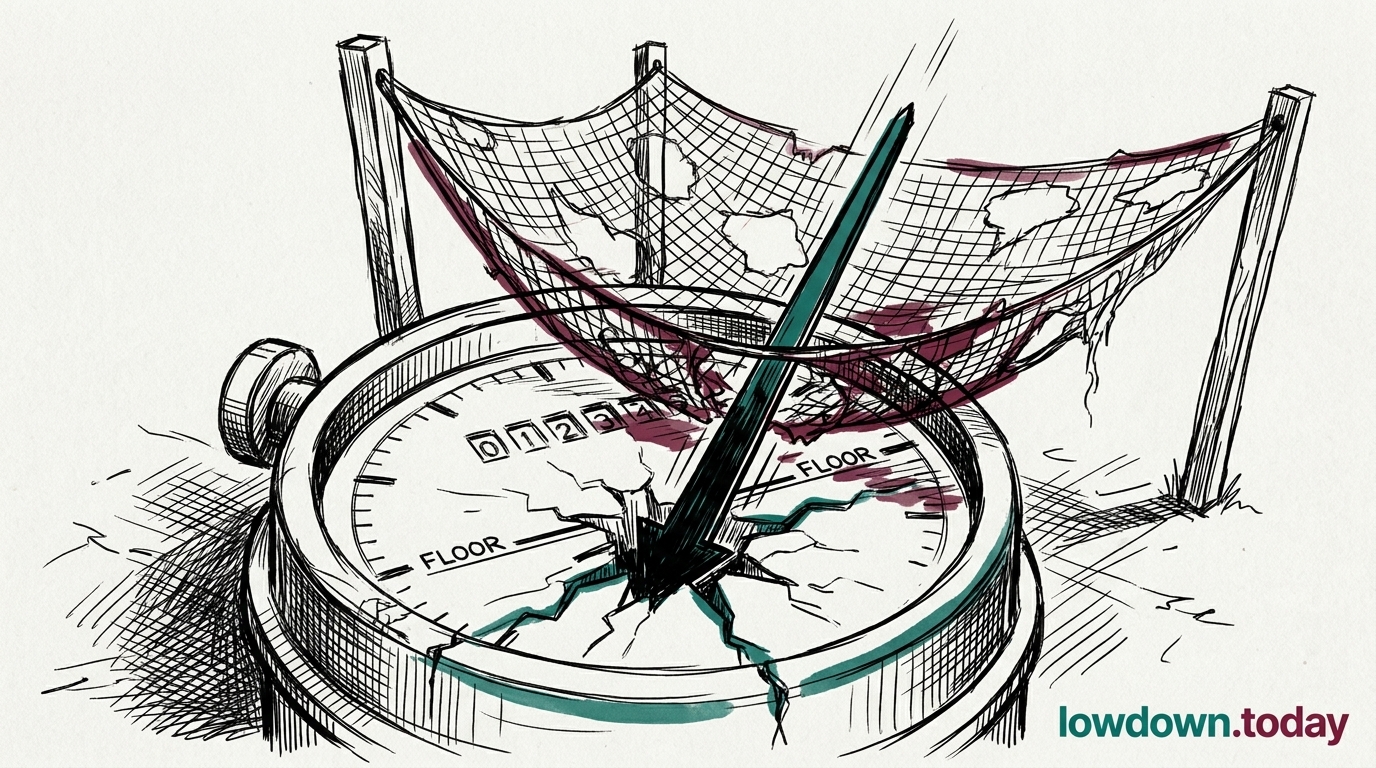
OPEC+ is defending its price-setting credibility, not balancing a market it can no longer supply.

OPEC+ ratified a 188kbd July output increase at the 41st ministerial video conference on Sunday 7 June, the third consecutive hike, with August and September already signalled. OPEC+ is the wider producer group led by Saudi Arabia and Russia that sets monthly quotas. The decision lands against the cartel's own collapse: its 11 remaining members produced 16.33mbd (million barrels per day) in May, down 1.22mbd on the month, the lowest in 37 years. The hike restores roughly 15% of a single month's lost output, a ratio near 1:6.5.

The member detail shows where the barrels went. Iran fell 710kbd to 2.34mbd, Kuwait dropped 310kbd to 490kbd, under a fifth of pre-war volume, and Saudi Arabia eased 240kbd to 6.57mbd. The UAE, outside OPEC's quota framework since 1 May, added 300kbd to 2.44mbd and now sits beyond the agreement entirely.

The market had expected this vote to pass despite collapsing group output ; the new fact is the freshly quantified gap between paper and physical. OPEC's spare capacity enforced cohesion in 2020, when Saudi Arabia could switch idle barrels on. In 2026 the binding constraint runs the other way: a member base physically unable to lift, so the quota describes a fiction the schedule cannot revise fast enough to correct.

For a spreads desk the read is that the barrels OPEC voted to add do not exist, so the hike moves the flat price as a signal but commits no supply behind it. Set against the China demand hole that compressed the Brent-Dubai exchange-for-swaps last week , the market is short of physical crude at both ends, with quota arithmetic that cannot close the gap.


Deep Analysis

In plain English

OPEC+ is a group of major oil-producing countries that coordinate how much oil they pump. Pumping more oil generally pushes prices down; pumping less keeps them up. On 7 June, these countries voted to add 188,000 barrels a day of oil to July output, the third month running they have approved such an increase. The catch is that they are already producing far less oil than normal because the Strait of Hormuz, the narrow sea channel most Gulf oil must pass through, is currently being blockaded. So the increase largely plugs a gap rather than flooding the market with new supply.

Deep Analysis
Root Causes

Saudi Arabia's willingness to vote hikes against its own fiscal breakeven reflects two structural pressures. The UAE's May 2026 OPEC exit removed Riyadh's biggest coalition constraint. With the UAE operating outside the quota framework and adding 300kbd independently, every barrel the Saudis withhold merely cedes market share to a neighbour who has already opted out.

The OPEC+ compliance architecture has broken down in parallel: Russia is producing 200-500kbd above quota, Kazakhstan is 322kbd long on Tengiz expansion, and Iraq has been chronically non-compliant for years. Voting hikes while compliance deteriorates allows Riyadh to maintain the appearance of quota leadership without actually constraining competitors who are already ignoring their ceilings.

What could happen next?
  • Consequence

    Each successive 188kbd hike locks in a larger nominal paper supply overhang that will deflate spot prices sharply once Hormuz delivery constraints lift.

    Medium term · Assessed
  • Risk

    Saudi Arabia running below its fiscal breakeven of $108-111 for multiple quarters risks Vision 2030 budget pressure and potential policy reversal to deeper cuts.

    Medium term · Assessed
  • Precedent

    The UAE's out-of-quota expansion while fellow OPEC+ members vote hikes they cannot deliver normalises a two-tier cartel structure where exit is the credible alternative to quota compliance.

    Long term · Reported
First Reported In

Update #6 · OPEC's quota is fiction at a 37-year low

Hellenic Shipping News· 8 Jun 2026
Read original
Causes and effects
This Event
OPEC adds 188kbd into 37-year output low
The cartel is now adding paper barrels no member can physically lift, which turns the quota into a price signal rather than a supply commitment and changes how spreads desks read every flat-price spike.
Different Perspectives
Spain's LNG terminal operators
Spain's 9,145 GWh terminal inventory is the largest single stock in the EU LNG network, an option value that can reroute cargoes wherever the winter strip pays best rather than a cavern gas obligation tied to a fixed date. That flexibility matters more as Germany's cavern shortfall pushes more of the winter security question onto import infrastructure.
European Commission
European Commission
Brussels holds the bloc to 90% on a flexible window while Germany, holding roughly a quarter of EU storage capacity, tracks toward missing its own lower 80% figure by 21 points. A national shortfall this size in the anchor market matters more to bloc security than the flexible timetable alone can absorb.
French power exporters and CRE
French day-ahead rose in step with Germany but by less, reopening a EUR 7-17 premium that makes northward export flows commercially attractive again after the EUR 43.09 discount evaporated in days. CRE separately authorised RTE and Enedis to buy flexibility locally, betting the coming winter's binding constraint is grid congestion rather than a shortage of firm capacity.
TTF trading desk
TTF trading desk
A visible national shortfall like Germany's 21-point gap is a directional signal, not noise, for a desk holding the summer-winter spread. TTF's flat EUR 58-60 range through this week's German price swings says the market has not yet chosen to reprice refill risk into the front of the curve.
German cavern and CCGT operators
German caverns kept buying prompt gas at TTF near EUR 58-60 through the inversion; the wind collapse to 2.4 GW then flipped the spark spread to plus EUR 29 and put turbines back in the same queue. Every day turbines win that bid, injection at a third of the 877 GWh/day pace needed falls further behind.
Slovakia
Slovakia
Slovakia says it dropped its hold-out on the 21st sanctions package only after Ursula von der Leyen personally signed written gas-price and supply guarantees. The Council of the European Union's own 17,238-character release on the package names neither Slovakia nor any guarantee, leaving Bratislava's account unconfirmed by the institutional record.



