Skip to content
You can now search across every topic, entity and event.What's new
European Energy Markets
15JUN

Lebanon talks open as the line moves

3 min read
12:23UTC

The fourth round of Israel-Lebanon ceasefire talks opened in Washington on 2 June while Israeli forces advanced north of the Litani and struck two districts.

EconomicDeveloping
Key takeaway

Israel-Lebanon talks opened in Washington as Israeli forces advanced on the ground they cover.

The fourth round of Israel-Lebanon ceasefire talks opened at the State Department on 2 June and ran into 3 June 1. Lebanon went in asking for a full ceasefire, an Israeli withdrawal from the south, and the return of 1.2 million displaced people; Israel went in demanding guarantees that Hezbollah will be disarmed 2. The two opening positions barely touch.

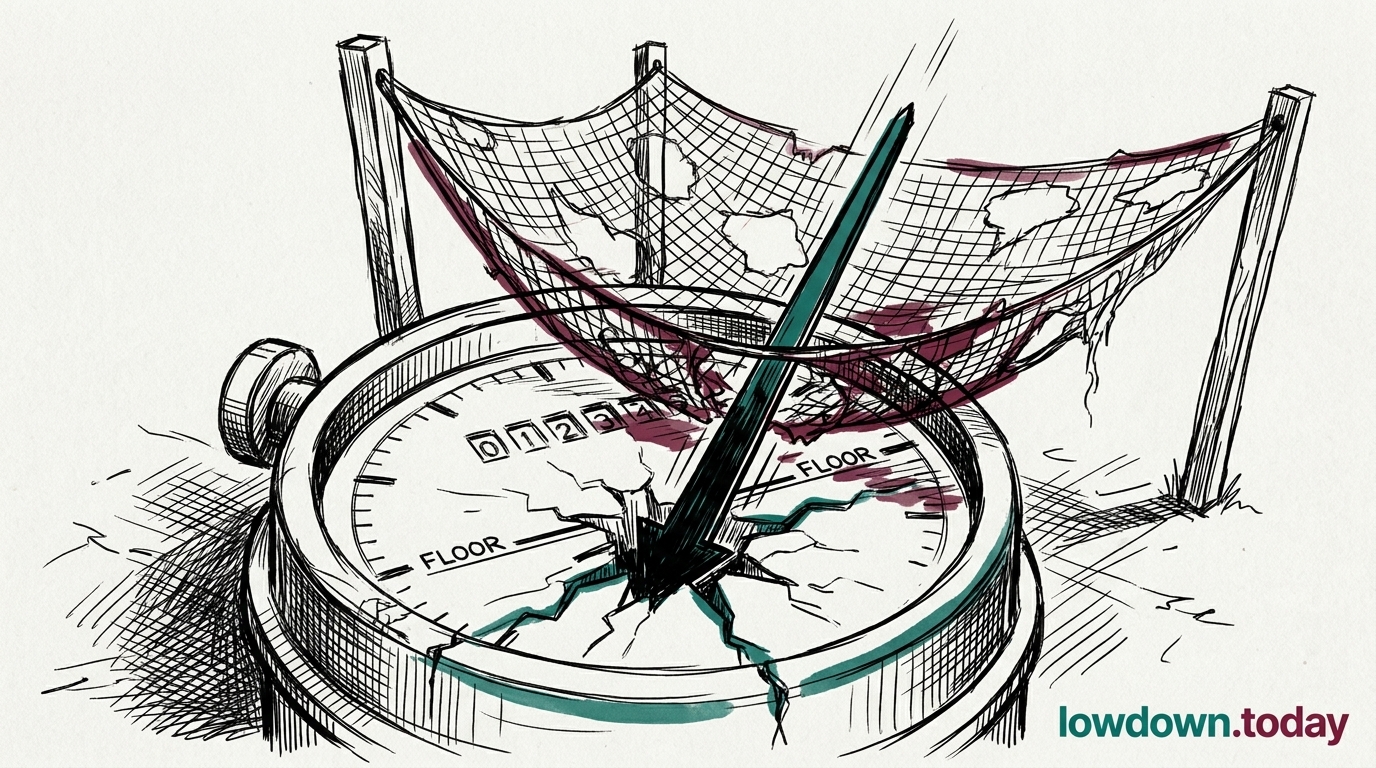
While the delegations sat in Washington, the line moved. Israeli forces pushed north of the Litani and strikes hit the Nabatieh and Tyre districts 3. The Washington table and the southern field ran on different clocks: diplomats negotiated the south's future while soldiers redrew its map by the hour.

The talks aim to stretch the Beirut-only truce Trump brokered on 1 June across all of Lebanon, which is precisely the ground Israel is taking on the Zaharani approach. Each kilometre the advance covers shrinks what Lebanon's delegation can still bargain for, because territory held by force is rarely surrendered at a table. The negotiation is chasing a front line that will not wait for it.


Deep Analysis

In plain English

The fourth round of ceasefire talks between Israel and Lebanon opened at the US State Department on 2 June. Lebanon went in asking for a complete Israeli withdrawal from southern Lebanon and the return of 1.2 million displaced people. Israel went in demanding that Hezbollah be disarmed. Lebanon's government has no legal mechanism to disarm Hezbollah; the 1989 Taif Agreement required disarmament of all non-state militias but Hezbollah was exempted under Iranian pressure. While the delegations sat in Washington, Israeli forces captured territory north of the Litani and struck Nabatieh and Tyre. Netanyahu confirmed ground operations would continue regardless of the talks.

Deep Analysis
Root Causes

The disarmament-guarantee deadlock rests on a structural asymmetry: Israel's minimum requirement (a verifiable Hezbollah disarmament) is beyond the capacity of Lebanon's government to deliver, while Lebanon's minimum requirement (Israeli withdrawal to the 1967 line) is beyond Israel's current military willingness. Neither side can meet the other's floor without internal political collapse.

The kinetic continuation during the talks reflects Clausewitz's principle that a party that is winning militarily has no rational incentive to settle on yesterday's terms. Every kilometre the IDF advances north of the Litani raises the price of any settlement Lebanon can offer Israel, because the withdrawal Israel eventually accepts will need to be counted from wherever the IDF stops.

What could happen next?
  • Risk

    Each day the IDF advances while talks continue changes the territorial baseline against which any withdrawal will be measured, ratcheting up Lebanon's demand and Israel's concession cost simultaneously.

  • Consequence

    Without an external guarantor capable of enforcing Hezbollah disarmament, any text agreed at the State Department faces the same implementation failure as Resolution 1701, which Hezbollah never complied with after August 2006.

First Reported In

Update #116 · Washington signs a sanction, not a strike

CNBC· 3 Jun 2026
Read original
Different Perspectives
Spain's LNG terminal operators
Spain's 9,145 GWh terminal inventory is the largest single stock in the EU LNG network, an option value that can reroute cargoes wherever the winter strip pays best rather than a cavern gas obligation tied to a fixed date. That flexibility matters more as Germany's cavern shortfall pushes more of the winter security question onto import infrastructure.
European Commission
European Commission
Brussels holds the bloc to 90% on a flexible window while Germany, holding roughly a quarter of EU storage capacity, tracks toward missing its own lower 80% figure by 21 points. A national shortfall this size in the anchor market matters more to bloc security than the flexible timetable alone can absorb.
French power exporters and CRE
French day-ahead rose in step with Germany but by less, reopening a EUR 7-17 premium that makes northward export flows commercially attractive again after the EUR 43.09 discount evaporated in days. CRE separately authorised RTE and Enedis to buy flexibility locally, betting the coming winter's binding constraint is grid congestion rather than a shortage of firm capacity.
TTF trading desk
TTF trading desk
A visible national shortfall like Germany's 21-point gap is a directional signal, not noise, for a desk holding the summer-winter spread. TTF's flat EUR 58-60 range through this week's German price swings says the market has not yet chosen to reprice refill risk into the front of the curve.
German cavern and CCGT operators
German caverns kept buying prompt gas at TTF near EUR 58-60 through the inversion; the wind collapse to 2.4 GW then flipped the spark spread to plus EUR 29 and put turbines back in the same queue. Every day turbines win that bid, injection at a third of the 877 GWh/day pace needed falls further behind.
Slovakia
Slovakia
Slovakia says it dropped its hold-out on the 21st sanctions package only after Ursula von der Leyen personally signed written gas-price and supply guarantees. The Council of the European Union's own 17,238-character release on the package names neither Slovakia nor any guarantee, leaving Bratislava's account unconfirmed by the institutional record.



