Skip to content
You can now search across every topic, entity and event.What's new
European Energy Markets
15JUN

Islamabad talks open in separate rooms

3 min read
12:23UTC

The first formal US-Iran negotiating session since 1979 opened at the Serena Hotel in Islamabad on Saturday with both delegations staying in separate rooms. Pakistani officials physically walked messages between them.

EconomicDeveloping
Key takeaway

Vance and Ghalibaf are in the same hotel but will not meet, by design.

Vice President JD Vance arrived at Nur Khan air base on Friday leading a 30-member US delegation that includes Steve Witkoff and Jared Kushner . Iran sent Parliament Speaker Mohammad Bagher Ghalibaf and Foreign Minister Abbas Araghchi. Both delegations are staying at the Serena Hotel, where Saturday's talks are taking place, in separate rooms; Pakistani officials physically walk messages between them, and no face-to-face meeting is contemplated 1.

The historical precedent cited by Pakistani officials is the 1988 Geneva Accords on Afghanistan, when Afghan and Pakistani delegations never met directly. Zamir Akram, a former Pakistani ambassador to the United Nations, described Islamabad's own success bar on the record: "breathing space, not expecting anything big" 2. Pakistani diplomats logged more than 25 high-level contacts in the run-up to the summit.

Ghalibaf went to meet Prime Minister Shehbaz Sharif before any contact with the Americans, and Iranian state television said the "timing of talks with the US delegation will be determined after preconditions are clarified" through the Pakistani mediators 3. This is the same Ghalibaf who rejected the ceasefire framework earlier in the week and whose presence in the room gives the Supreme Leader's inner circle a pre-built justification for walking out . The format is designed to survive failure, not to produce success.


Deep Analysis

In plain English

The US and Iran have not held formal talks since the 1979 Iranian revolution made them enemies. In Islamabad, both sides are staying in the same hotel but in separate rooms — Pakistani officials physically walk messages back and forth between them, like a diplomatic version of passing notes through a classroom. This format is called a 'proximity talk'. It was chosen because both sides want to keep talking, but neither can afford to be seen sitting across a table from the other without facing severe domestic backlash. Pakistan's own goal, by its own admission, is simply to keep the conversation going — not to reach an agreement.

Deep Analysis
Root Causes

The proximity format reflects a specific domestic political constraint on both sides. For Iran, direct contact with the US would require the Supreme Leader's explicit public sanction — which Mojtaba Khamenei has not given — while the presence of Ghalibaf rather than Araghchi alone signals the format was designed to maintain deniability for the leadership.

For the US, the Witkoff and Kushner inclusion despite prior Iranian exclusion requests signals Washington is prioritising internal coalition management over Iranian comfort. Neither side entered Islamabad intending a breakthrough; both entered intending to demonstrate good faith without committing to it.

What could happen next?
  • Precedent

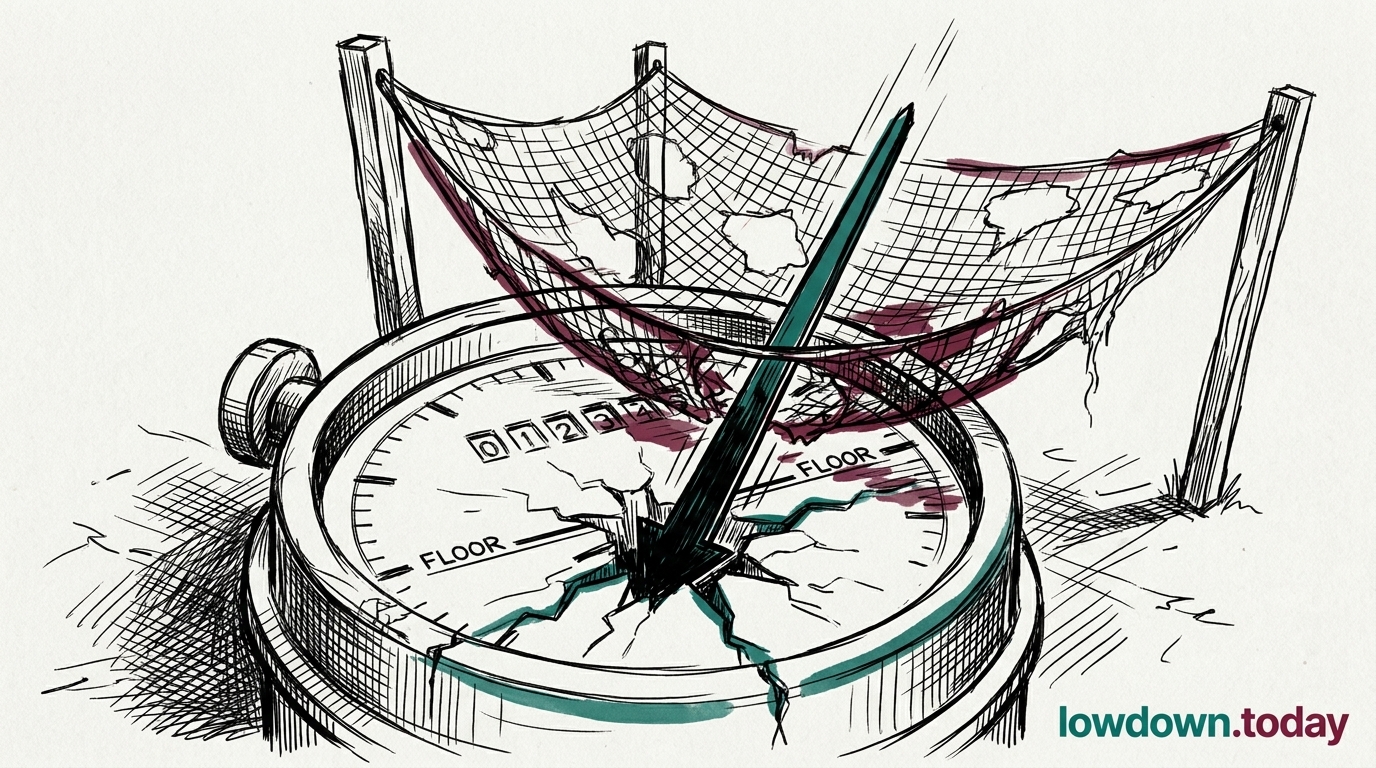
    The Islamabad format establishes that the US and Iran can conduct structured indirect communication after 47 years of no formal diplomatic channel — a floor, not a ceiling, for future contact.

  • Risk

    Pakistan Defence Minister Khawaja Asif's deleted post calling Israel 'a cancerous state' prompted Netanyahu's office to declare Pakistan cannot serve as a neutral arbiter, undermining the format's legitimacy before substantive exchanges begin.

First Reported In

Update #65 · Iran lost its own minefield

Al Jazeera· 11 Apr 2026
Read original
Different Perspectives
Spain's LNG terminal operators
Spain's 9,145 GWh terminal inventory is the largest single stock in the EU LNG network, an option value that can reroute cargoes wherever the winter strip pays best rather than a cavern gas obligation tied to a fixed date. That flexibility matters more as Germany's cavern shortfall pushes more of the winter security question onto import infrastructure.
European Commission
European Commission
Brussels holds the bloc to 90% on a flexible window while Germany, holding roughly a quarter of EU storage capacity, tracks toward missing its own lower 80% figure by 21 points. A national shortfall this size in the anchor market matters more to bloc security than the flexible timetable alone can absorb.
French power exporters and CRE
French day-ahead rose in step with Germany but by less, reopening a EUR 7-17 premium that makes northward export flows commercially attractive again after the EUR 43.09 discount evaporated in days. CRE separately authorised RTE and Enedis to buy flexibility locally, betting the coming winter's binding constraint is grid congestion rather than a shortage of firm capacity.
TTF trading desk
TTF trading desk
A visible national shortfall like Germany's 21-point gap is a directional signal, not noise, for a desk holding the summer-winter spread. TTF's flat EUR 58-60 range through this week's German price swings says the market has not yet chosen to reprice refill risk into the front of the curve.
German cavern and CCGT operators
German caverns kept buying prompt gas at TTF near EUR 58-60 through the inversion; the wind collapse to 2.4 GW then flipped the spark spread to plus EUR 29 and put turbines back in the same queue. Every day turbines win that bid, injection at a third of the 877 GWh/day pace needed falls further behind.
Slovakia
Slovakia
Slovakia says it dropped its hold-out on the 21st sanctions package only after Ursula von der Leyen personally signed written gas-price and supply guarantees. The Council of the European Union's own 17,238-character release on the package names neither Slovakia nor any guarantee, leaving Bratislava's account unconfirmed by the institutional record.



