Skip to content
Welcome, thoughtbot's Giant Robots listeners!Start here
Data Centres: Boom and Backlash
15JUL

Hyperscalers raise 2026 capex to $725 billion

5 min read
13:16UTC

Microsoft, Alphabet, Amazon and Meta confirmed a combined $725 billion of 2026 capital spending in late-April earnings, up 77 per cent on 2025, with no downward revision after Maine's veto, Seattle's freeze, or the Iran energy shock.

IndustryDeveloping
Key takeaway

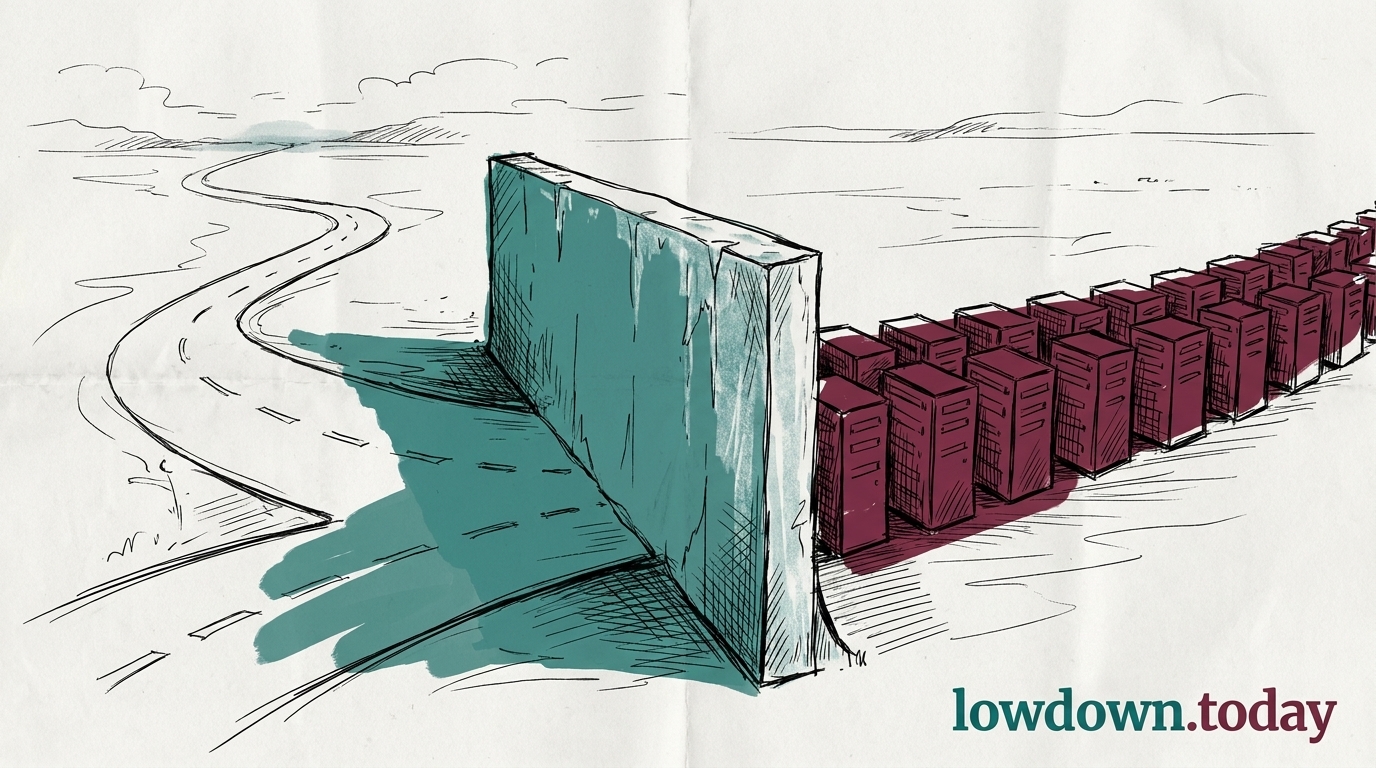
Hyperscaler capital plans absorbed the moratorium wave intact; the binding constraint shifted to the supplier side.

Late-April Q1 2026 earnings calls from Microsoft, Alphabet, Amazon, and Meta confirmed a combined $725 billion of 2026 capital expenditure, up 77 per cent from 2025's $410 billion record. That works out to roughly $2 billion of new infrastructure spend every day this year, around three-quarters of it AI-related. Microsoft's AI business cleared a $37 billion annual run rate in fiscal Q3, up 123 per cent year-on-year. Google Cloud's customer backlog jumped past $460 billion. Amazon spent $44.2 billion in a single quarter and reaffirmed a full-year plan approaching $200 billion. Meta raised both ends of its 2026 guidance by $10 billion to $125-145 billion.

None of these numbers moved when Maine voted, when Seattle froze, when Compass walked away from Prince William. Capital allocation cycles quarterly inside hyperscaler boards; consent cycles through ballots, hearings, and litigation calendars on five-to-eight-year clocks. Microsoft's $37 billion AI run rate is the structural change inside the prints rather than the headline aggregate, because it is the threshold at which AI revenue can be argued to fund AI capex on a forward basis without diluting existing shareholders. Meta is in a different position: capex is rising faster than monetisation can plausibly catch up, which is why a 16,000-job restructuring lands alongside the $10 billion guidance increase.

The consequence shows up at the supplier end. GE Vernova's Q1 backlog rose from 83 GW to 100 GW in a single quarter, with $2.4 billion of data-centre electrification orders in the quarter alone, exceeding the whole of 2025. Customers pulled aggressively into 2030, and roughly 10 GW of available production capacity remains across 2029 and 2030 combined. The behind-the-meter gas escape, the standard route round a slow grid queue, has now become its own queue paced by factory throughput rather than utility planning. Capital can outrun consent, because consent cannot lobby a 2030 turbine slot. It cannot outrun a turbine that has not been built yet.


Deep Analysis

In plain English

The four largest US tech companies, Microsoft, Google's parent Alphabet, Amazon, and Meta, announced in their quarterly results that they plan to spend a combined $725 billion on data centres and related infrastructure in 2026. That is roughly 77 per cent more than they spent in 2025. None of them cut spending plans despite the growing number of cities and states trying to pause data centre construction. All $725 billion is formally allocated in corporate capital plans. The problem is that spending the money does not automatically produce operating data centres: the gas turbines used to power them independently of the grid have a manufacturing queue booked until 2030, and the planning hurdles described elsewhere in this briefing add years to timelines in the US market.

Deep Analysis
Root Causes

Three physical constraints are structurally independent of the capital allocation: turbine slots, transformer lead times, and consent.

GE Vernova's 100 GW backlog as of Q1 2026, with approximately 10 GW of available capacity remaining across 2029-2030 combined, means that any behind-the-meter generation strategy announced by a hyperscaler today competes for equipment slots that are essentially exhausted. This is not a price problem, it is a manufacturing-capacity problem that cannot be resolved by paying more.

Transformer lead times for large power transformers (the 100-MVA-plus units data centres require at grid-connection points) are 18-24 months from domestic US suppliers and 12-18 months from European and South Korean suppliers. The US transformer manufacturing base (ABB in Mount Pleasant, SC; Eaton in Pittsburgh; and a small number of others) operates at roughly 85-90 per cent of rated capacity, with no new greenfield transformer plants expected before 2028.

The consent layer, detailed in events 0-3 of this briefing, now adds 12-36 months to North American siting timelines in a way that was not priced into 2024-2025 site-acquisition models.

What could happen next?
  • Consequence

    Hyperscalers routing capital away from the US consent-constrained markets will accelerate build-out in Nordic, Gulf, and Iberian locations where consent and grid timelines are shorter, concentrating new capacity outside the US faster than current market-share projections assume.

  • Risk

    If GE Vernova or Siemens Energy cannot expand turbine production capacity by 2027, the behind-the-meter generation strategy that US hyperscalers adopted as a grid bypass (xAI's 41-turbine Colossus installation, Meta El Paso's 366 MW) will not be replicable for projects committed in 2026.

First Reported In

Update #2 · Maine veto, Seattle freeze, $725bn capex

Yahoo Finance· 6 May 2026
Read original →
Different Perspectives
MUFG
MUFG
Mitsubishi UFJ (MUFG) and Morgan Stanley are preparing to sell a loan of about $4.5bn secured on the GPUs CoreWeave runs for Meta in Dalton, Georgia, with price talk of 7% to 7.5%, Bloomberg reported. Meta's contract is expected to win the loan investment-grade ratings, though CoreWeave is rated below investment grade and the loan has not priced.
CX Tech
CX Tech
CX Tech's £16.5bn, 1,000 MW plan for the former Chapelcross nuclear site has drawn more than 10,000 representations, the most Dumfries and Galloway's planners have received, BBC News reported. The company says the scheme could support up to 750 construction jobs and about 540 permanent posts; comments close on 29 November.
Nate Glubish, Alberta's technology and innovation minister
Glubish tabled Bill 42 on 18 November to ban power plants and data centres on Class 1 and 2 farmland and within 600 m of homes, a day after the regulator approved a 1,494 MW plant that fails both tests. The bill exempts projects already approved or under review, so the Indus plant stands.
NEXTDC's chairman and chief executive
After a second pay strike and a defeated spill on 20 November, NEXTDC's leaders said they are exploring a joint venture for the S4 Sydney campus and do not expect to raise shareholder capital for contracted capacity. They raised FY27 underlying EBITDA guidance to A$260m-A$275m, still excluding about A$140m tied to Melbourne's stalled M3 site.
Friends of the Irish Environment, Friends of the Earth Ireland and ClientEarth
The three groups argued in the High Court on 18 November that the CRU's data-centre connection framework breaches the 2015 Climate Act by ignoring carbon budgets, which the CRU denies. Judge Micheal O'Connell reserved judgment with no date, so the framework stands meanwhile.
South Korean data-centre industry groups
Industry groups told Etnews on 13 November that tougher grid scoring for one sector alone is unfair, three days before the climate and energy ministry raised the capital-region pass mark to 75 from 70. Pending applications are judged on the new bar; the pilot assessed 28 capital-region projects worth 1.9 GW.

Written with AI from Lowdown's published reporting. Not individually reviewed by an editor. Editorial standards.