Skip to content
You can now search across every topic, entity and event.What's new
Cuba Dispatch
28MAY

Marines drill at Guantanamo as a back-channel opens

4 min read
08:42UTC

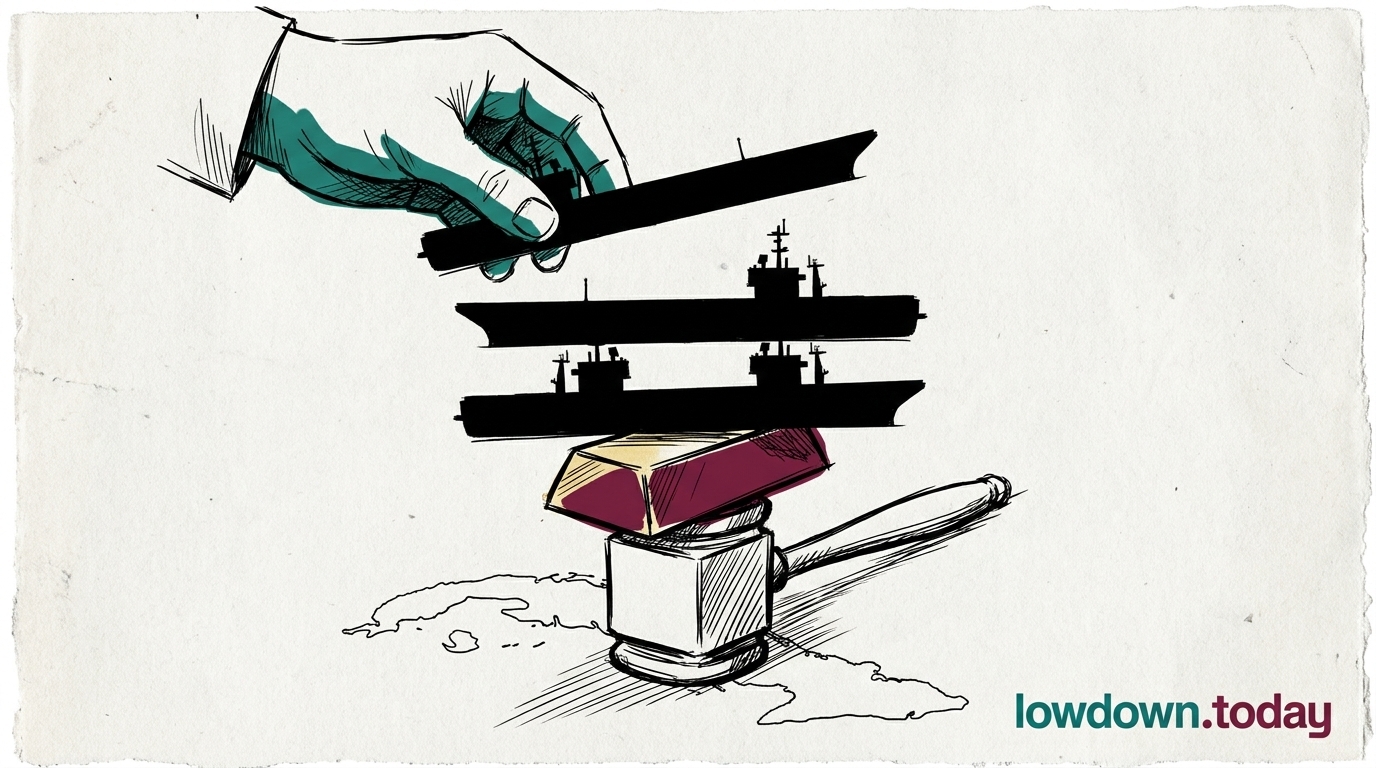
The 24th MEU ran fast-rope assault drills at Guantanamo on 4 June, the same fortnight a Cuban general called a meeting with the US SOUTHCOM commander positive, so the force display and the quiet talking are running at once.

PoliticsDeveloping
Key takeaway

Escalation theatre and a de-escalation channel are running in parallel around Cuba.

The 24th Marine Expeditionary Unit ran fast-rope insertion drills, known as FRIES (fast-rope insertion and extraction system), at Naval Station Guantanamo on 4 June 2026, using UH-1Y Venom helicopters; SOUTHCOM (US Southern Command) announced the exercise on 11 June 1. It is a tactical step up from the USS Nimitz carrier presence reported in May , and the formation involved, Littoral Combat Force-24, is built for fast insertion rather than drug interdiction. SOUTHCOM is the US military command responsible for the Caribbean and Latin America; Guantanamo is the US base it has held on the island's southeastern tip since 1903.

A contrary signal runs underneath the drills. On Friday 29 May Cuban General Roberto Legra Sotolongo met SOUTHCOM commander General Francis Donovan and described the meeting as "positive," the first confirmed military-to-military contact of the crisis 2. Two channels are open at once: an exercise that rehearses force and a conversation that suggests neither side wants a shooting war. The simultaneity reads less as confusion than as a managed posture, visible deterrence paired with a deconfliction line, the dual track familiar from other US-adversary standoffs.

The drills have been linked to a 17 May Axios report that US intelligence officials say Cuba has acquired more than 300 Russian and Iranian drones since 2023, and that Cuban officials discussed possible strikes on Key West and Guantanamo 3. That claim rests on a single administration official who, by Axios's own account, described the intelligence as a potential pretext for military action 4. Lowdown has not independently verified it and does not treat it as established. The verified facts in this thread are the exercise and the Legra-Donovan meeting; the drone intelligence is contested and carries its own author's caveat. Whether the back-channel survives the next escalation, or the pretext narrative hardens into justification, is the variable that decides whether the drills stay theatre.

Deep Analysis

In plain English

On 4 June 2026, US Marines at Guantanamo Bay practised fast-rope descents from helicopters, a technique used to quickly insert soldiers into buildings or confined spaces. The US Southern Command, which oversees American military operations in the Americas, announced the exercise a week later on 11 June. At the same time, Cuban General Roberto Legra Sotolongo met the SOUTHCOM commander, General Francis Donovan, on 29 May and described the meeting as positive. This was the first known face-to-face military contact between the two countries during the current crisis. A US news outlet, Axios, reported in May that American intelligence officials claimed Cuba had acquired hundreds of Russian and Iranian drones and discussed potential strikes on Key West and Guantanamo. That report rested on a single unnamed official who described the intelligence as a potential pretext for action. Neither the drone claim nor any specific threat has been independently verified. Two things are happening at once: the US is rehearsing military force near Cuba while also talking to Cuba's military directly. Both tracks appear deliberately maintained.

First Reported In

Update #7 · Cuba's president lands on the OFAC blacklist

CiberCuba· 12 Jun 2026
Read original
Causes and effects
This Event
Marines drill at Guantanamo as a back-channel opens
A functioning military-to-military channel running underneath visible deterrence drills lowers the odds of miscalculation, even as the contested, self-caveated drone claim hangs over the posture.
Different Perspectives
Russia
Russia
Moscow has sent Havana solidarity gestures, including birthday messages to Raúl Castro, but no tanker has reached Cuba since the Sovcomflot Universal diverted away in May, and none arrived this week either. Russia's backing remains rhetorical while the fuel gap CUPET's designation created stays unfilled from any state-to-state source.
Observatorio Cubano de Derechos Humanos (OCDH)
The Madrid-based monitor published its half-year count of 1,949 repressive actions on 7 July, 299 in June, the highest monthly total it has logged in 2026, with independent journalists the most-targeted group. OCDH's figures moved the debate from sanctions cadence to security-state conduct in the same week Havana wanted the argument to stay on sanctions.
European Union (Stavros Lambrinidis)
Lambrinidis told the UNGA the embargo harms ordinary Cubans, then criticised Havana's Ukraine-ceasefire vote and Russian military participation, announcing no new measures. The EU is managing two separate Cuba files, human rights and Cuba's Russia alignment, that have not yet merged into one policy with teeth.
United States (Mike Waltz / OFAC)
Ambassador Mike Waltz held up photographs of named Cuban political prisoners, including Otero Alcántara, telling the delegation "this is not Havana", while OFAC issued no new Cuba designation between 1 and 9 July. Washington is running the prisoner-naming track and the sanctions track separately, and a re-charged Otero Alcántara would give the naming track a fresh case to press.
Cuban Ministry of Foreign Affairs (MINREX)
MINREX rebutted Mike Waltz's prisoner photographs at the UNGA debate, saying Cuba has nothing resembling the repression imagery Washington displayed, while giving no public account of Otero Alcántara's whereabouts. Havana's embargo case depends on external sanctions as the sole cause of harm, which a domestically caused grid failure and an unexplained disappearance both complicate.
Russia and China
Russia and China
Moscow and Beijing offered rhetorical solidarity but no relief. No Russian tanker has reached Cuba since the Sovcomflot Universal diverted on 26 May, and China has moved no substitute cargo, leaving Havana's fuel siege unbroken by its strategic partners.

