Skip to content
You can now search across every topic, entity and event.What's new
Cuba Dispatch
26JUL

Cuba's president lands on OFAC blacklist

5 min read
10:44UTC

OFAC named Miguel Diaz-Canel to its sanctions list on 4 June, the first sitting Cuban head of state on the SDN register, then issued a quieter rule that reaches companies it never named.

PoliticsDeveloping
Key takeaway

The unlisted ownership rule, not the head-of-state name, is the substantive escalation.

On Thursday 4 June 2026 the US Treasury named Miguel Diaz-Canel to its Specially Designated Nationals list, the first sitting Cuban head of state placed on the register maintained by OFAC, the Office of Foreign Assets Control 1. The same action blocked his wife Lis Cuesta Peraza, her son Manuel Anido Cuesta, and Alejandro Castro Espin, Raul Castro's son and a former intelligence chief, alongside the armed forces ministry MINFAR (Ministerio de las Fuerzas Armadas Revolucionarias). The 4 June wave named five individuals and five entities under the standing Cuba sanctions order, raising total designations under it to 27 2.

The designation matters because Washington has nearly run out of new institutions to punish. The 18 May wave had already hit the interior ministry and the intelligence directorate ; Trump's family-relatives order came on 1 May and directly enabled the listing of Cuesta Peraza and her son; the first individual designation under that order landed on 7 May . OFAC reached the head of state only after the ministries, the police and the intelligence directorate were already on the list. The 4 June wave also forecloses the reciprocal prisoner-release diplomacy that Marco Rubio's own Vatican channel nominally pursued in May : a president on the SDN list is not a counterparty Havana can trade concessions to.

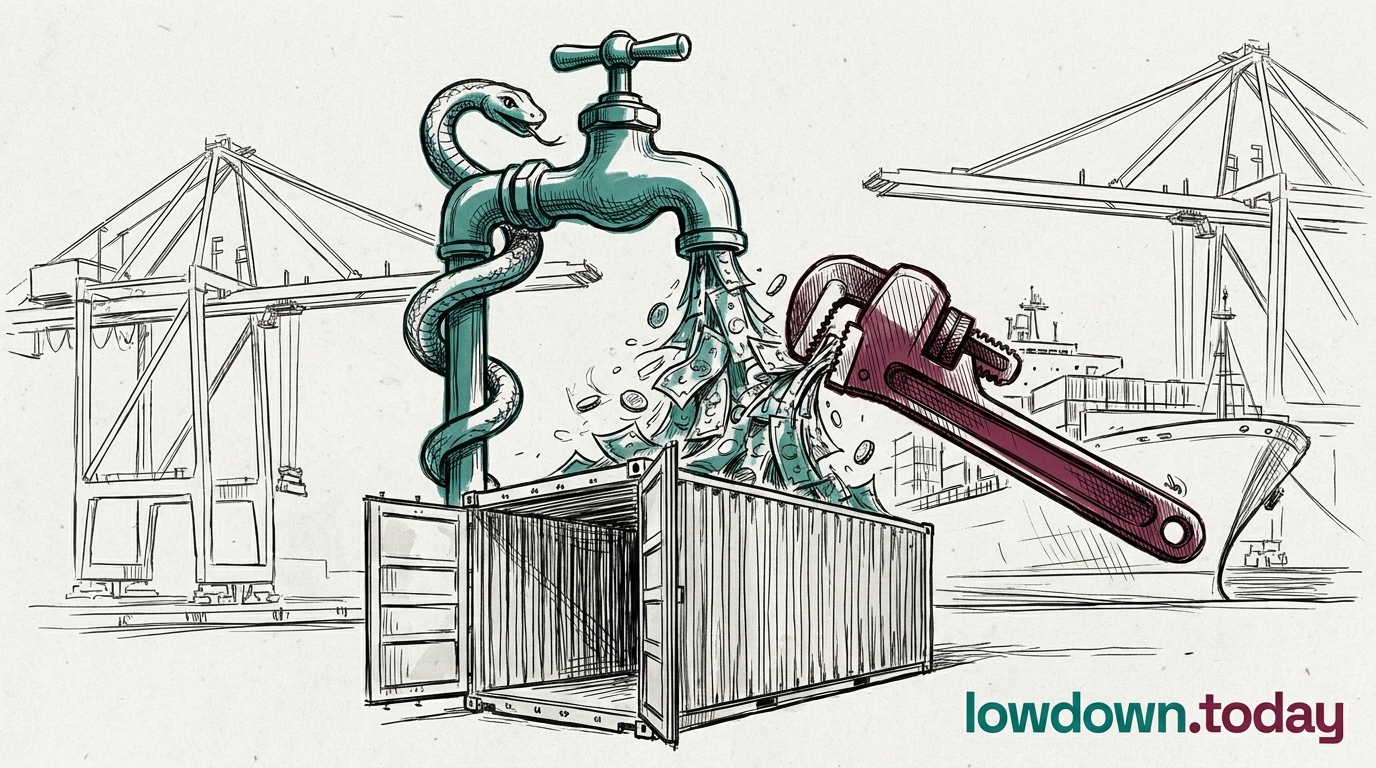
The heavier instrument carried no name at all. FAQ 1258, issued the same day, extends secondary-sanctions exposure to any company that GAESA, MININT (the interior ministry) or MINFAR owns 50 per cent or more, even when that company never appears on a published list 3. That changes the homework a foreign firm must do. Before 4 June, a hotel operator or bank could clear a Cuban counterparty against the Cuba Restricted List. Now it must trace the ownership chain back to the military holding company and stop dealing if the line crosses half. Baker McKenzie's sanctions team called the shift a departure from prior OFAC practice 4. The Spanish chains that walked before the 5 June GAESA wind-down cleared the named-list risk; firms with GAESA-subsidiary ties not yet on any list inherit a fresh exposure they cannot audit away.

Analysts at the Washington Office on Latin America (WOLA) have argued that sanctioning officeholders paid in Cuban pesos carries little coercive bite, since peso-denominated officials hold no US bank accounts to freeze. On that reading Diaz-Canel's personal listing functions as a signal rather than a seizure, the symbolic apex of a programme whose real weight sits a layer down. The substance lives in FAQ 1258's ownership multiplier, and a week later in the oil.


Deep Analysis

In plain English

When the US government wants to punish a foreign official or company, it adds them to a list called the SDN (Specially Designated Nationals) list. Any bank or business that then deals with a listed person or company risks losing access to the US financial system, which is the plumbing most international money flows through. On 4 June 2026, Washington added Cuba's president, his family, and the armed forces ministry to that list. That itself limits the diplomatic room available: a president on the list is hard to negotiate with because any deal-making could be read as doing business with a sanctioned person. The more practically significant action was a new rule published the same day, FAQ 1258. It says that any company 50 per cent or more owned by Cuba's military conglomerate GAESA, its interior ministry, or its armed forces is automatically treated as sanctioned even if it never appears on any published list. Cuba's military secretly owns chunks of many of the island's commercial businesses, so the rule forces foreign companies to trace who really owns their Cuban partners, rather than run a simple name against a published list.

Deep Analysis
Root Causes

Cuba's vulnerability to personal-designation escalation reflects a structural governance architecture in which the president functions as both head of state and First Secretary of the Communist Party, concentrating political authority at a single legally targetable individual without creating a succession mechanism that Washington could reward or incentivise.

The Cuban system was designed to survive external pressure by diffusing operational authority downward into the party-military-GAESA nexus; the head-of-state designation paradoxically targets the position with the fewest personal financial levers.

The FAQ 1258 ownership-tree rule exploits a different structural condition: the decision by Cuban authorities since the 1990s to use GAESA, MININT, and MINFAR as holding umbrellas for commercial ventures that nominally operated on market terms.

That corporate architecture made Cuba legible to foreign investors during the dollarisation era but simultaneously created a compliance surface that OFAC could trace. The subsidiaries that foreign hotel operators and banks transacted with were visible only as commercial counterparties; FAQ 1258 makes the military-ownership chain the operative legal fact.

What could happen next?
  • Consequence

    Foreign firms with Cuban joint ventures not on the published SDN list now face a second-pass ownership audit under FAQ 1258, likely accelerating further business exits from the island.

    Short term · Assessed
  • Risk

    Placing Diaz-Canel personally on the SDN list forecloses the prisoner-release reciprocal diplomacy that Rubio's Vatican channel was nominally pursuing; any negotiated release framework now requires a sanctions-listed counterpart.

    Immediate · Assessed
  • Precedent

    FAQ 1258's 50 per cent ownership-tree rule extends the OFAC model that has been applied to Iran and Russia's state-adjacent commercial sectors, and may be cited as a template for future designations of authoritarian state economies with opaque military-commercial structures.

    Long term · Reported
  • Meaning

    With the president, the oil company, the interior ministry, the intelligence directorate, and the armed forces all designated, Washington has exhausted the main institutional targets; further escalation within the EO 14404 architecture requires either secondary-tariff enforcement or a new legal instrument.

    Medium term · Reported
First Reported In

Update #7 · Cuba's president lands on the OFAC blacklist

Baker McKenzie Global Sanctions Blog· 12 Jun 2026
Read original
Causes and effects
This Event
Cuba's president lands on OFAC blacklist
A head-of-state designation is close to irreversible and forecloses the reciprocal prisoner-release diplomacy of March and April; the unlisted ownership rule beside it widens US sanctions to the whole military economy.
Different Perspectives
Spain (Foreign Ministry and hotel investors)
Madrid has worked to shield Spanish hotel operators exposed to Cuba, and OFAC's General Licences 2 and 3 winding down the Guernsey-listed CEIBA Investments fund give those investors a defined exit rather than an abrupt block. Spain's stake in managing an orderly wind-down, not confronting the designation itself, keeps it distinct from Havana's collective-punishment framing.
Cuban Ministry of Foreign Affairs (MINREX)
Foreign Minister Bruno Rodriguez Parrilla called the 23 July designations "castigo colectivo" and defended the medical missions as protecting healthcare access for patients in the countries where Cuban doctors serve, without addressing the evasion allegation against Coral Maritima directly.
US Treasury (OFAC) and State Department
OFAC designated Cuba's medical-missions operators and named the Mariel-Coral Maritima transfer as GAESA sanctions evasion on 23 July, characterisations Washington has not independently substantiated in public documents reviewed. The administration frames the wave as closing hard-currency channels sector by sector, following the same pattern applied to tourism and financial clearing in June and July.
Human rights monitors (OCDH and Prisoners Defenders)
OCDH's 14 July dictamen named the specific offices responsible for holding Otero Alcántara past his sentence-expiry date; Prisoners Defenders counted 1,306 political prisoners, including 40 detained minors, on 9 July. Both oppose the Cuban government's account without endorsing Washington's sanctions instrument as a remedy.
US State Department
US State Department
Secretary Rubio said Cuba 'continues to ally itself with America's enemies' and framed the 13 July designations as deploying 'every tool at our disposal', now citing forced-labour export to Angola for the first time. These quotes rest on cached web snippets; state.gov was unreachable this run and could not be directly verified.
Cuban Ministry of Foreign Affairs
Foreign Minister Bruno Rodríguez Parrilla called the 13 July designation package 'criminal and genocidal' and said 'Cuba is not a threat and US intelligence agencies know it'. State media frame the 16 July gas-price rise as a direct consequence of the intensifying blockade, though Havana has not disclosed its own container-import shift dated 3 July.