Skip to content
You can now search across every topic, entity and event.What's new
Cuba Dispatch
26JUL

OFAC hits Cuba's main clearing bank

2 min read
10:44UTC

OFAC designated Banco Financiero Internacional and four GAESA-linked firms on 23 June, five days after Cuba legalised private banks. The action strips the reform of the one state bank most private dollars would clear through.

PoliticsDeveloping
Key takeaway

Days after Cuba legalised private dollar accounts, OFAC sanctioned the state bank they must clear through.

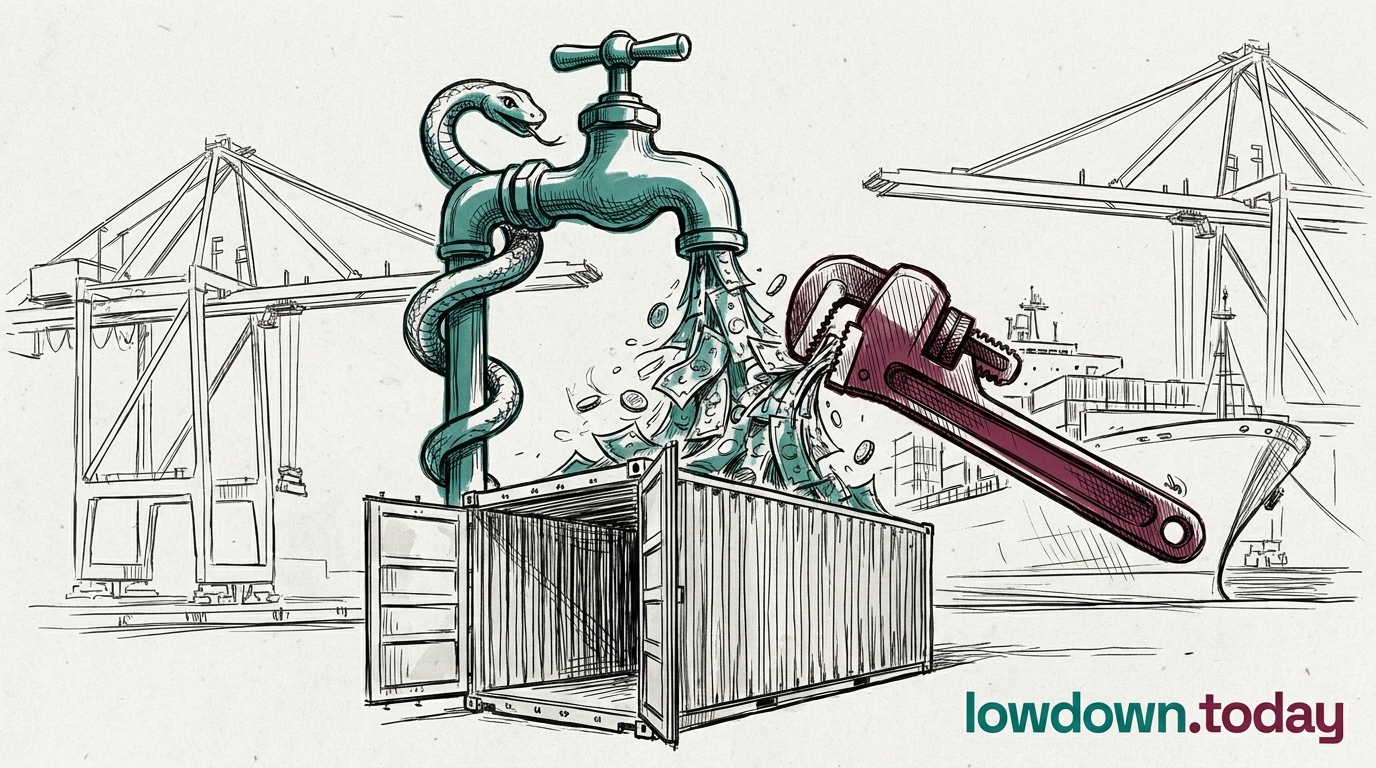
On Tuesday 23 June the US Office of Foreign Assets Control (OFAC), the US Treasury's sanctions arm, designated Banco Financiero Internacional (BFI), the state bank that clears the bulk of Cuba's foreign-currency transactions, under Executive Order 14404 1. Five days earlier, on 18 June, Cuba's National Assembly had legalised private banks and personal dollar accounts . Havana built a front door for private dollars; Washington sanctioned the one clearing bank those dollars must pass through.

OFAC named four other targets alongside the bank: RAFIN S.A., the finance arm of the military conglomerate GAESA; the cargo handler Almacenes Universales S.A.; the mining firm Geominera S.A.; and Annalie Lilliam Rueda Cardero, an adult relative of Alejandro Castro Espín, Raúl Castro's son and former intelligence chief 2. Her listing extends to a second Castro-line relative the adult-family-member track OFAC opened when it sanctioned Díaz-Canel and his household on 4 June .

A private-banking law needs a correspondent route to move hard currency abroad, and the designation removes the state bank that supplied it. Treasury and the courts run on separate timetables, and nothing in the record shows the two June moves were synchronised. The narrower, verifiable point holds regardless of intent: any bank licensed under the reform still has to clear dollars through a counterparty willing to touch them, and BFI on the SDN (Specially Designated Nationals) list makes that route unlawful for compliant institutions. The reform this dispatch reported a fortnight ago now lacks the clearing path to work.


Deep Analysis

In plain English

The US Treasury's Office of Foreign Assets Control, OFAC, keeps a blacklist called the Specially Designated Nationals list. Any bank or company on it is cut off from the US financial system, and anyone who deals with it risks being cut off too. On 23 June OFAC added Banco Financiero Internacional, the Cuban bank most dollar payments to and from the island pass through, plus three companies linked to Cuba's military-run business empire GAESA, and a relative of a former Cuban intelligence chief. For ordinary Cubans this means the new private bank accounts the government just legalised have no working dollar pipeline to move money through.

Deep Analysis
Root Causes

Cuba has had no direct US correspondent banking relationship since the 1963 Cuban Assets Control Regulations, so BFI's dollar clearing always ran through third-country banks willing to accept the secondary-sanctions risk of touching Cuban currency flows.

Once OFAC tagged BFI itself, those third-country banks inherit that same secondary-sanctions exposure just for having cleared a transaction through a now-designated institution, which is why correspondent banks are reported pulling back rather than testing the exposure.

What could happen next?
  • Consequence

    Any dollar wire that touches BFI after 23 June risks being frozen or returned by the intermediary bank enforcing OFAC's block.

    Immediate · Assessed
  • Meaning

    The reform's private-banking provisions have no functioning correspondent route until Havana finds a non-dollar clearing channel.

    Short term · Assessed
  • Risk

    Third-country banks that continue clearing Cuban transactions through BFI now carry secondary-sanctions exposure on their own US-linked business.

    Short term · Assessed
First Reported In

Update #9 · Cuba's dollar reform, no bank to clear it

US Treasury OFAC· 1 Jul 2026
Read original
Different Perspectives
Spain (Foreign Ministry and hotel investors)
Madrid has worked to shield Spanish hotel operators exposed to Cuba, and OFAC's General Licences 2 and 3 winding down the Guernsey-listed CEIBA Investments fund give those investors a defined exit rather than an abrupt block. Spain's stake in managing an orderly wind-down, not confronting the designation itself, keeps it distinct from Havana's collective-punishment framing.
Cuban Ministry of Foreign Affairs (MINREX)
Foreign Minister Bruno Rodriguez Parrilla called the 23 July designations "castigo colectivo" and defended the medical missions as protecting healthcare access for patients in the countries where Cuban doctors serve, without addressing the evasion allegation against Coral Maritima directly.
US Treasury (OFAC) and State Department
OFAC designated Cuba's medical-missions operators and named the Mariel-Coral Maritima transfer as GAESA sanctions evasion on 23 July, characterisations Washington has not independently substantiated in public documents reviewed. The administration frames the wave as closing hard-currency channels sector by sector, following the same pattern applied to tourism and financial clearing in June and July.
Human rights monitors (OCDH and Prisoners Defenders)
OCDH's 14 July dictamen named the specific offices responsible for holding Otero Alcántara past his sentence-expiry date; Prisoners Defenders counted 1,306 political prisoners, including 40 detained minors, on 9 July. Both oppose the Cuban government's account without endorsing Washington's sanctions instrument as a remedy.
US State Department
US State Department
Secretary Rubio said Cuba 'continues to ally itself with America's enemies' and framed the 13 July designations as deploying 'every tool at our disposal', now citing forced-labour export to Angola for the first time. These quotes rest on cached web snippets; state.gov was unreachable this run and could not be directly verified.
Cuban Ministry of Foreign Affairs
Foreign Minister Bruno Rodríguez Parrilla called the 13 July designation package 'criminal and genocidal' and said 'Cuba is not a threat and US intelligence agencies know it'. State media frame the 16 July gas-price rise as a direct consequence of the intensifying blockade, though Havana has not disclosed its own container-import shift dated 3 July.