Skip to content
You can now search across every topic, entity and event.What's new
Autonomous Systems: Land & Sea
18JUL

Europe bids for the AUKUS seabed

4 min read
13:42UTC

Kongsberg and DRASS unveiled a joint undersea-warfare bid at ILA Berlin on 8 June, ten days after the AUKUS trilateral named only US vehicles for its first seabed programme.

TechnologyDeveloping
Key takeaway

Europe will not cede the AUKUS undersea-hardware market to US primes without a contest.

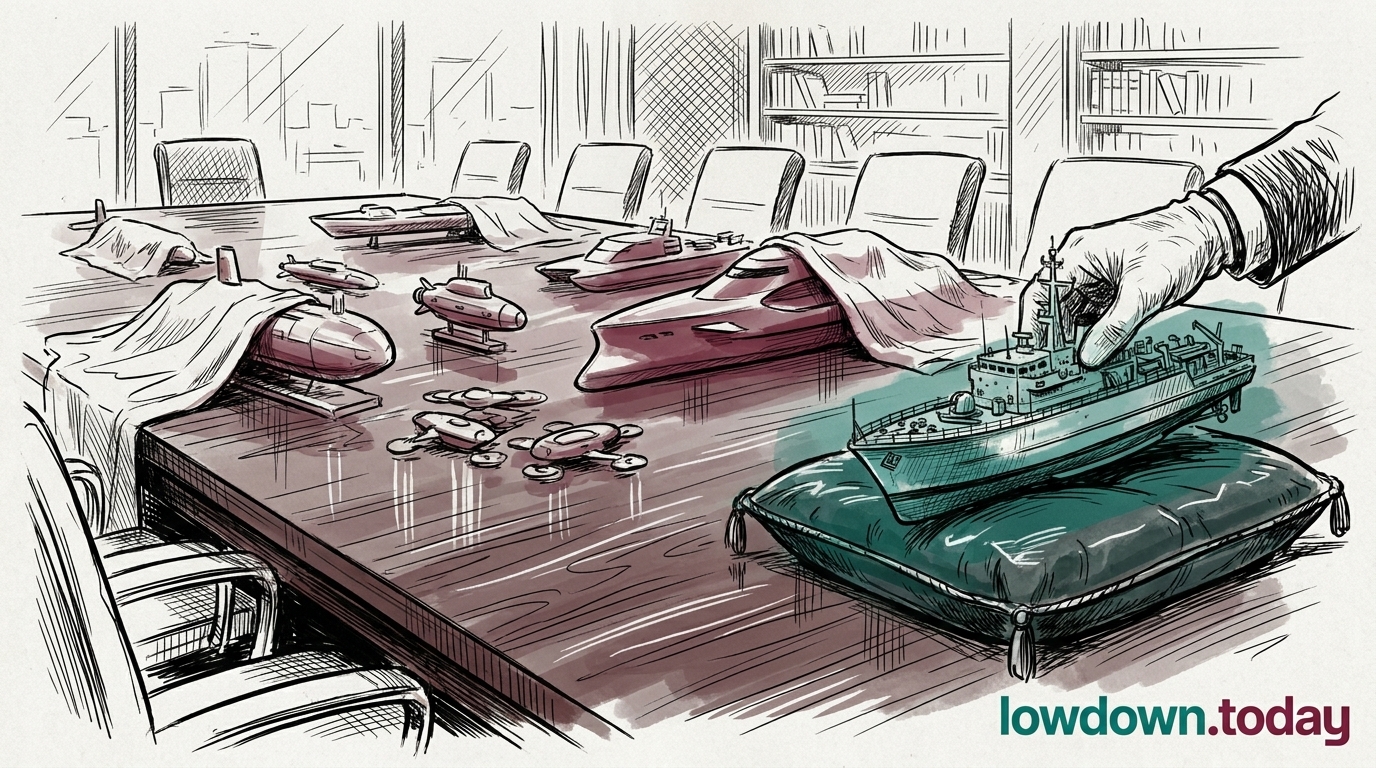
Kongsberg of Norway and Italy's DRASS unveiled a combined undersea-warfare bid at ILA Berlin, Germany's aerospace and defence exhibition, on 8 June 2026. Their pitch pairs Kongsberg's HUGIN Superior autonomous underwater vehicle (AUV, a self-navigating submersible) and HISAS 1032 synthetic-aperture sonar with DRASS's DG-900 compact submarine, a host that carries three AUVs. The two firms named 2027 as their target for AUKUS Pillar II procurement 1.

AUKUS Pillar II is the advanced-capability strand of the Australia-UK-US security partnership, covering uncrewed undersea vehicles, payloads and enabling systems. Its first Signature Project naming on 30 May listed the Mission Specialist Defender Mk IV and L3Harris IVER4 900, with no British or European hull . Kongsberg and DRASS arrived ten days later to contest the platform slot the trilateral had assigned to American primes.

The DG-900 changes what is being offered. A compact submarine carrying three AUVs is a different procurement object from a torpedo-launched vehicle like the IVER4 900, and it gives navies without large attack-submarine fleets a route into seabed autonomy. The opening these two firms are reading is the same one that drew HII and Babcock to pitch their REMUS vehicles to the Royal Navy in May . Britain's nearest equivalent, BAE Systems' Herne extra-large AUV, remains in Lloyd's Register certification with no Royal Navy order 2.

No money has changed hands. Kongsberg and DRASS disclosed no contract value and no customer commitment, only intent, and 2027 sits well over a year out. An air-show announcement marks where a supplier wants to compete; it moves neither hardware nor budget. The speed of the European response, rather than its maturity, is what the procurement professional should log.

Deep Analysis

In plain English

AUKUS is a defence partnership between Australia, the UK, and the US, best known for its plan to give Australia nuclear-powered submarines. But it also has a second track covering advanced military technology, including underwater drones. On 30 May 2026, the three nations announced which underwater drones would form that programme's first official project. Both named vehicles were made by US companies. That left European firms out in the cold. Kongsberg, a Norwegian company, makes HUGIN, one of the most capable underwater survey drones in the world. DRASS, an Italian firm, builds compact submarines. They announced at a Berlin air show on 8 June that they would offer HUGIN mounted inside a DRASS submarine as a joint package, targeting the AUKUS programme from 2027. Think of it like this: the US has claimed the 'drone' slot, but someone still needs to supply the submarine that carries the drone underwater. Kongsberg and DRASS announced on 8 June that their combined package, HUGIN inside a DG-900, fills that submarine role.

Deep Analysis
Root Causes

AUKUS Pillar II's 30 May 2026 Signature Project named only US-manufactured vehicles (Mission Specialist Defender Mk IV and L3Harris IVER4 900). That creates a structural opening at two levels below the named platforms: first, at the payload layer (sonars, sensors, and effectors mounted on those vehicles), where HISAS 1032 is already a qualified NATO payload; second, at the host-platform layer (the submarine that launches and recovers the AUV), where no AUKUS commitment has been made.

Kongsberg's export position derives from Norway's defence-industrial relationship with the US: as a Major Non-NATO Ally equivalent under US export licensing, Norway has preferential access to ITAR-controlled components, which allows HUGIN to integrate US Navy payload standards without a full AUKUS partner waiver.

DRASS's DG-900 compact submarine fills the gap for navies, such as Australia's Collins-class interim fleet, that cannot yet operate nuclear-powered boats but need AUV-launch capability before the SSN-AUKUS boats arrive in the 2030s.

What could happen next?
  • Consequence

    If Kongsberg qualifies HUGIN Superior as an AUKUS Pillar II payload on US-built submarines, it establishes a European AUV in the programme's core hardware roster without requiring a new platform competition.

    Medium term · Suggested
  • Risk

    The DG-900 compact submarine faces ITAR compatibility review before any AUKUS nation can purchase it with US-funded programme money, which could eliminate the platform layer of the bid while leaving the payload layer intact.

    Short term · Assessed
  • Opportunity

    Australia's interim AUV capability gap between now and SSN-AUKUS delivery in the 2030s creates demand for compact-submarine AUV hosts that neither the US nor UK currently offer, a niche the DG-900 is sized to fill.

    Medium term · Suggested
  • Precedent

    A successful Kongsberg HUGIN qualification as an AUKUS Pillar II payload would give other European sensor and AUV makers a legal pathway into the programme without competing for named platform slots.

    Long term · Suggested
First Reported In

Update #3 · Europe bids for the AUKUS seabed layer

Tech Times· 13 Jun 2026
Read original
Different Perspectives
RUSI naval-procurement analysts
RUSI reads Thales-Exail as backward integration into a supply chain Thales already depended on, and the mothership order as the true bottleneck behind Britain's autonomy transition, not the drones themselves. Firm specifications for Type 91-94 without a named contractor mark a requirement stage, not a procurement commitment.
US Defense Innovation Unit
DIU used its Other Transaction Authority to select Norway's Kongsberg over a US-only team to design the CAMP extra-large underwater vehicle, due for concept design in the third quarter of 2026. DIU values proven HUGIN-class vehicle hours over the domestic-sourcing preference a standard procurement track would apply.
UK Ministry of Defence
Defence Minister Luke Pollard confirmed on 17 July that Britain will spend GBP 90 million on three Norwegian-built mine-hunting motherships, retiring HMS Chiddingfold the same fortnight after 42 years' service. The motherships, not more drones, are the bottleneck the Royal Navy is actually funding to hold its autonomy timetable.
Kongsberg
Kongsberg
Kongsberg's HUGIN line won a US Navy XLUUV design lead from the Defense Innovation Unit on 15 July while the same product family closed Main Supplier and HUGIN-order deals with Fugro and DOF. One Norwegian programme now serves a US design study, a European AUKUS bid and two commercial survey contracts at once.
Thales
Thales
Thales agreed on 6 July to pay EUR 3.9 billion for Exail Technologies, folding sonar, vehicle and navigation production under one French roof rather than continuing to buy in the vehicle layer. The deal turns Thales into a single vertically-integrated bidder against Kongsberg's DRASS-partnered European AUKUS counter-bid.
China (military commentary)
Chinese military commentary has called uncrewed maritime equipment 'an excellent force multiplier' that cannot overturn the fundamental logic of naval warfare, the lone voice against the Western consensus that autonomy is the central axis of naval modernisation. Beijing reads the airdrop trial as an incremental logistics fix, not London's claimed doctrinal breakthrough.