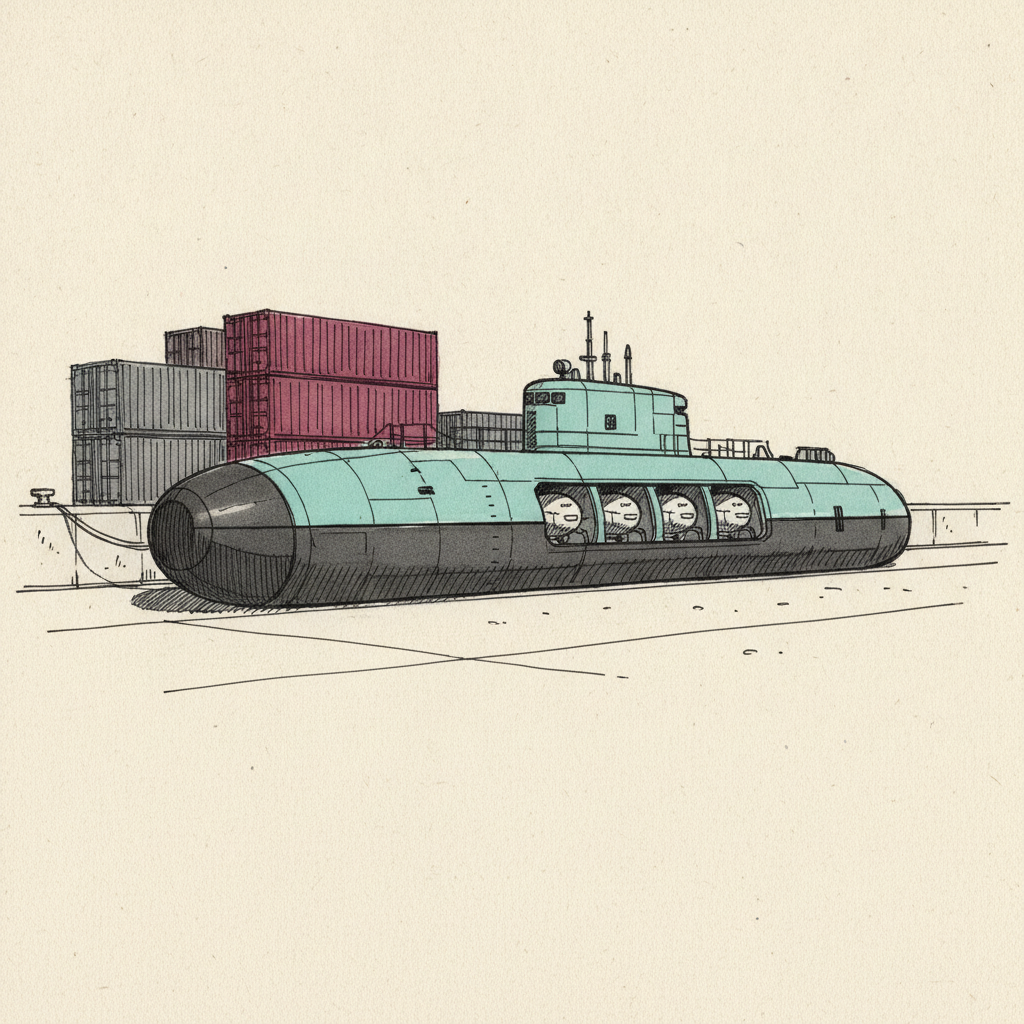
DG-900
DRASS compact submarine; carries three HUGIN AUVs as host platform in the AUKUS Pillar II bid.
Last refreshed: 13 June 2026 · Appears in 1 active topic
Will ITAR rules block DRASS's compact submarine from entering the AUKUS programme?
Timeline for DG-900
Proposed as the manned host platform carrying up to three AUVs
Autonomous Systems: Land & Sea: Europe bids for the AUKUS seabed- What is the DRASS DG-900 compact submarine?
- The DG-900 is an Italian compact conventional submarine built by DRASS that carries up to three autonomous underwater vehicles. It forms the host-platform element of the Kongsberg-DRASS AUKUS Pillar II bid announced at ILA Berlin on 8 June 2026.Source: Tech Times / Kongsberg-DRASS press release
- How does the DG-900 differ from the US submarines in the AUKUS programme?
- The DG-900 is a compact conventionally powered submarine designed to launch and recover AUVs, not a nuclear-powered attack submarine. AUKUS Pillar I covers SSN-AUKUS nuclear submarines; the DG-900 targets the Pillar II AUV host role and is sized for navies awaiting those nuclear boats in the 2030s.Source: AUKUS Pillar II structure analysis
- Could Australia buy the DRASS DG-900 under AUKUS?
- Possibly, but ITAR compatibility has not been confirmed. AUKUS procurement involves US-controlled technologies; a DG-900 purchase with programme funding would likely require a technology-transfer waiver from Washington that has not been publicly addressed.
Background
The DG-900 is DRASS's compact conventional submarine, serving as the AUV host platform in the joint Kongsberg-DRASS bid for AUKUS Pillar II undersea-warfare procurement. Announced at ILA Berlin on 8 June 2026, the DG-900 is configured to carry and recover up to three HUGIN Superior AUVs in a continuous launch cycle, offering a seabed-warfare package distinct from the torpedo-tube-launched vehicles named in AUKUS's 30 May Signature Project. No contract value or AUKUS customer commitment was disclosed.
The DG-900 sits within DRASS's DG-series, which ranges from one-person swimmer-delivery vehicles to mission-configured compact submarines. Unlike full-size attack submarines, the DG-900 does not require nuclear propulsion and is sized for navies, such as Australia's interim fleet, that cannot operate nuclear boats but need AUV-launch capability before SSN-AUKUS boats arrive in the 2030s. Its compact displacement also reduces the acoustic signature footprint that full-size boats produce during AUV operations, though Chinese naval analysis has noted that AUV launch-and-recovery itself generates a detectable acoustic event regardless of the host vessel's size.
The ITAR compatibility of the DG-900 for AUKUS procurement has not been publicly confirmed. A technology-transfer waiver from the US may be required before any AUKUS nation can purchase the platform with programme funding. This is the primary near-term risk to the Kongsberg-DRASS bid at the platform layer, distinct from Kongsberg's HUGIN payload, which holds an existing NATO qualification record.