Skip to content
You can now search across every topic, entity and event.What's new
Autonomous Systems: Land & Sea
12AUG

Zelenskyy offers MBS drone skills

4 min read
14:17UTC

Two days after Trump's request, Zelenskyy pitched Saudi Arabia's crown prince on Ukraine's counter-drone expertise — and Bloomberg reported the asking price: ceasefire progress.

TechnologyDeveloping
Key takeaway

Ukraine is converting wartime expertise into Gulf diplomatic capital, following Israel's post-1967 arms-diplomacy model.

On 7 March, Zelenskyy called Saudi Crown Prince Mohammed bin Salman and offered Ukraine's counter-drone expertise. "We know Shaheds. No other country in the world has this kind of experience," Zelenskyy told MBS 1. Bloomberg framed the exchange without ambiguity: Zelenskyy "offers help in return for truce" 2. The linkage between drone assistance and ceasefire progress was explicit — a transaction, not a goodwill gesture.

The economics favour Ukraine. Kyiv has developed low-cost interceptor drones at $1,000–$2,000 per unit 3, against $4–6 million for a single Patriot round and $12 million for a THAAD interceptor. Saudi Arabia has faced Houthi drone and missile attacks since the Yemen intervention began in 2015 and now confronts direct Iranian ballistic threats. It has immediate operational need for the capability Ukraine has refined under three years of fire. A wartime export ban currently blocks Ukrainian drone sales, but US and Gulf demand is building pressure to lift the restriction.

Ukraine entered 2026 seeking weapons, money, and security guarantees — the posture it has held since Russia's full-scale invasion. Within 48 hours of Trump's 5 March request, Zelenskyy had pitched the wealthiest Gulf state on a commodity neither the US nor European defence industry can supply at comparable cost or from comparable experience. The 2 March announcement that Ukraine would export counter-drone expertise to non-NATO states was the policy foundation; the MBS call was the first diplomatic application.

Whether this leverage converts depends on two decisions beyond Kyiv's control. First, Washington must lift the wartime export ban — a step that would signal US willingness to let Ukraine profit from the Iran war rather than merely absorb its side-effects. Second, MBS must weigh Ukraine's drone expertise against the oil-market coordination he maintains with Moscow through OPEC+. Saudi Arabia has avoided choosing sides in the Russia-Ukraine war since 2022, hosting negotiations while sustaining energy ties with both belligerents. Zelenskyy is betting that Iranian drones falling on Gulf territory change that arithmetic. The Russian oil revenues that had already fallen 65% year-on-year by January suggest Moscow's economic leverage over Riyadh is weaker than it was — but whether MBS sees it that way is a question only the next round of diplomacy will answer.

Deep Analysis

In plain English

Ukraine called Saudi Arabia's de facto ruler and offered something specific: the accumulated knowledge of how to shoot down Iranian Shahed drones, earned through three years of nightly interceptions. Saudi Arabia has itself been struck by Shahed variants and has strong reasons to want this expertise. In exchange, Ukraine is asking for help pushing a ceasefire with Russia — help that Saudi Arabia is positioned to provide, given its direct relationship with Trump and its influence over global oil markets that affect Russian revenues. Bloomberg described it plainly as 'help in return for a truce.' This is Ukraine repositioning from aid-receiver to capability-provider, using the Iran war as the catalyst for a new kind of diplomacy.

Deep Analysis
Synthesis

The MBS call is strategically layered beyond what the body surfaces. Saudi Arabia simultaneously holds leverage over Trump through their personal relationship and oil pricing, and over Russia through OPEC+ decisions that directly affect the oil revenues funding the war. Ukraine offering drone expertise to MBS is not merely a bilateral security transaction — it is an attempt to activate Saudi pressure on both ends of the Russia-US-Ukraine triangle at once. No other actor Ukraine could approach holds both levers simultaneously.

Root Causes

Ukraine's outreach to MBS reflects a calculated recognition that the US ceasefire track runs partly through Riyadh. Saudi Arabia's oil pricing decisions directly affect Russian fiscal revenues, and MBS has personal access to Trump that European leaders do not. Kyiv is constructing parallel pressure points on Moscow that do not depend on the frozen trilateral format — a hedge against that format's continued suspension.

What could happen next?
  • Opportunity

    If the export ban is lifted, Ukraine acquires a Gulf defence-market revenue stream and diplomatic network that persists beyond any eventual ceasefire.

    Medium term · Suggested
  • Risk

    Gulf states may absorb Ukrainian counter-drone doctrine without providing ceasefire pressure on Russia, extracting the expertise without the political reciprocity Kyiv needs.

    Short term · Suggested
  • Consequence

    Saudi mediation in the Ukraine conflict, if activated, would give Riyadh simultaneous leverage over Moscow and Washington — a structural position Riyadh would be incentivised to prolong.

    Short term · Assessed
  • Precedent

    A state actively at war monetising battlefield expertise for diplomatic outcomes establishes a new template for asymmetric conflict actors seeking influence beyond their military capacity.

    Long term · Assessed
First Reported In

Update #3 · Iran war halts talks, drains air defences

Al Jazeera· 9 Mar 2026
Read original
Causes and effects
Different Perspectives
Conservative opposition
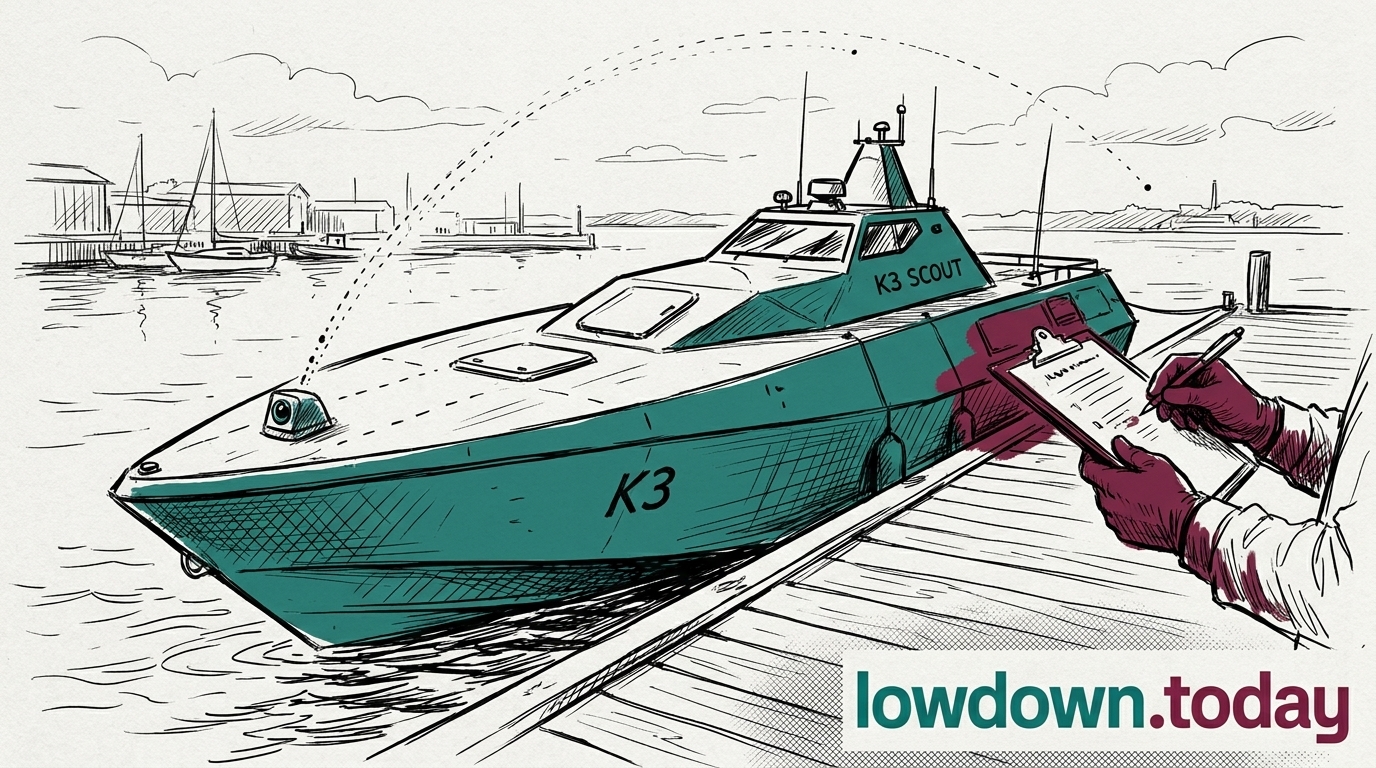
The Conservative opposition called on the Government on 9 August to 'urgently audit' equipment for hidden Chinese components, after the Telegraph's K3 SCOUT report. No named MP has been quoted on the record; the call came at party level, alongside the Ministry of Defence's own 10 August statement that no data had been compromised.
Netherlands Ministry of Defence
The Netherlands Ministry of Defence authorised Dutch Naval Design on 4 August to design 12-metre anti-submarine warfare uncrewed vessels for the Dutch-Belgian frigate programme, and to buy an adapted Compact FLASH dipping sonar from Thales Underwater Systems France. The order commits money and a named supplier while Britain's own certification body remains at the market-engagement stage.
Kraken Technology Group
Kraken Technology Group is a UK maritime-defence company based in Portsmouth that builds the K3 SCOUT, and crossed a $1bn valuation in July on a single-sourced $175m raise. The camera components reached the fleet under a third party's written security assurance, which the Platform Authority, which does not yet exist, was never positioned to check.
Navy Commercial
Navy Commercial
Navy Commercial at Whale Island published two notices on 5 August: 074032-2026, asking industry how to build a Platform Authority to certify uncrewed vessels, and 074351-2026, a GBP10m multi-role USV testbed for the Defence Chief Technology Officer. Responses on the Platform Authority close 19 August, ten days after the cameras were found transmitting to China.
Ministry of Defence
Ministry of Defence
The Ministry of Defence said on 10 August that a routine cyber vulnerability assessment found the camera fault, and a thorough investigation found no evidence that MoD data or systems had been accessed, compromised or transmitted externally. It stripped the cameras of internet connectivity but did not say whether it acted against the supplier.
Thales
Thales
Thales converted its 6 July engaging accord with Exail into a definitive combination agreement on 30-31 July, but the tender offer for Exail's remaining shares now closes by early 2028, later than July's timetable implied. Thales integrates its new undersea prime while still bidding against Kongsberg and DRASS's 2027 target for the AUKUS Pillar II contest.
