Skip to content
You can now search across every topic, entity and event.What's new
Autonomous Systems: Land & Sea
12AUG

Saudi firm buys Ukrainian interceptors

3 min read
14:17UTC

At $1,000 per interceptor versus $13.5 million for a Patriot round, the economics are doing the diplomacy's work for it.

TechnologyDeveloping
Key takeaway

Saudi Arabia buying Ukrainian weapons marks the first major Gulf procurement from a nation in active all-out war.

A Saudi arms company has signed a deal for Ukrainian interceptor missiles, with Kyiv Independent reporting a separate 'huge deal' under negotiation 1. At least three Gulf States approached TAF Industries directly: the UAE requesting 5,000 interceptors, Qatar 2,000, and Kuwait expressing interest 2.

The driver is cost. A Ukrainian interceptor drone runs $1,000–$2,000. A PAC-3 MSE round costs $13.5 million. The United States spent an estimated $2.4 billion on Patriot rounds in five days of the Iran war . Gulf States watching those expenditure rates have powerful fiscal incentive to diversify their air defence mix — and Ukraine is the only country currently producing battle-tested counter-drone systems at that price point.

The complication is legal. Ukraine banned weapons exports in February 2022 to preserve domestic stocks. No formal lifting has occurred. The National Security and Defence Council must determine what can leave the country without degrading Kyiv's own air defence — a live calculation when Russian drone volumes exceed 9,000 per week and each interceptor exported is one unavailable over Ukrainian cities.

If the ban is lifted under a state-regulated framework, the revenue implications are direct. Ukraine runs wartime deficits funded largely by Western aid. An arms export market — built on technology tested in the world's most intensive drone war — would generate independent income and reduce Kyiv's dependence on foreign financial support. Bloomberg has framed the counter-drone assistance as explicitly linked to ceasefire diplomacy , which means these deals function simultaneously as commercial transactions and negotiating leverage.

Deep Analysis

In plain English

Saudi Arabia has signed a contract to buy Ukrainian missiles designed to shoot down drones. This is unusual for two reasons. First, Ukraine is in the middle of a war and does not normally sell weapons abroad. Second, Saudi Arabia normally buys from the United States, United Kingdom, or France — countries that have dominated Gulf arms sales for decades. The fact that Saudi Arabia is turning to Ukraine signals that traditional Western suppliers do not make the right weapon at the right price for the specific threat Saudi Arabia now faces. Ukrainian missiles cost a fraction of Western equivalents and were designed specifically for the Iranian drones now targeting Saudi infrastructure.

Deep Analysis
Synthesis

A Saudi arms deal with Ukraine creates a structural interdependency that Riyadh will have an institutional interest in protecting. Saudi Arabia carries significant leverage in Washington; a Riyadh–Kyiv commercial relationship gives the Gulf's most influential state an incentive to advocate for Ukraine's survival as a functioning arms producer. This is a genuinely novel alignment: a wealthy state with geopolitical reach becoming commercially dependent on Ukraine's continued existence as a manufacturing entity.

Root Causes

Saudi Arabia's traditional arms suppliers — the US, UK, and France — do not produce interceptor systems optimised for cheap commercial-component drone threats. Their export catalogues reflect Cold War and peer-adversary design requirements. The gap between available Western products and the actual tactical threat Saudi Arabia faces created an opening that Ukrainian manufacturers, operating under wartime necessity, have filled by accident rather than commercial strategy.

What could happen next?
  • Precedent

    Saudi procurement from an active combatant breaks a long-standing Gulf convention of sourcing exclusively from established Western or Russian defence exporters.

    Long term · Assessed
  • Opportunity

    Hard-currency Saudi contracts could provide Ukraine with unconditional defence revenue that reduces reliance on Western political cycles and appropriation processes.

    Short term · Suggested
  • Consequence

    US defence contractors face a new competitive threat in the Gulf market they have dominated for decades; congressional pressure to develop cheaper interceptors may follow commercial losses.

    Medium term · Suggested
  • Risk

    If Ukraine's domestic air defence needs preclude fulfilling Saudi orders, the deal could collapse, damaging the bilateral relationship at a strategically important moment for both parties.

    Short term · Suggested
First Reported In

Update #4 · Ukraine pivots to drone exporter

Kyiv Independent· 15 Mar 2026
Read original
Causes and effects
This Event
Saudi firm buys Ukrainian interceptors
Saudi Arabia's arms purchases from Ukraine signal the emergence of a wartime defence export market that could generate independent revenue for Kyiv and reduce its dependence on Western financial aid, though the 2022 export ban remains formally in place.
Different Perspectives
Conservative opposition
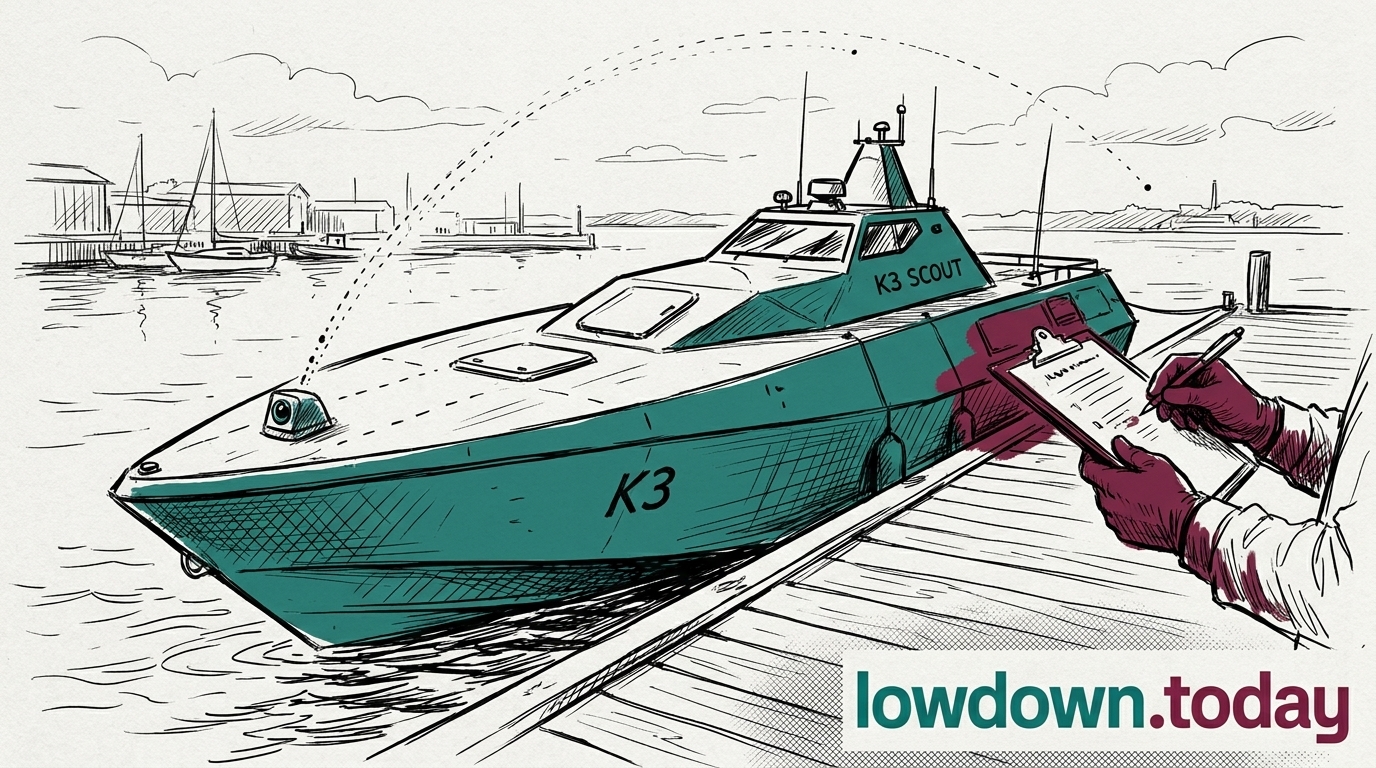
The Conservative opposition called on the Government on 9 August to 'urgently audit' equipment for hidden Chinese components, after the Telegraph's K3 SCOUT report. No named MP has been quoted on the record; the call came at party level, alongside the Ministry of Defence's own 10 August statement that no data had been compromised.
Netherlands Ministry of Defence
The Netherlands Ministry of Defence authorised Dutch Naval Design on 4 August to design 12-metre anti-submarine warfare uncrewed vessels for the Dutch-Belgian frigate programme, and to buy an adapted Compact FLASH dipping sonar from Thales Underwater Systems France. The order commits money and a named supplier while Britain's own certification body remains at the market-engagement stage.
Kraken Technology Group
Kraken Technology Group is a UK maritime-defence company based in Portsmouth that builds the K3 SCOUT, and crossed a $1bn valuation in July on a single-sourced $175m raise. The camera components reached the fleet under a third party's written security assurance, which the Platform Authority, which does not yet exist, was never positioned to check.
Navy Commercial
Navy Commercial
Navy Commercial at Whale Island published two notices on 5 August: 074032-2026, asking industry how to build a Platform Authority to certify uncrewed vessels, and 074351-2026, a GBP10m multi-role USV testbed for the Defence Chief Technology Officer. Responses on the Platform Authority close 19 August, ten days after the cameras were found transmitting to China.
Ministry of Defence
Ministry of Defence
The Ministry of Defence said on 10 August that a routine cyber vulnerability assessment found the camera fault, and a thorough investigation found no evidence that MoD data or systems had been accessed, compromised or transmitted externally. It stripped the cameras of internet connectivity but did not say whether it acted against the supplier.
Thales
Thales
Thales converted its 6 July engaging accord with Exail into a definitive combination agreement on 30-31 July, but the tender offer for Exail's remaining shares now closes by early 2028, later than July's timetable implied. Thales integrates its new undersea prime while still bidding against Kongsberg and DRASS's 2027 target for the AUKUS Pillar II contest.
