Skip to content
You can now search across every topic, entity and event.What's new
Autonomous Systems: Land & Sea
12AUG

£5bn UK drone plan follows Healey exit

3 min read
14:17UTC

Britain committed more than £5bn over four years to military drones on 29 June, weeks after the defence secretary quit calling the same budget too small.

TechnologyDeveloping
Key takeaway

Britain put £5bn and firm dates behind military drones weeks after its defence secretary quit over the budget.

Britain committed more than £5 billion over four years to drones and autonomous systems on 29 June, when Defence Secretary Dan Jarvis and Prime Minister Keir Starmer published the Defence Investment Plan 1. The plan is the government's four-year budget for military equipment, and this line folds programmes readers have tracked separately into one pot: Project NYX, the Apache loyal-wingman effort funded at £10 million in May , now scoped for up to 24 armed autonomous drones by 2030; Project Corvus, the Watchkeeper surveillance-drone replacement ; RAPSTONE, worth £50 million over twelve months for Army first-person-view (FPV) and interceptor drones; and Storm Shroud, an uncrewed electronic-warfare drone for the Royal Air Force.

A new Uncrewed Systems Centre at Swindon and an Uncrewed Systems Taskforce sit beneath the funding line. The plan turns the £4 billion autonomous-systems doubling announced in the spring into named programmes with dates attached. The Royal Navy's Type 91 to 94 uncrewed surface vessels also draw funding, though that maritime strand runs through Britain's wider autonomous-fleet plans rather than this drone line.

John Healey quit as defence secretary on 11 June in a reported dispute with Starmer that the autonomous-systems budget was too small. Jarvis, his successor, published the plan eighteen days later at a figure larger than Healey is said to have fought for. The account of that dispute rests on trade-press and secondary reporting rather than a primary statement, so treat the vindication as suggested, not confirmed.

Whether £5 billion buys production or merely commissions a test centre and a taskforce is the open question, because Swindon is a proving ground, not a factory.

Deep Analysis

In plain English

Britain's government runs the armed forces through several departments. On 29 June it set out how much it will spend on unmanned aircraft, called drones, and other systems that operate with little or no human control, called autonomous systems, over the next four years: more than £5 billion. The money brings together several separate projects that used to have their own budgets. Project NYX will build drones that fly alongside Apache attack helicopters without a pilot. Project Corvus replaces an older surveillance drone called Watchkeeper. RAPSTONE funds small first-person-view (FPV) drones, the kind soldiers fly using video goggles, plus systems to shoot enemy drones down. Storm Shroud is a drone designed to jam enemy radar and radio signals for the RAF. All of this now sits under a new Uncrewed Systems Centre, a test site in Swindon, and an Uncrewed Systems Taskforce, a team coordinating the work across the army, navy and air force. The announcement came three weeks after the previous defence secretary, John Healey, resigned reportedly because he thought the government was not spending enough on exactly this.

Deep Analysis
Root Causes

Each of the four folded programmes previously answered to a different single-service budget: Army for RAPSTONE, RAF for Storm Shroud, a joint but separately tracked NYX and Corvus, which let the Treasury cut any one without touching the others' headline commitments.

Watchkeeper's own seven-year delay and near-cancellation in the 2010 defence review happened precisely because it had no cross-service budget protection. The new Uncrewed Systems Centre line targets that specific vulnerability, not the funding total itself.

What could happen next?
  • Precedent

    Ring-fencing programme funding under a single cross-service line, rather than individual service budgets, may become the template the MoD applies to future procurement to avoid repeating Watchkeeper's stovepipe failure.

  • Risk

    If the Uncrewed Systems Centre remains a test and assessment site without a co-located production line, the plan risks repeating the R&D-heavy pattern that left Britain dependent on contractors such as Tekever for manufacturing scale.

First Reported In

Update #14 · UK's £5bn drone bet follows Healey's exit

GOV.UK· 5 Jul 2026
Read original
Different Perspectives
Conservative opposition
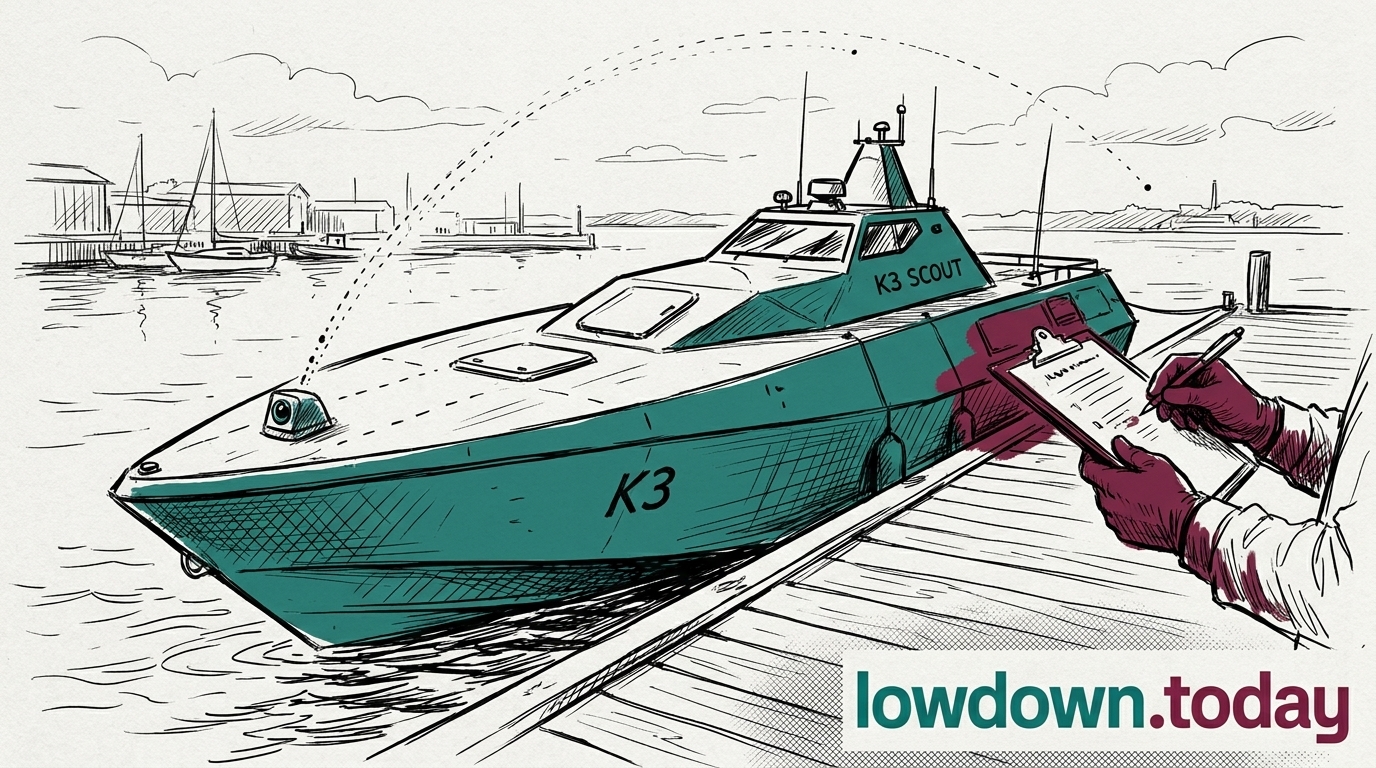
The Conservative opposition called on the Government on 9 August to 'urgently audit' equipment for hidden Chinese components, after the Telegraph's K3 SCOUT report. No named MP has been quoted on the record; the call came at party level, alongside the Ministry of Defence's own 10 August statement that no data had been compromised.
Netherlands Ministry of Defence
The Netherlands Ministry of Defence authorised Dutch Naval Design on 4 August to design 12-metre anti-submarine warfare uncrewed vessels for the Dutch-Belgian frigate programme, and to buy an adapted Compact FLASH dipping sonar from Thales Underwater Systems France. The order commits money and a named supplier while Britain's own certification body remains at the market-engagement stage.
Kraken Technology Group
Kraken Technology Group is a UK maritime-defence company based in Portsmouth that builds the K3 SCOUT, and crossed a $1bn valuation in July on a single-sourced $175m raise. The camera components reached the fleet under a third party's written security assurance, which the Platform Authority, which does not yet exist, was never positioned to check.
Navy Commercial
Navy Commercial
Navy Commercial at Whale Island published two notices on 5 August: 074032-2026, asking industry how to build a Platform Authority to certify uncrewed vessels, and 074351-2026, a GBP10m multi-role USV testbed for the Defence Chief Technology Officer. Responses on the Platform Authority close 19 August, ten days after the cameras were found transmitting to China.
Ministry of Defence
Ministry of Defence
The Ministry of Defence said on 10 August that a routine cyber vulnerability assessment found the camera fault, and a thorough investigation found no evidence that MoD data or systems had been accessed, compromised or transmitted externally. It stripped the cameras of internet connectivity but did not say whether it acted against the supplier.
Thales
Thales
Thales converted its 6 July engaging accord with Exail into a definitive combination agreement on 30-31 July, but the tender offer for Exail's remaining shares now closes by early 2028, later than July's timetable implied. Thales integrates its new undersea prime while still bidding against Kongsberg and DRASS's 2027 target for the AUKUS Pillar II contest.
