Skip to content
You can now search across every topic, entity and event.What's new
Autonomous Systems: Land & Sea
12AUG

Britain unveils its first sovereign combat drone

2 min read
14:17UTC

BAE Systems unveiled Brontanax at Farnborough on 22 July, Britain's first home-built pilotless fighter and the first hardware to sit against the named £300m StormFighter line.

TechnologyDeveloping
Key takeaway

Britain has a sovereign combat drone tied to £300m, but only a prototype and a 2027 flight date.

BAE Systems unveiled Brontanax, Britain's first home-built pilotless fighter designed to fly into combat alongside crewed jets, at the Farnborough International Airshow on Wednesday 22 July. It is the country's first sovereign uncrewed Collaborative Combat Aircraft (CCA), a jet that flies and fights under the direction of a piloted aircraft. Built at Warton in Lancashire by more than 500 staff and 75 partner firms, the aircraft is sized like a Hawk trainer and directed from the cockpit of a Typhoon, whose pilot commands it for electronic warfare and precision strike. A prototype is targeted to fly alongside a Typhoon by the end of 2027, with entry into service before the decade closes. 1

The unveiling attaches an airframe to money already on the books. Britain's £5 billion Defence Investment Plan names a £300 million StormFighter programme to develop exactly this class of sovereign autonomous combat aircraft, and Brontanax is the first hardware to sit against that line. It slots above the first low-cost air-defence effector awards Britain made this month under LCADE , giving the air force a domestic apex to an autonomy stack it had been assembling contract by contract.

BAE is building the capability two ways at once. Under its FalconWorks advanced-projects arm it builds the CCA in-house, while wholly owned subsidiaries Malloy Aeronautics (heavy-lift logistics drones) and Callen-Lenz (smaller intelligence, surveillance and reconnaissance platforms) supply the tiers around it. One prime now owns logistics, ISR and combat air under a single roof, a vertical span no other British firm holds. 2

Washington reached production first. The US Air Force awarded CCA production to Anduril and General Atomics in June while Britain is unveiling a demonstrator two years from first flight. America has combat aircraft on a line; the UK has a prototype, a named programme, and a 2027 clock.

Deep Analysis

In plain English

A Collaborative Combat Aircraft is an uncrewed drone designed to fly alongside a crewed fighter jet, taking orders from the pilot rather than a ground operator. Brontanax is Britain's first such aircraft built entirely at home, directed from the cockpit of a Typhoon jet rather than by a human pilot inside the drone itself. BAE Systems built it through FalconWorks, its in-house advanced-projects team, with help from more than 500 staff and 75 outside companies. It sits against a £300 million government programme called StormFighter, part of a wider £5 billion, four-year plan to fund drones and autonomous military equipment that ministers announced in June.

Deep Analysis
Root Causes

Brontanax's unveiling follows directly from the US Air Force's 17 June production award to Anduril and General Atomics , which left Britain without a domestic equivalent while allies moved to funded hardware.

The Ministry of Defence's response folded Project NYX, Project Corvus, RAPSTONE and Storm Shroud into a single £5 billion, four-year Defence Investment Plan line on 29 June , and StormFighter is the first named programme to produce hardware under that reorganised structure.

BAE's choice to build in-house through FalconWorks, rather than through a joint venture like Leonardo and Baykar's LBA Systems, reflects a preference for retaining full control of the Typhoon-to-drone data link architecture, since a shared jet-and-drone control loop is harder to export-control if built with a foreign partner.

What could happen next?
  • Meaning

    Brontanax converts Britain's £5bn Defence Investment Plan from a budget announcement into its first named hardware programme.

    Immediate · Assessed
  • Consequence

    BAE now needs a funded production order to keep pace with the US Air Force's already-contracted Anduril and General Atomics CCA lines.

    Short term · Reported
  • Risk

    Without an export partner or treaty-backed budget beyond StormFighter's £300 million, the programme could stall at demonstrator stage as GCAP's Tempest predecessor nearly did before the 2023 treaty.

    Medium term · Reported
First Reported In

Update #16 · BAE unveils Britain's first combat drone

BAE Systems via GlobeNewswire· 24 Jul 2026
Read original
Different Perspectives
Conservative opposition
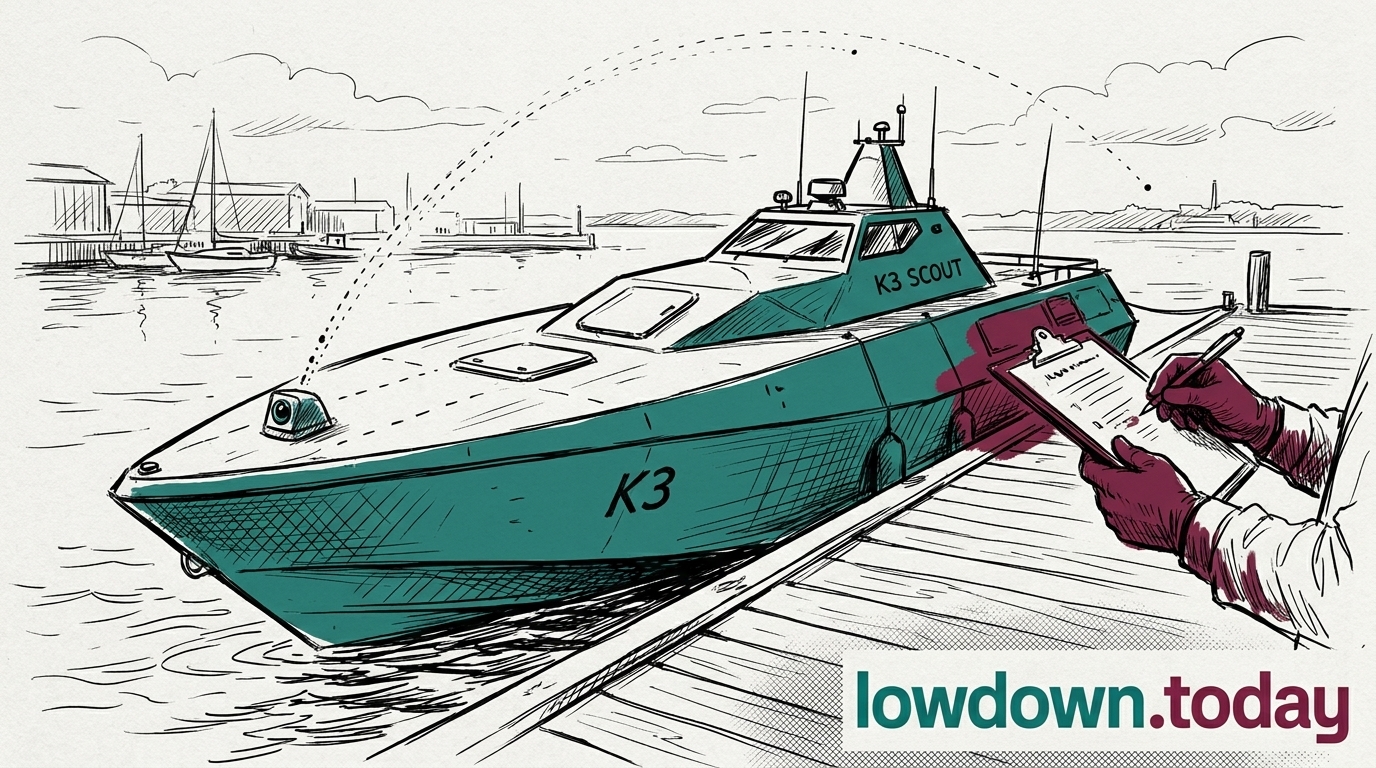
The Conservative opposition called on the Government on 9 August to 'urgently audit' equipment for hidden Chinese components, after the Telegraph's K3 SCOUT report. No named MP has been quoted on the record; the call came at party level, alongside the Ministry of Defence's own 10 August statement that no data had been compromised.
Netherlands Ministry of Defence
The Netherlands Ministry of Defence authorised Dutch Naval Design on 4 August to design 12-metre anti-submarine warfare uncrewed vessels for the Dutch-Belgian frigate programme, and to buy an adapted Compact FLASH dipping sonar from Thales Underwater Systems France. The order commits money and a named supplier while Britain's own certification body remains at the market-engagement stage.
Kraken Technology Group
Kraken Technology Group is a UK maritime-defence company based in Portsmouth that builds the K3 SCOUT, and crossed a $1bn valuation in July on a single-sourced $175m raise. The camera components reached the fleet under a third party's written security assurance, which the Platform Authority, which does not yet exist, was never positioned to check.
Navy Commercial
Navy Commercial
Navy Commercial at Whale Island published two notices on 5 August: 074032-2026, asking industry how to build a Platform Authority to certify uncrewed vessels, and 074351-2026, a GBP10m multi-role USV testbed for the Defence Chief Technology Officer. Responses on the Platform Authority close 19 August, ten days after the cameras were found transmitting to China.
Ministry of Defence
Ministry of Defence
The Ministry of Defence said on 10 August that a routine cyber vulnerability assessment found the camera fault, and a thorough investigation found no evidence that MoD data or systems had been accessed, compromised or transmitted externally. It stripped the cameras of internet connectivity but did not say whether it acted against the supplier.
Thales
Thales
Thales converted its 6 July engaging accord with Exail into a definitive combination agreement on 30-31 July, but the tender offer for Exail's remaining shares now closes by early 2028, later than July's timetable implied. Thales integrates its new undersea prime while still bidding against Kongsberg and DRASS's 2027 target for the AUKUS Pillar II contest.
