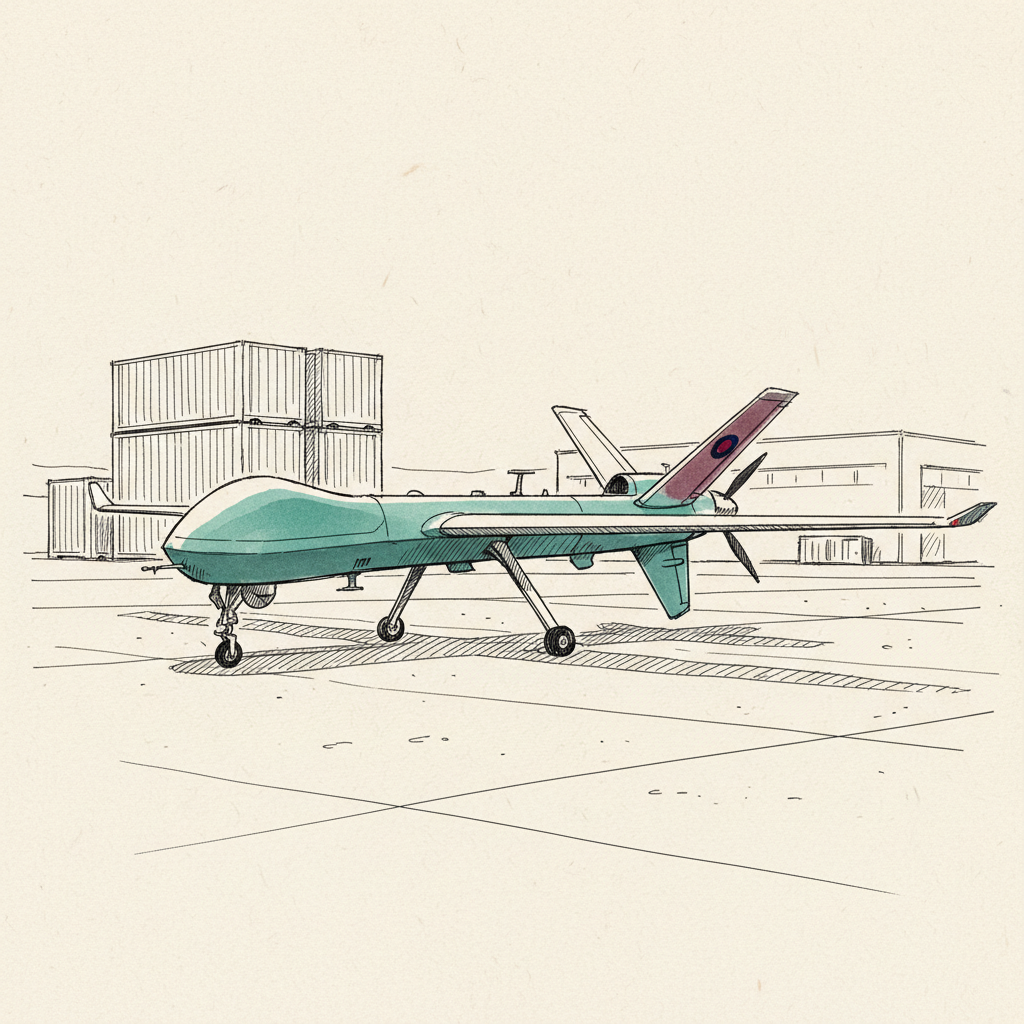
Watchkeeper
British Army tactical surveillance drone in service since 2014, repeatedly delayed and operationally underperforming, now being replaced by Project Corvus.
On 16 September, the Ministry of Defence awarded Tekever up to £400m for AR5 aircraft to replace Watchkeeper, ending Project Corvus after its May competition produced no compliant bids.
Last refreshed: 1 October 2026 · Appears in 1 active topic
Timeline for Watchkeeper
UK awards Tekever up to £400m for AR5
Drones: Industry & DefenceMentioned in: £5bn UK drone plan follows Healey exit
Drones: Industry & DefenceMentioned in: UK launches Apache drone wingman trial
Drones: Industry & Defencetargeted for replacement after a decade of underperformance and delays
Drones: Industry & Defence: UK tenders £130M Watchkeeper swapBackground
Watchkeeper is a British Army tactical surveillance drone, built for battlefield observation and targeting support. It entered service in 2014 and is now being replaced through Project Corvus.
Thales UK developed the platform with Elbit Systems through UAV Engines Ltd, using the Israeli Hermes 450 airframe as its basis. Its sensors support day and night surveillance, including electro-optical, infrared and synthetic-aperture radar collection.
The platform matters as a durable reference point for British Army tactical drone procurement. Its replacement by AR5 links the Army's surveillance requirement to a newer aircraft programme, while keeping Watchkeeper relevant to the history of the capability it supplied.
Watchkeeper gives way to AR5
On 16 September, the Ministry of Defence selected Tekever's AR5 to replace Watchkeeper under Project Corvus, with a contract worth up to £400m and six aircraft first. The decision gives the British Army a successor after the May competition had produced no compliant bids.
For Watchkeeper, the award closes the replacement contest rather than extending its operational role. The tender had initially been valued at £130m to £156m before VAT, but the ministry moved to direct negotiations with Tekever after the competition failed.
What happened to the Watchkeeper drone programme?
What drone is replacing Watchkeeper in the British Army?
How long has Watchkeeper been in British Army service?


