Skip to content
Welcome, thoughtbot's Giant Robots listeners!Start here
Autonomous Systems: Land & Sea
12AUG

UK awards Tekever up to £400m for AR5

3 min read
14:17UTC

Britain's Watchkeeper successor went to Tekever without a contest after the tender drew no compliant bids, at more than double the ministry's estimate.

TechnologyAssessed
Key takeaway

Britain's Watchkeeper replacement went to Tekever without competition, at more than double the tender estimate.

The UK Ministry of Defence awarded Tekever a contract worth up to £400 million on 16 September for the AR5 surveillance drone, which replaces the British Army's Watchkeeper⁠1. Tekever is a Portuguese drone maker with a factory in Swindon. Six aircraft come first, rising to as many as 24 by 2029. When the ministry tendered the work as Project Corvus in May, it estimated £130m to £156m excluding VAT.

FlightGlobal reported in July that the competition drew no compliant bids, and that the ministry moved to a sole-source award to Tekever worth £336m excluding value added tax (VAT)⁠2. On those figures the sole-source price is more than double the top of the ministry's tender estimate. Lowdown's reading, which the ministry has not confirmed, is that £336m plus 20 per cent VAT gives roughly the ceiling now published. Neither document shows whether the award's scope and options match those tendered in May.

A tender with no compliant bid leaves the ministry negotiating with a single firm. Corvus is one of the programmes folded into Britain's £5bn drone and autonomy plan, which assumes a supplier base deep enough to compete on price, and it closed without a contest.

A separate £16m buy under Project Rapstone brings in 1,025 small drones from three suppliers. The largest share, 670 X10 drones, comes from Skydio, an American maker, through Marlborough Communications; Evolve Dynamics and Brigantes Consulting supply the rest. China sanctioned Skydio on 11 October 2024, cutting it off from Chinese battery cells⁠3, so most of RAPSTONE's drones come from a maker whose supply chain Beijing has already squeezed.

Deep Analysis

In plain English

The British Army has flown a surveillance drone called Watchkeeper since 2014. It is being replaced by the AR5, made by Tekever, a Portuguese company with factories in Britain. The Ministry of Defence first tried to run a contest between firms. No company put in a bid that met the rules, so the ministry negotiated with Tekever directly. The final contract can be worth up to £400 million, much more than the ministry first expected to pay. In a separate deal, the Army is buying about a thousand small drones for its soldiers to carry.

Deep Analysis
Root Causes

Britain has few makers of Army surveillance drones. Tekever had already built a position: £270 million of earlier separate ministry contracts and a 254,000 sq ft factory in Swindon . A rival entering late had to match an incumbent with a plant already in Britain.

A tender priced at £130m to £156m also left little room for firms to bid compliant offers for a long-endurance drone fleet over five years. When every bid fails, the rules let the buyer negotiate with one supplier, and the ministry did.

What could happen next?
  • Risk

    A sole-source price well above the estimate invites scrutiny of other programmes in the £5bn drone plan.

  • Consequence

    Tekever's Swindon plant becomes the British Army's main source of long-endurance surveillance drones for the rest of the decade.

First Reported In

Update #18 · Four EU states skip tenders on drone defence

UK Ministry of Defence· 1 Oct 2026
Read original →
Causes and effects
Different Perspectives
Conservative opposition
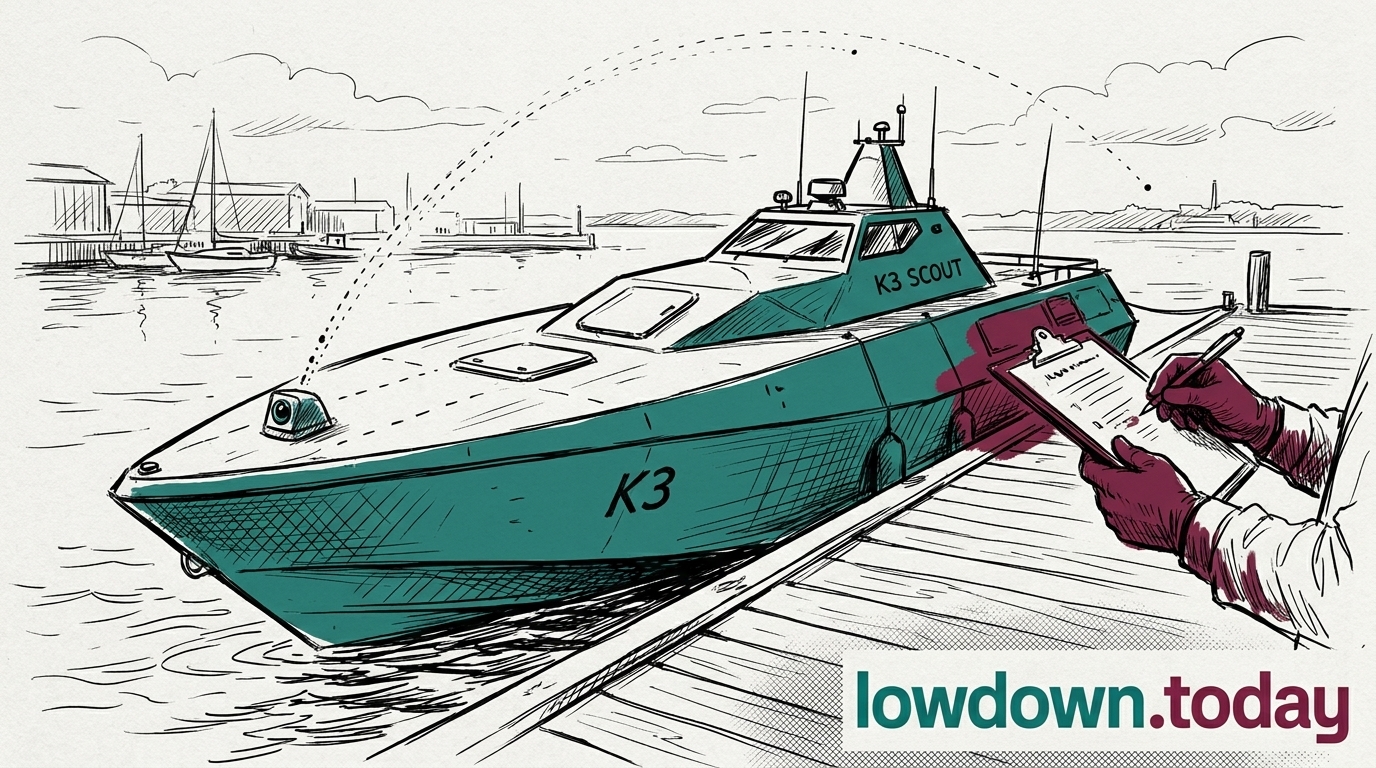
The Conservative opposition called on the Government on 9 August to 'urgently audit' equipment for hidden Chinese components, after the Telegraph's K3 SCOUT report. No named MP has been quoted on the record; the call came at party level, alongside the Ministry of Defence's own 10 August statement that no data had been compromised.
Kraken Technology Group
Kraken Technology Group is a UK maritime-defence company based in Portsmouth that builds the K3 SCOUT, and crossed a $1bn valuation in July on a single-sourced $175m raise. The camera components reached the fleet under a third party's written security assurance, which the Platform Authority, which does not yet exist, was never positioned to check.
Navy Commercial
Navy Commercial
Navy Commercial at Whale Island published two notices on 5 August: 074032-2026, asking industry how to build a Platform Authority to certify uncrewed vessels, and 074351-2026, a GBP10m multi-role USV testbed for the Defence Chief Technology Officer. Responses on the Platform Authority close 19 August, ten days after the cameras were found transmitting to China.
HUMAIN
HUMAIN
HUMAIN and Applied Intuition stated a 2030 target for thousands of autonomous trucks on Saudi logistics corridors. The announcement disclosed no order, fleet baseline or contract value.
Saildrone
Saildrone
Saildrone and Lockheed Martin demonstrated two JAGM launches from a Surveyor-class vessel at RIMPAC. The accepted record identifies no requirement, customer or production configuration behind the demonstration.
Taiwan Legislative Yuan
Taiwan's Legislative Yuan passed the Act at third reading with a small suicide uncrewed boat on the named development list. The NT$240 billion ceiling covers all unmanned domains, and the Act was not promulgated by 4 September.
