Skip to content
You can now search across every topic, entity and event.What's new
Autonomous Systems: Land & Sea
12AUG

UK launches Apache drone wingman trial

3 min read
14:17UTC

The UK MoD selected Anduril UK, BAE Systems, Tekever, and Thales UK to compete for GBP 10 million in Project NYX assessment funding, developing autonomous drone wingmen for Apache helicopters with a down-select to two companies in autumn 2026.

TechnologyDeveloping
Key takeaway

Britain has no domestic favourite for Apache drone wingmen and is testing four archetypes.

The UK Ministry of Defence launched Project NYX, selecting four companies for an assessment phase funded at GBP 10 million to develop autonomous drone loyal wingmen for Apache attack helicopters. The selected companies are Anduril Industries (UK) Ltd, BAE Systems Operations Ltd, Tekever Ltd, and Thales UK Ltd. Up to two will advance to the prototype phase in autumn 2026, with an operational variant targeted for 2030.

The field spans a US defence-AI firm operating through a UK subsidiary, Britain's largest prime, a Portuguese-origin ISR specialist with over 50,000 operational hours in Ukraine , and a Franco-British electronics group. Thales UK manufactured the original Watchkeeper, which is now being replaced under Project Corvus. The autumn 2026 down-select will reveal whether the MoD favours US defence-AI integration, UK prime scale, combat-proven ISR depth, or Franco-British electronics for the loyal-wingman architecture. That preference will set a precedent beyond Apache: the same architecture question applies to every allied air force exploring crewed-uncrewed teaming, and the broader autonomous-systems programme makes it a reference buyer for mid-sized NATO members.

Deep Analysis

In plain English

The British Army is working on drone wingmen: autonomous aircraft that fly alongside Apache attack helicopters. The idea is that drones can go first into dangerous areas to gather intelligence or absorb enemy fire, protecting the helicopter and its crew. Four companies are competing for the contract: a US tech firm (Anduril), Britain's largest defence company (BAE Systems), a Portuguese specialist (Tekever), and a Franco-British electronics group (Thales UK). The winner gets chosen in autumn 2026, and the system should be operational by 2030.

Deep Analysis
Root Causes

Project NYX reflects three forces: the British Army's recognition that Apache helicopter survivability in contested airspace requires drone wingmen to extend sensor reach and absorb threats.

The absence of a NATO-standard loyal-wingman architecture, making domestic development unavoidable; and the MoD's GBP 4 billion autonomous-systems commitment (April 2026) creating political pressure to show identifiable projects against that headline spending.

What could happen next?
  • Consequence

    The autumn 2026 down-select will reveal the MoD's architectural preference: US defence-AI (Anduril), UK prime integration (BAE Systems), combat-proven ISR specialist (Tekever), or established electronics group (Thales UK). Each choice signals a different theory of how AI autonomy software should be governed in British weapons programmes. The decision will be studied by other NATO members facing the same loyal-wingman architecture question.

First Reported In

Update #10 · NATO shoots down drone over Estonia

UK Ministry of Defence· 29 May 2026
Read original
Different Perspectives
Conservative opposition
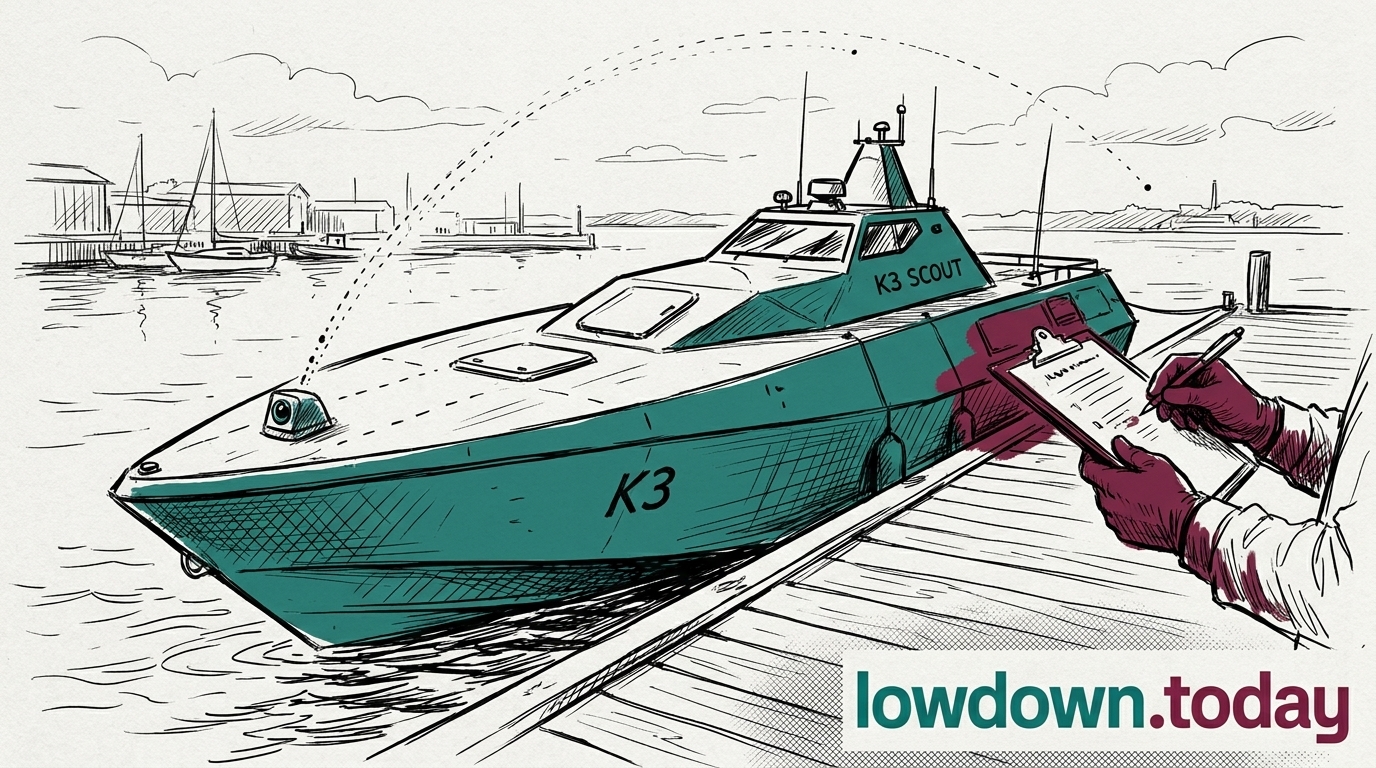
The Conservative opposition called on the Government on 9 August to 'urgently audit' equipment for hidden Chinese components, after the Telegraph's K3 SCOUT report. No named MP has been quoted on the record; the call came at party level, alongside the Ministry of Defence's own 10 August statement that no data had been compromised.
Netherlands Ministry of Defence
The Netherlands Ministry of Defence authorised Dutch Naval Design on 4 August to design 12-metre anti-submarine warfare uncrewed vessels for the Dutch-Belgian frigate programme, and to buy an adapted Compact FLASH dipping sonar from Thales Underwater Systems France. The order commits money and a named supplier while Britain's own certification body remains at the market-engagement stage.
Kraken Technology Group
Kraken Technology Group is a UK maritime-defence company based in Portsmouth that builds the K3 SCOUT, and crossed a $1bn valuation in July on a single-sourced $175m raise. The camera components reached the fleet under a third party's written security assurance, which the Platform Authority, which does not yet exist, was never positioned to check.
Navy Commercial
Navy Commercial
Navy Commercial at Whale Island published two notices on 5 August: 074032-2026, asking industry how to build a Platform Authority to certify uncrewed vessels, and 074351-2026, a GBP10m multi-role USV testbed for the Defence Chief Technology Officer. Responses on the Platform Authority close 19 August, ten days after the cameras were found transmitting to China.
Ministry of Defence
Ministry of Defence
The Ministry of Defence said on 10 August that a routine cyber vulnerability assessment found the camera fault, and a thorough investigation found no evidence that MoD data or systems had been accessed, compromised or transmitted externally. It stripped the cameras of internet connectivity but did not say whether it acted against the supplier.
Thales
Thales
Thales converted its 6 July engaging accord with Exail into a definitive combination agreement on 30-31 July, but the tender offer for Exail's remaining shares now closes by early 2028, later than July's timetable implied. Thales integrates its new undersea prime while still bidding against Kongsberg and DRASS's 2027 target for the AUKUS Pillar II contest.
