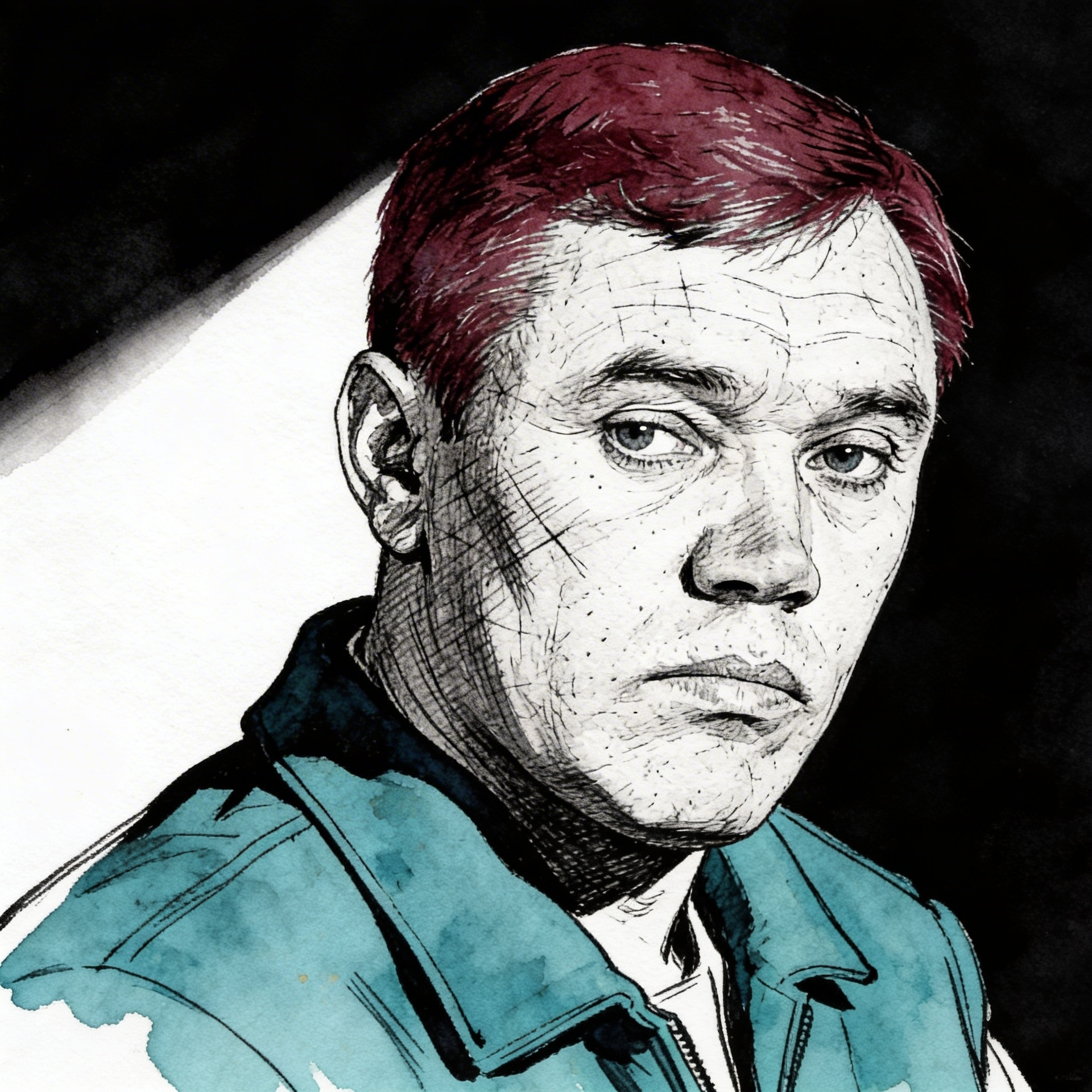
Valery Gerasimov
Chief of the Russian General Staff; ordered halt to combat for the 32-hour Orthodox Easter ceasefire.
Valery Gerasimov claimed fresh captures in Donetsk Oblast on 18 July, and the Institute for the Study of War found no evidence for any of them, the second time in 2026 it has publicly disputed a territorial claim by Russia's top general.
Last refreshed: 12 October 2026 · Appears in 1 active topic
If Gerasimov's Luhansk claims are five times reality, what does Russia actually control?
Timeline for Valery Gerasimov
Mentioned in: DeepState triples count of Russian gains
Russia-Ukraine War 2026Claimed Donetsk captures ISW says it cannot corroborate
Russia-Ukraine War 2026: ISW calls Ukraine's front line frozenPresented fresh Donetsk captures that ISW disputes
Russia-Ukraine War 2026: ISW finds no trace of Gerasimov's gainsFiled claims of 1,700 km² of 2026 territorial gains, contradicted by ISW's 340 km² figure
Russia-Ukraine War 2026: Russian deaths up while engagements fallClaimed Russia fully completed Luhansk Oblast occupation on 21 April, the fourth such claim
Russia-Ukraine War 2026: Gerasimov files fourth false Luhansk claimBackground
Valery Gerasimov is Chief of the General Staff of the Russian Armed Forces, a POST he has held since 2012, and since January 2023 he has also been overall commander of Russian forces in Ukraine, replacing Sergei Surovikin. He is the officer through whom Kremlin orders reach the Army: the Easter Ceasefire decree of 9 April 2026 was addressed to him and Defence Minister Andrei Belousov.
He is also the public voice of Russian operational aims. In March 2026 he said Vladimir Putin had ordered the buffer-zone push into Sumy and Kharkiv oblasts to protect Kursk and Belgorod from cross-border raids.
His territorial statements need checking against Independent mapping. Through 2026 his claims repeatedly ran ahead of what the Institute for the Study of War could verify, most sharply in April, when he claimed 1,700 square kilometres of gains against 340 verified. Readers should treat a Gerasimov capture claim as Moscow's position, not as a settled fact on the ground.
Gerasimov's maps outrun the ground
On 21 April Gerasimov said Russia had "fully completed" the occupation of Luhansk Oblast and had seized 1,700 square kilometres in 2026. ISW verified 340 square kilometres, and a net Russian loss since 1 March. It was his fourth such Luhansk claim.
The pattern held into the summer. On 18 July he presented captures in Donetsk Oblast, including Dobropillia; ISW observed no sign that Russian troops had entered the five named settlements, and recorded no confirmed change of hands by either side between 13 and 19 July. ISW did not geolocate Russian troops elsewhere; it simply found nothing to support Gerasimov's 18 July claim. By 22 July it judged the roughly 1,000km front essentially static, with Kostiantynivka still Russia's unmet main objective.
Gerasimov received the order to stop
At 22:00 Moscow time on 9 April the Kremlin decreed a 32-hour Orthodox Easter ceasefire, from 16:00 on 11 April to the end of 12 April. Gerasimov and Defence Minister Andrei Belousov were ordered to halt combat on all fronts.
The order showed the chain of command running from Putin to the General Staff with no negotiated text behind it. Ukraine rejected the truce, and Dnipropetrovsk's governor reported 30 Russian strikes on 10 April before it began. When it lapsed, Ukraine's General Staff logged 10,721 Russian violations, against 1,971 Ukrainian ones claimed by Moscow. The episode tested whether Gerasimov's forces would hold fire on command; the competing tallies left that question open.
Reference
What is the Gerasimov doctrine?
Who is Valery Gerasimov and what is his role in the Ukraine war?
How often has ISW disputed Gerasimov's territorial claims in 2026?
Why did Russia announce an Easter ceasefire in Ukraine?
Did ISW confirm Gerasimov's July 2026 Donetsk claims?
Is Russia's front line in Ukraine actually moving in July 2026?

