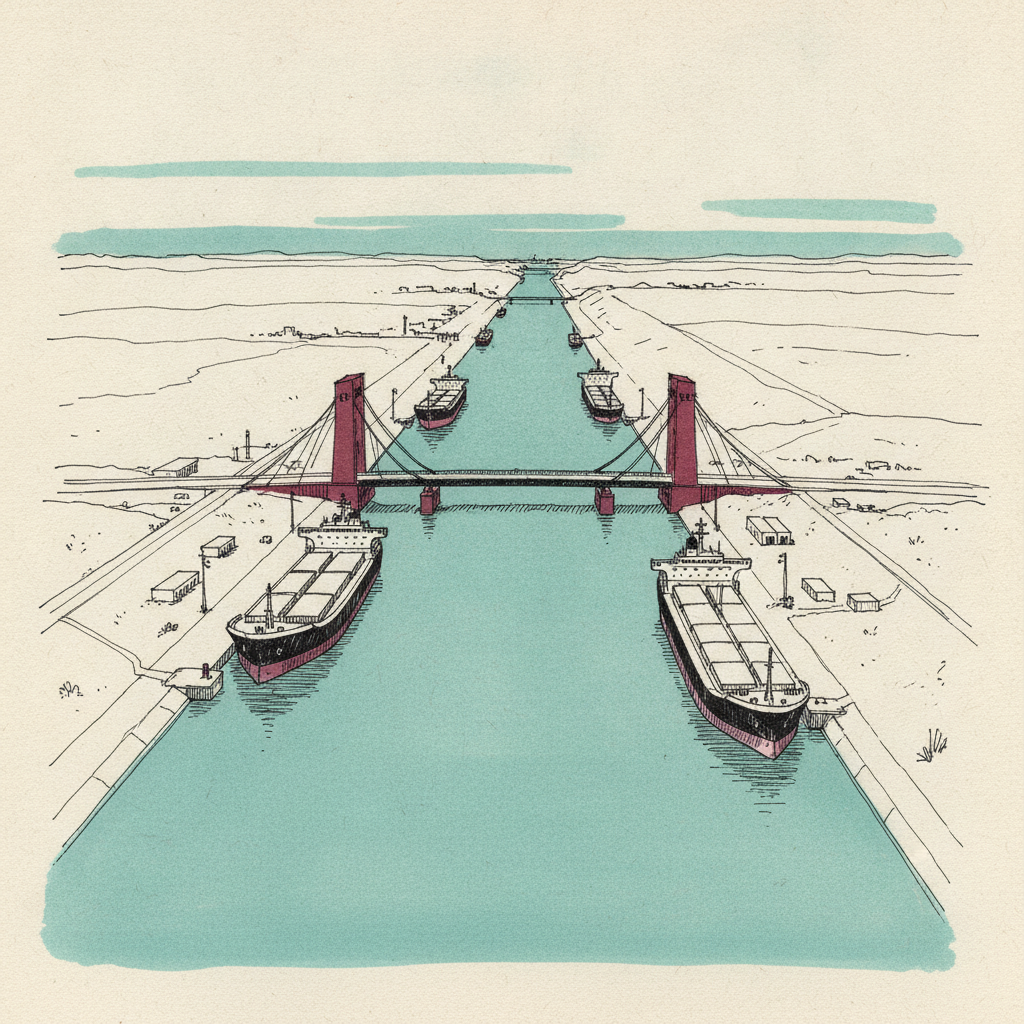
Suez Canal
Egypt's 193km Mediterranean-Red Sea link, absorbing rerouted Gulf crude as Bab el-Mandeb closures spread.
On 24 July, Saudi crude traffic through the Suez Canal rose 106% to 1.06 million barrels a day after the Bab el-Mandeb blockade diverted cargoes.
Last refreshed: 22 October 2026 · Appears in 2 active topics
Can the Suez Canal keep absorbing Saudi crude if the Bab el-Mandeb blockade drags on?
Timeline for Suez Canal
Mentioned in: China, Djibouti: war must not reach Horn
Iran Conflict 2026Mentioned in: UKMTO confirms one tanker hit near Bukha
Iran Conflict 2026Mentioned in: Yemeni troops push on Houthi-held Dhubab
Iran Conflict 2026Mentioned in: Qatar refuses to hedge against Hormuz
Iran Conflict 2026Houthis take all of Yemen's Red Sea coast
Iran Conflict 2026Background
The Suez Canal is Egypt's sea-level waterway between the Mediterranean and Red Seas. It runs from Port Said to Suez and lets ships travel between Europe and Asia without rounding the Cape of Good Hope. The Suez Canal Authority operates the route and collects transit fees for Egypt.
The canal carries container ships, tankers, bulk carriers and other commercial traffic. Its value comes from distance saved, so disruption can add time, fuel and insurance costs across global supply chains. Access from the south depends on passage through the Bab el-Mandeb and Red Sea, while Middle Eastern oil can reach the canal from Red Sea terminals and pipelines. Suez is therefore distinct from the strait of Hormuz but connected to it through energy routes. Trouble at either chokepoint can alter traffic and revenue at the other.
Suez Canal absorbs diverted Saudi crude
On 24 July, Saudi Arabia's halt to crude loadings through Bab el-Mandeb pushed Suez Canal traffic up 106% in one week, to 1.06 million barrels a day. The canal became the northern outlet for cargoes that could no longer use the southern Red Sea route.
The diversion changed the canal's role from a normal transit shortcut to the working route for rerouted Saudi exports. On 24 July, replacing one direct voyage with two Suezmax tankers added about $2m in freight costs and extended the journey from 24 to 54 days. Those costs make secure passage through the canal commercially important to the diverted trade.
Suez Canal absorbs diverted Saudi crude
How does the Suez Canal affect Mediterranean refiners?
What is the alternative to the Suez Canal for Saudi oil exports?
Why has Suez Canal traffic increased in July 2026?
What happened to Suez Canal crude traffic in July 2026?
Reference
Why is the Suez Canal important for oil markets?
Where is the Suez Canal?
How long is the Suez Canal?

Written with AI from Lowdown's published reporting. Not individually reviewed by an editor. Updated 22 October 2026. Editorial standards.