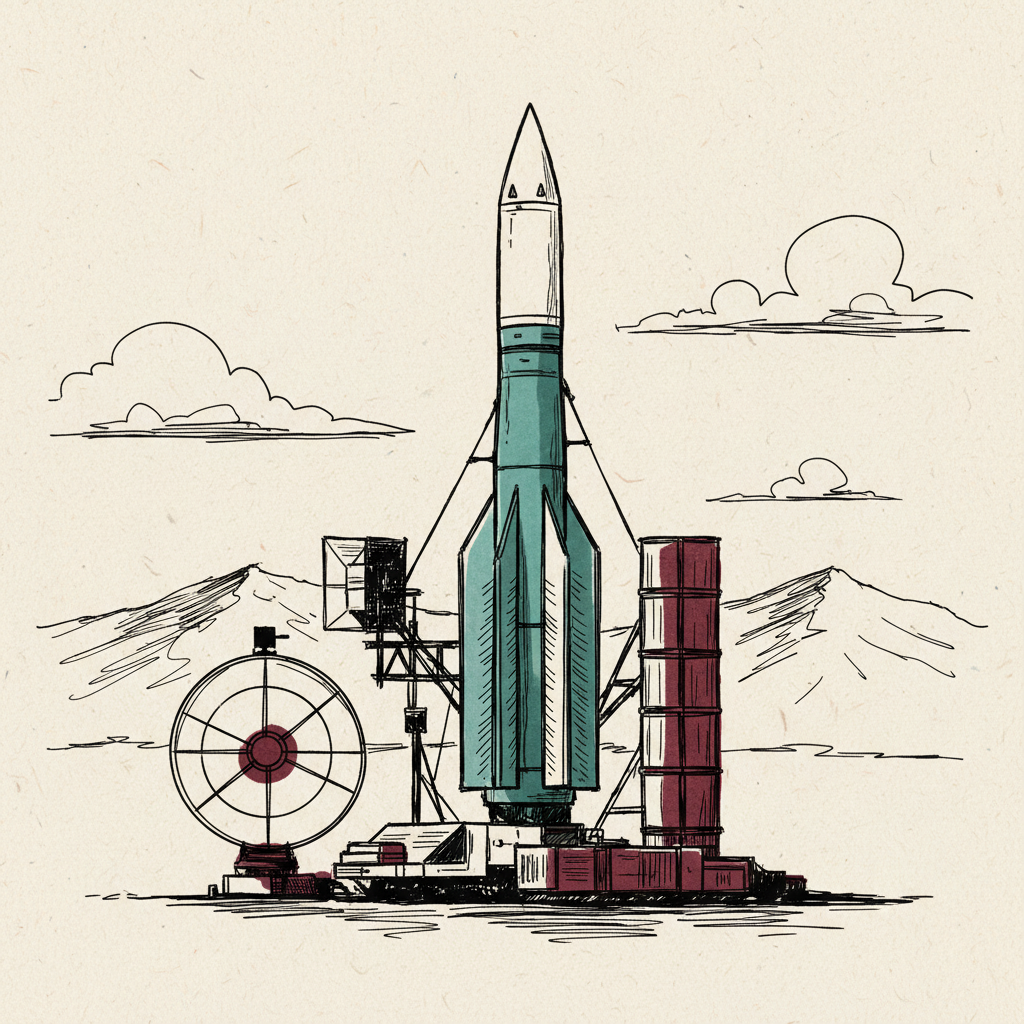
S-300
Russian long-range surface-to-air missile system; supplied to Iran in 2016.
Last refreshed: 26 April 2026 · Appears in 1 active topic
Did Iran's S-300 batteries fail in 2026, and what does that tell us about the system's real capability?
Timeline for S-300
Mentioned in: Ukraine lands 347 drones on Moscow's Victory Day
Drones: Industry & DefenceMentioned in: Putin receives Araghchi at the Kremlin
Iran Conflict 2026Mentioned in: Ukraine hits 20 Russian air defences
Russia-Ukraine War 2026Background
The S-300 is a family of long-range surface-to-air missile systems developed by the Soviet Union and manufactured by Almaz-Antey in Russia. Iran's variant — the S-300PMU-2 — was delivered in 2016 after Russia lifted a self-imposed arms embargo following the 2015 JCPOA nuclear deal. Iran operates the system to protect strategic sites including nuclear facilities at Fordow and Natanz and the Isfahan enrichment complex.
In the context of the 2026 conflict, the S-300's limitations became tactically significant: the system is designed to intercept high-altitude aircraft and ballistic missiles but is less effective against low-observable Cruise Missiles, saturation attacks, and electronic warfare. Israeli and US strikes early in the conflict degraded several S-300 batteries using a combination of AARGM-ER anti-radiation missiles and decoy drones. Russia has not offered replacement systems or spare parts under wartime conditions, citing its own consumption in Ukraine.
The S-300 family also equips several NATO and EU member states, creating interoperability and intelligence-sharing sensitivities that shaped Western decisions about which munitions to share with Israel. Russian exports of the system to Syria, Belarus, and Algeria have made the S-300's operational record closely studied by NATO planners.
What is the S-300 missile system and who has it?
How did Israel defeat Iran's S-300 air defences in 2026?
Why did Russia supply S-300 to Iran?
Can the S-300 stop cruise missiles?