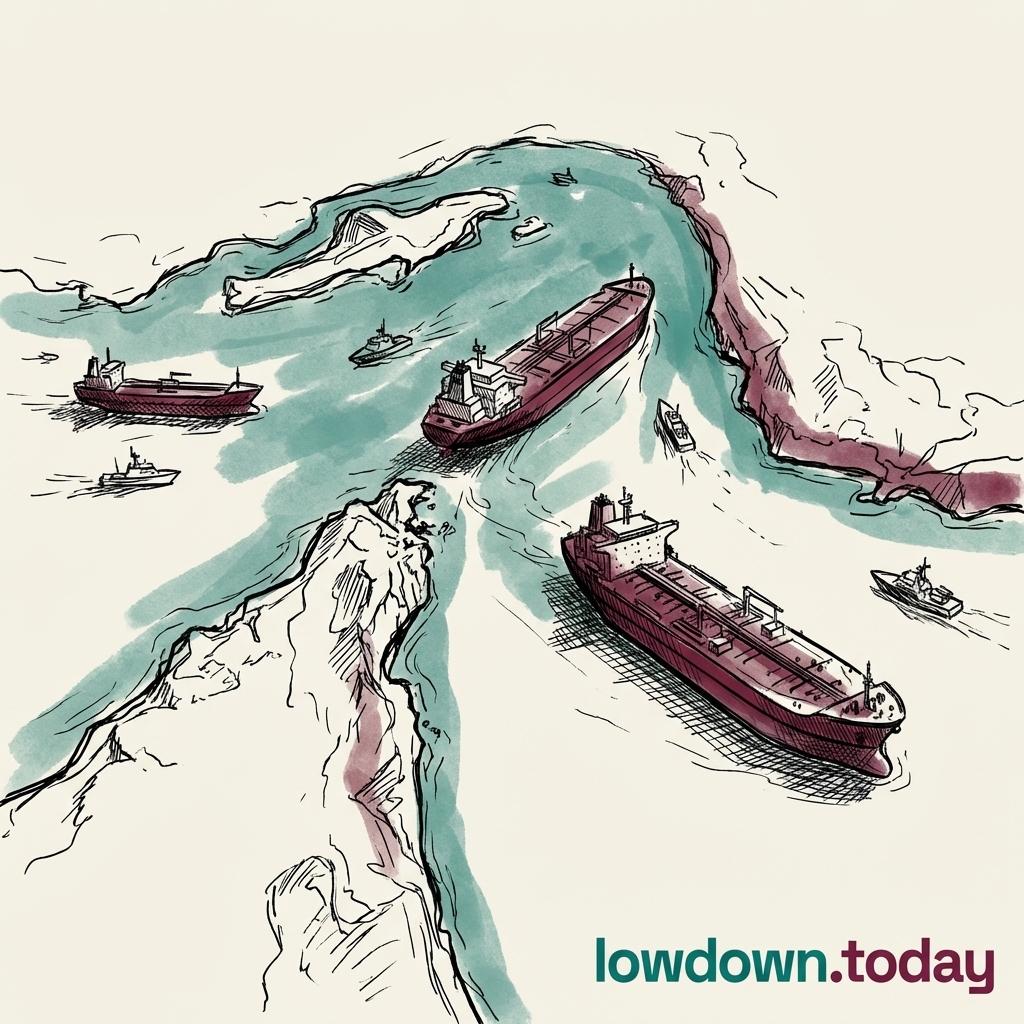
Who controls the Persian Gulf now — Iran, the US Navy, or neither?
Timeline for Persian Gulf
Mentioned in: Al Funtas is struck and files no report
Iran Conflict 2026Mentioned in: Iran claims to hold a US Kingfish robot
Autonomous Systems: Land & SeaMentioned in: Navy says it cleared two Hormuz lanes
Iran Conflict 2026Mentioned in: Seven filings put a price on Hormuz
Iran Conflict 2026Mentioned in: Iran bills the world for Hormuz oil
Iran Conflict 2026Background
The Persian Gulf is a shallow inland SEA roughly 990 kilometres long, separating Iran's southern coast from the Arabian Peninsula. Its eight littoral states, Iran, Iraq, Kuwait, Saudi Arabia, Bahrain, Qatar, the UAE and Oman, sit atop among the world's largest proven oil reserves. At its southern mouth, the strait of Hormuz carries a substantial share of the world's seaborne oil trade in normal conditions, the narrowest point in the global energy supply chain.
That geography makes The Gulf a permanent point of use for whichever power controls its waters. Iran's coastline runs the entire northern shore, giving Tehran a standing capacity to threaten transit that no naval presence can fully neutralise, only offset. The US Fifth Fleet has been headquartered in Bahrain since the 1990s for the same reason: no other chokepoint carries comparable weight for global energy security.
The Gulf's enclosed, shallow character is a fixed structural fact, not a wartime one: it has no alternative internal route, so any disruption near its southern mouth reverberates through shipping and insurance markets FAR beyond the region, war or no war. The event record includes and.
Reference
Is there a route around the Strait of Hormuz for oil tankers?
How much oil goes through the Persian Gulf?
Which countries share a coastline with the Persian Gulf?
What is the Persian Gulf?
Why is the Persian Gulf important for energy markets?
What links the Persian Gulf to the Strait of Hormuz?
Where is the Persian Gulf?
How is the Iran conflict affecting Brent crude oil prices?
Why did US strikes reach inland Iranian cities like Ahvaz and Yazd?
What happened to the container ship GFS Galaxy in the Strait of Hormuz?
Why is the Strait of Hormuz effectively closed in July 2026?
What is the Multinational Military Mission in the Strait of Hormuz?
Is the Persian Gulf safe for shipping in 2026?
Why is Iran threatening Gulf desalination plants?
Did the US and Iran agree a ceasefire in the Persian Gulf in 2026?
Why are European gas prices rising because of the Persian Gulf conflict?
What is Iran's Hormuz toll system and is it legal?
Are Iran's sea mines in the Persian Gulf cleared?
How many ships has the US redirected in the Hormuz blockade?
How did war-risk premiums affect Gulf shipping?
How does the Strait of Hormuz toll system work?


