K3 SCOUT
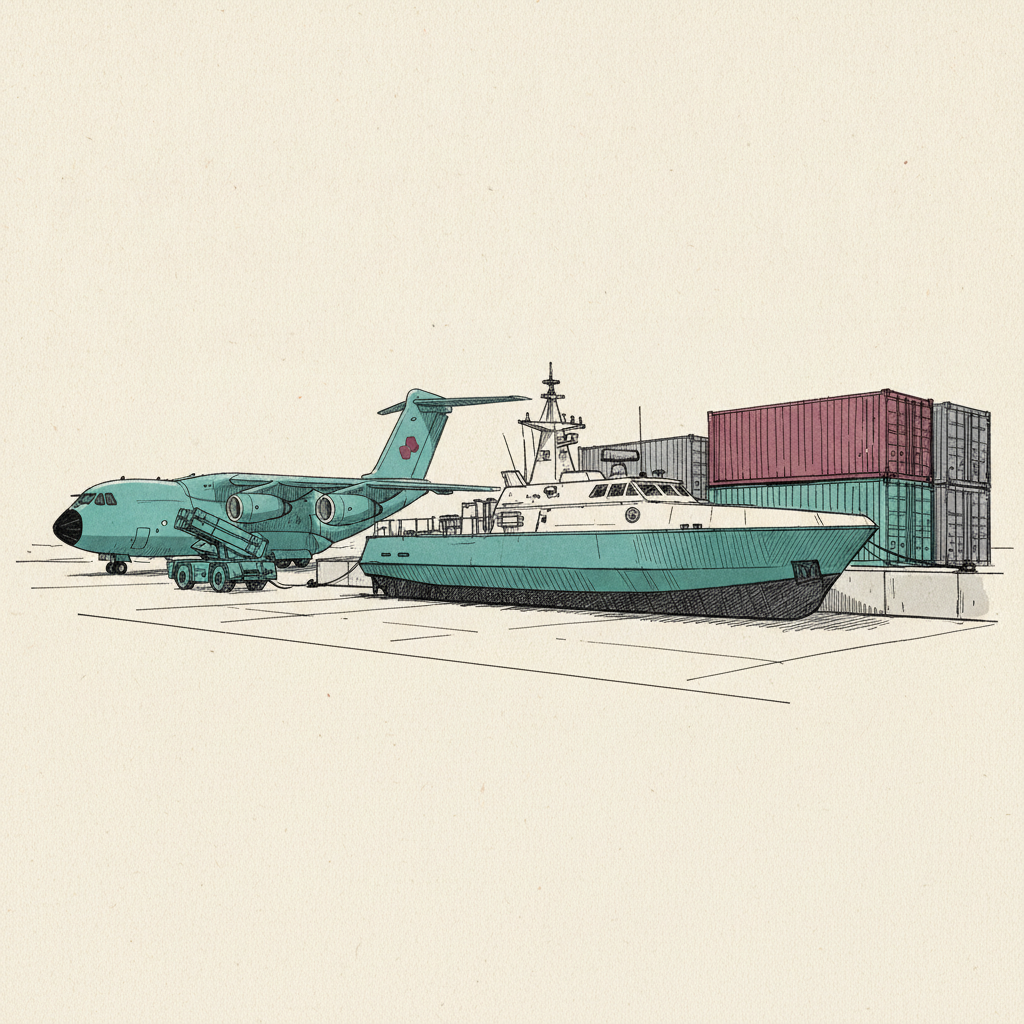
Kraken uncrewed surface vessel, airdropped from an A400M under Project Beehive.
On 8 July 2026 the K3 SCOUT became the first uncrewed surface vessel airdropped from an aircraft, surviving four drops from an Airbus A400M into Sea State 4 water under Kraken's Project Beehive.
Last refreshed: 3 August 2026 · Appears in 1 active topic
The K3 SCOUT can now arrive by parachute; does that solve the Navy's uncrewed-minehunter problem, or just move it?
Timeline for K3 SCOUT
Mentioned in: Taiwan passes its unmanned vehicle law
Autonomous Systems: Land & SeaMoD: no data left the robot boats
Autonomous Systems: Land & SeaCarried Chinese-made cameras found transmitting to China
Autonomous Systems: Land & Sea: Navy robot boats' cameras called ChinaMentioned in: Navy asks how to certify a robot ship
Autonomous Systems: Land & SeaMentioned in: Ocean Infinity: 13,000 hours, no crew
Autonomous Systems: Land & SeaBackground
K3 SCOUT is Kraken Technology Group's family of uncrewed surface vessels, built for mine countermeasures and ISR work in waters a crewed hull would rather not enter.
The production hull, the 8.5-metre K3 SCOUT Medium, entered series production at Rheinmetall Kraken GmbH, a Hamburg joint venture based at the former Blohm+Voss yard, alongside the larger 11-metre Heavy and 18.6-metre Max variants in the same family.
Twenty K3 SCOUT hulls already form the Royal Navy's Project Beehive force package aboard RFA Lyme Bay, giving the platform an established SEA-deployment route well before any airdrop capability is operationally proven; sceptics still question the vessel's range, self-defence in hostile waters and the cost of recovering a drop rig in a real theatre.
K3 SCOUT survives an airdrop into water
Over six days ending 8 July 2026, Kraken Technology Group and Capewell dropped a K3 SCOUT four times from an Airbus A400M's cargo bay, proving the hull could parachute straight off a transport aircraft's ramp and still float in Sea State 4 water.
The trial matters for K3 SCOUT specifically because twenty of the same hulls already sit embarked on RFA Lyme Bay as the Royal Navy's Project Beehive force package, ready for a mine-clearance tasking in the strait of Hormuz should one arise; an airdrop route would let more hulls reach the same waters without a ship alongside. Critics note the trial proved the rigging works in home waters, not survival in a contested one.
