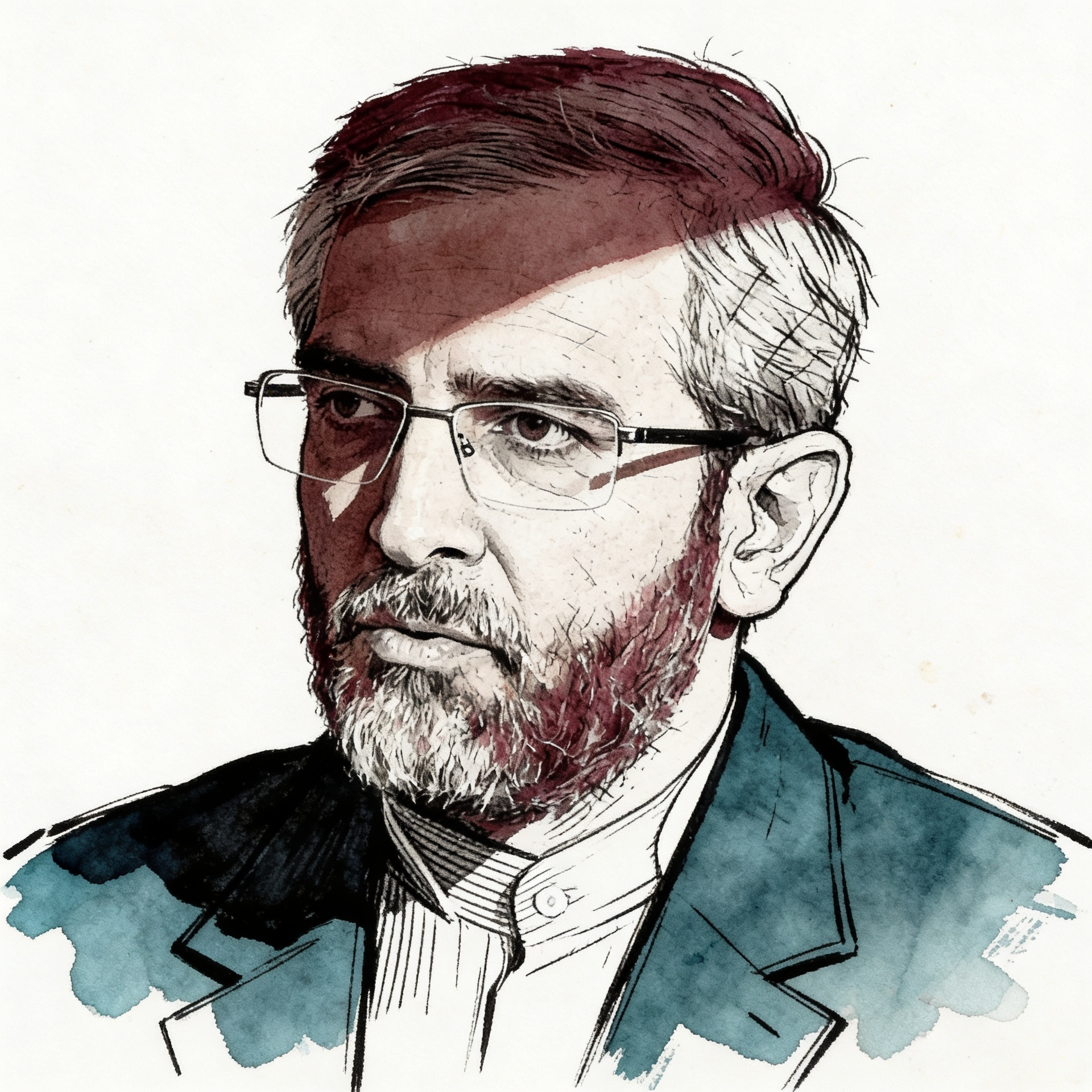
Ali Bagheri Kani
Senior Iranian diplomat and nuclear negotiator central to the 2026 ceasefire talks.
Last refreshed: 22 September 2026 · Appears in 1 active topic
Why is Bagheri Kani's HEU statement the clearest sign the Iran-US deal is unravelling?
Timeline for Ali Bagheri Kani
Stated publicly Iran's enriched-uranium stockpile is not on the agenda of current negotiations
Iran Conflict 2026: Iran and US publish two different dealsAraghchi denies Hormuz obstruction at BRICS Delhi
Iran Conflict 2026Background
Ali Bagheri Kani occupies two institutional positions that place him at the centre of Iran's 2026 diplomatic effort. As a senior official of Iran's Supreme National Security Council (SNSC), the body that co-ordinates defence and Foreign Policy under The Supreme Leader, he speaks with authority on the nuclear file. It was in that capacity that he told Euronews in Farsi on 27 May 2026 that Iran's stockpile of Highly Enriched Uranium is "not on the agenda of current negotiations". The US text of the unsigned Memorandum of Understanding lists HEU disposal as the first priority of the 60-day POST-Ceasefire window. His statement is the clearest official signal that Tehran and Washington are negotiating different documents. He also confirmed that no agreement had been reached on lifting the Hormuz blockade, directly contradicting the US-described MoU terms.
Bagheri Kani is one of Iran's most experienced career diplomats. He served as Iran's chief nuclear negotiator from 2021 to 2024 under President Raisi, leading the P4+1 JCPOA revival talks in Vienna and Doha. When those negotiations stalled after Raisi's government sought conditions the West would not meet, Bagheri Kani transitioned into a wider Foreign Policy portfolio. He accompanied Foreign Minister Abbas Araghchi at the BRICS foreign ministers' summit in New Delhi on 14 May 2026, where he called on member states to act "against US aggression" (the most explicit multilateral framing Iran had attempted since the conflict began), while Araghchi denied Hormuz obstruction to the same audience.
His significance in the 2026 conflict is structural. As a figure WHO straddles the SNSC and the foreign ministry, Bagheri Kani bridges Tehran's hardline institutional core and its public diplomatic face. The gap between his 27 May HEU statement and the US MoU text is not a tactical ambiguity; it is the central unresolved contradiction of the Ceasefire process. Each side now holds an official document that the other's would require it to publicly repudiate. That Bagheri Kani made the contradiction explicit on the record, speaking to a European broadcaster in Farsi, suggests Tehran is not seeking to paper over the divergence, but to entrench it before any final signature.
Who is Ali Bagheri Kani and what is his role in the Iran nuclear talks?
What did Ali Bagheri Kani say about Iran's enriched uranium in May 2026?
Why are Iran and the US publishing different versions of the ceasefire deal?
Was Ali Bagheri Kani Iran's nuclear negotiator for the JCPOA?
What did Iran's delegation say at the BRICS summit in May 2026?

