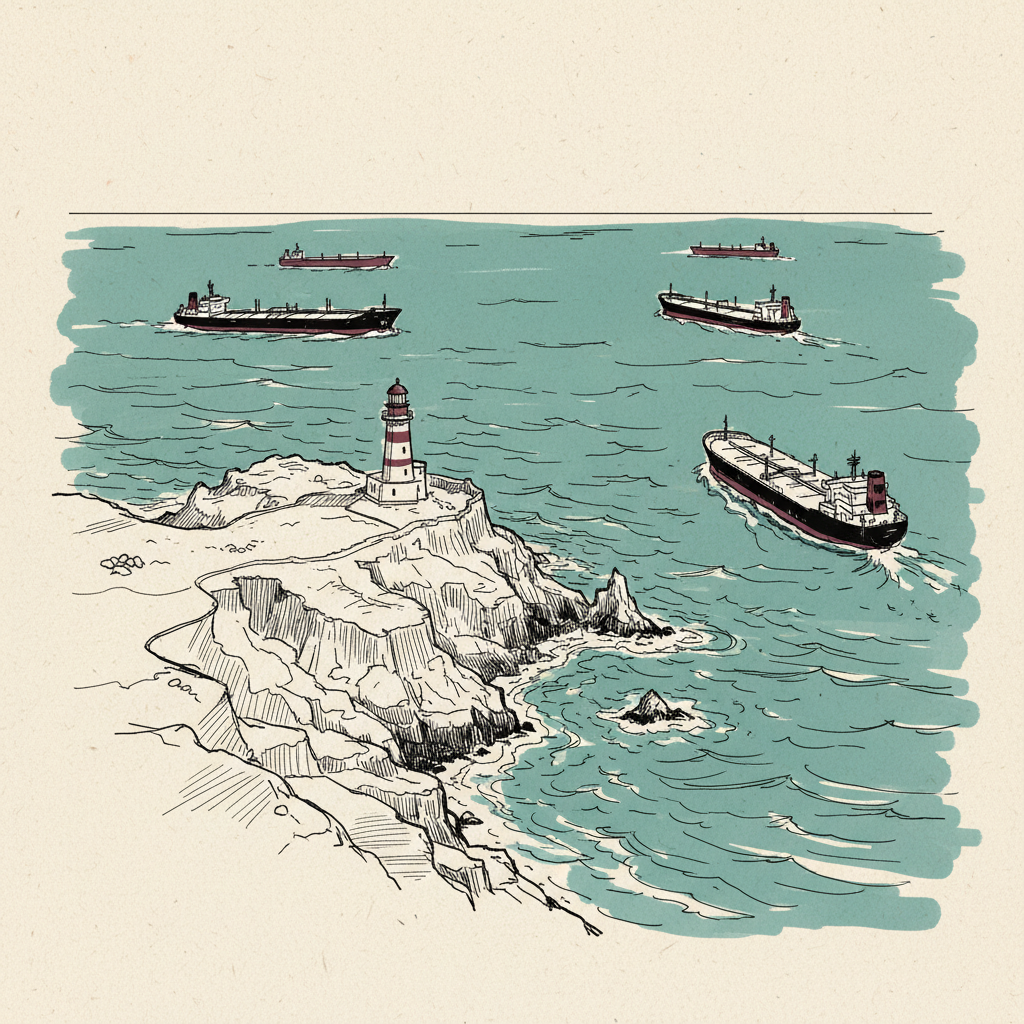
Cape of Good Hope
Africa's southern cape; the shipping detour used when Gulf or Red Sea routes turn risky.
On 12 September, Houthi control of Yemen's full Red Sea coast made the Cape of Good Hope a longer bypass for ships avoiding Bab al-Mandeb, after Saudi-linked tankers began diverting around Africa in July.
Last refreshed: 22 September 2026 · Appears in 3 active topics
Can Cape rerouting absorb enough displaced tanker traffic to stabilise oil prices?
Timeline for Cape of Good Hope
Mentioned in: QatarEnergy suspends gas as ships move
Iran Conflict 2026Mentioned in: Houthis take all of Yemen's Red Sea coast
Iran Conflict 2026Mentioned in: Saudi Red Sea diesel loadings collapse
European Oil MarketsMentioned in: Tanker NCC Masa struck off Al-Shuqaiq
Iran Conflict 2026Mentioned in: Saudi crude abandons its Red Sea route
European Oil MarketsBackground
The Cape of Good Hope is the southern cape of Africa, at South Africa's south-western tip between The Atlantic and Indian Oceans. Its position makes it the SEA route used when vessels need to avoid the Middle East's shorter passages.
Shipping routes use the Cape of Good Hope to bypass other passages. A voyage around southern Africa can connect Atlantic and Indian Ocean routes without passing through the strait of Hormuz or Bab al-Mandeb. That makes it relevant whenever insecurity changes the cost or insurability of those chokepoints.
In 2026, ships began choosing the African route after attacks and blockades disrupted Red Sea traffic. The Cape's significance lies in offering a physical alternative when a direct route becomes too dangerous, even though the detour keeps vessels at sea longer.
The Cape becomes the fallback route
On 22 July, seven ships diverted from Bab al-Mandeb after strikes on tankers made the strait a wider shipping risk. For the Cape of Good Hope, each choice turned a Red Sea passage into a voyage around Africa.
By 12 September, the Houthis held Yemen's entire Red Sea coast, including Mayun island in Bab al-Mandeb. That control made the Cape's role more than a temporary response to individual attacks: it remained the geographical bypass for owners unwilling to risk the strait.
Reference
Has the Cape of Good Hope been used as a shipping bypass before?
Is it cheaper to go around Africa or through the Suez Canal?
How much longer is the Cape of Good Hope shipping route?
Why are so many ships rerouting around the Cape of Good Hope in 2026?
Why are tankers going around the Cape of Good Hope instead of Suez?

