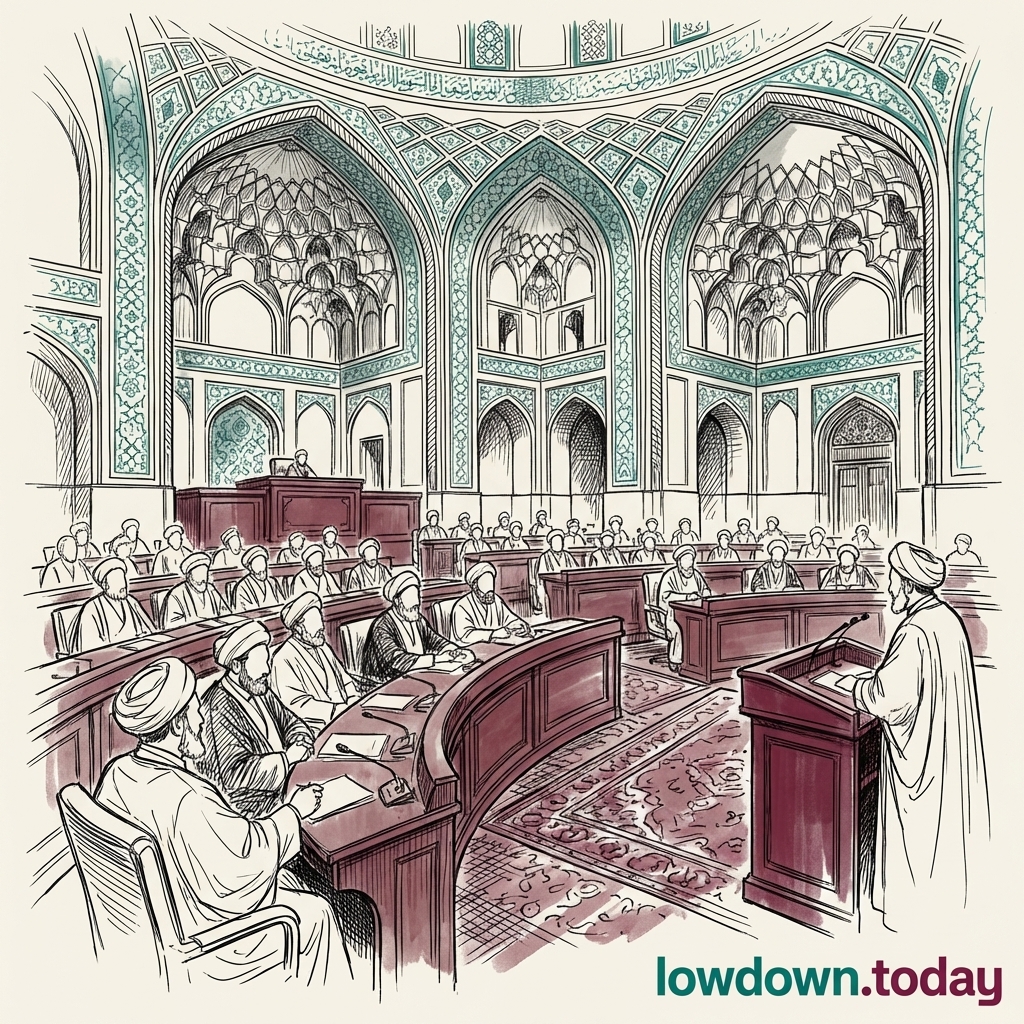
Assembly of Experts
Iran's 88-member clerical appointing body; elevated Mojtaba Khamenei in dynastic succession under IRGC pressure.
On 7 March, the Assembly of Experts confirmed Mojtaba Khamenei as Iran’s Supreme Leader after an emergency succession vote.
Last refreshed: 22 September 2026 · Appears in 1 active topic
Can the Assembly of Experts remove a Supreme Leader it installed under military pressure?
Timeline for Assembly of Experts
Mentioned in: A senior cleric blesses Khamenei's coffin
Iran Conflict 2026Mentioned in: Iran's new leader wounded, sources say
Iran Conflict 2026Mentioned in: Iran's heir skips the funeral for him
Iran Conflict 2026Mentioned in: Iran claims 100 nations, confirms two
Iran Conflict 2026Issued a similar statement against the deal shortly before Qom's
Iran Conflict 2026: Qom clerics draw Tehran's red lineBackground
The Assembly of Experts is an 88-member Iranian clerical body with constitutional responsibility for appointing, supervising and removing The Supreme Leader. Its members are elected for eight-year terms from candidates vetted by the Guardian Council. The body’s importance lies in its formal place at the apex of Iran’s political and religious system.
Its only previous leadership succession came in 1989, when it named Ali Khamenei after Ayatollah Khomeini’s death. On 7 March 2026, it again exercised its appointment power by confirming Mojtaba Khamenei.
The Assembly’s constitutional REMIT includes supervision and removal as well as appointment. Its 2026 vote drew dissent from eight members, who boycotted it. That episode matters because the body’s authority depends on whether its formal powers can operate independently during a succession crisis.
The Assembly confirmed a successor
On 7 March, the Assembly of Experts confirmed Mojtaba Khamenei as Supreme Leader after Ali Khamenei’s death. The decision placed the constitutional body at the centre of Iran’s first leadership succession since 1989.
The vote also exposed a limit on the Assembly’s independence. Eight members boycotted the process on 7 March, citing pressure and Mojtaba Khamenei’s disputed religious credentials. For the Assembly, the succession made its appointment power visible while attaching its institutional authority to a contested outcome.
The Assembly backed a harder line
On 1 July, the Assembly of Experts issued a warning on the Iran-US framework as negotiations were under way in Doha. Qom’s seminary administration issued a near-identical statement shortly afterwards.
The intervention placed the Assembly in a public argument over the limits of diplomacy, rather than merely in its constitutional role of choosing a Supreme Leader. Its statement gave clerical weight to Tehran’s insistence that any agreement meet the leader’s demands. For the Assembly, that made its authority part of the political contest around the framework.
What is Iran's Assembly of Experts?
Who did the Assembly of Experts choose as Supreme Leader?
Was the Assembly of Experts destroyed?
How many Assembly members boycotted the Supreme Leader vote?
How is Iran's Supreme Leader chosen?
Who did Iran's Assembly of Experts choose as Supreme Leader?
Why did eight Assembly of Experts members boycott the succession vote?
Does Mojtaba Khamenei have the religious qualifications to be Supreme Leader?
What is the Assembly of Experts and what power does it have?
Has Mojtaba Khamenei appeared in public since becoming Supreme Leader?
What is the Assembly of Experts and what does it do?
Why did some Assembly of Experts members boycott the 2026 vote?
Can the Assembly of Experts remove the Supreme Leader?
How was Mojtaba Khamenei chosen as Supreme Leader?
What happened to the Assembly of Experts' headquarters in 2026?
Did Iran's Assembly of Experts oppose the 2026 US-Iran deal?
