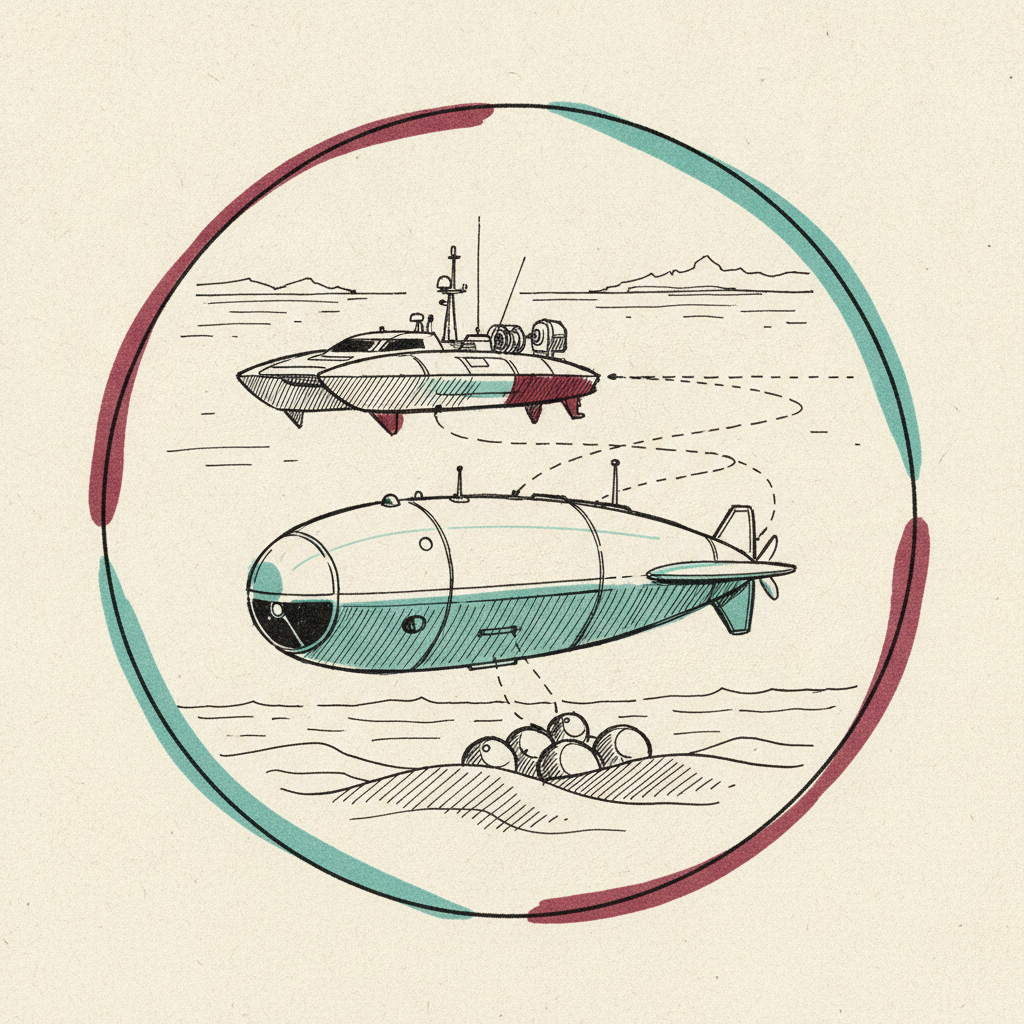
Anglo-French MMCM programme
UK-French bilateral mine-clearing drone programme, now conducting its first joint at-sea integration.
On 23 June 2026, RFA Lyme Bay carried the Anglo-French MMCM programme's Sirius and Ariadne drones into the Middle East, the most capable allied autonomous mine-clearance package assembled near the Strait of Hormuz, though clearance has since stalled.
Last refreshed: 3 August 2026 · Appears in 1 active topic
Can Britain and France clear Hormuz mines together using robot boats from one ship?
Timeline for Anglo-French MMCM programme
Mentioned in: Thales locks Exail in, closing in 2028
Autonomous Systems: Land & SeaMentioned in: Belgium's twelve robots come with cables
Autonomous Systems: Land & SeaMentioned in: Tethered drone flies from robot boat
Autonomous Systems: Land & SeaMentioned in: Allied robot minehunters reach the Gulf
Autonomous Systems: Land & SeaLyme Bay embarks France's mine-hunting drone
Autonomous Systems: Land & SeaBackground
Launched in 2015 under the Lancaster House Defence and Security Co-operation Treaty, the Anglo-French Maritime Mine Counter-Measures programme pools UK and French budgets for autonomous mine-hunting technology developed after 2008. Thales supplies a common SAMDIS-family synthetic-aperture sonar to both nations' platforms, while each retains its own hull prime: BAE Systems and L3Harris UK build the Royal Navy's RNMB Ariadne, and Thales builds the French Navy's Sirius.
That shared sonar layer is what makes the two systems interoperable: the technical challenge lies in data-link and control-station integration rather than sensor hardware. A working combined package, once proven at sea as it was during the Toulon embarkation, gives Thales an export reference that a harbour demonstration cannot match, relevant to navies including Japan, South Korea, Singapore and Australia, which have all stated autonomous mine-countermeasures requirements through 2030.
The programme's Gulf mission has stalled
The Toulon integration in early June 2026 was the first time either navy had operated autonomous mine-hunting systems from a shared mothership in a deployment rather than a demonstration, with Thales's shared sonar architecture making the joining of RNMB Ariadne and Sirius technically tractable.
By 23 June the package had reached the Gulf alongside German and British escorts, the most capable allied autonomous mine-countermeasures grouping yet assembled in theatre. Oman authorised clearance of its southern Hormuz route in early July, but a tanker attack on 7 July reset the timeline before either drone began work, and no confirmed restart has followed.
What is the Anglo-French MMCM programme?
Have Britain and France run their mine-hunting drones together at sea?
Who makes the sonar for the Anglo-French mine-hunting drones?
Why is the Lyme Bay mine-hunting mission important for export?
Why did the Royal Navy retire HMS Chiddingfold in 2026?

