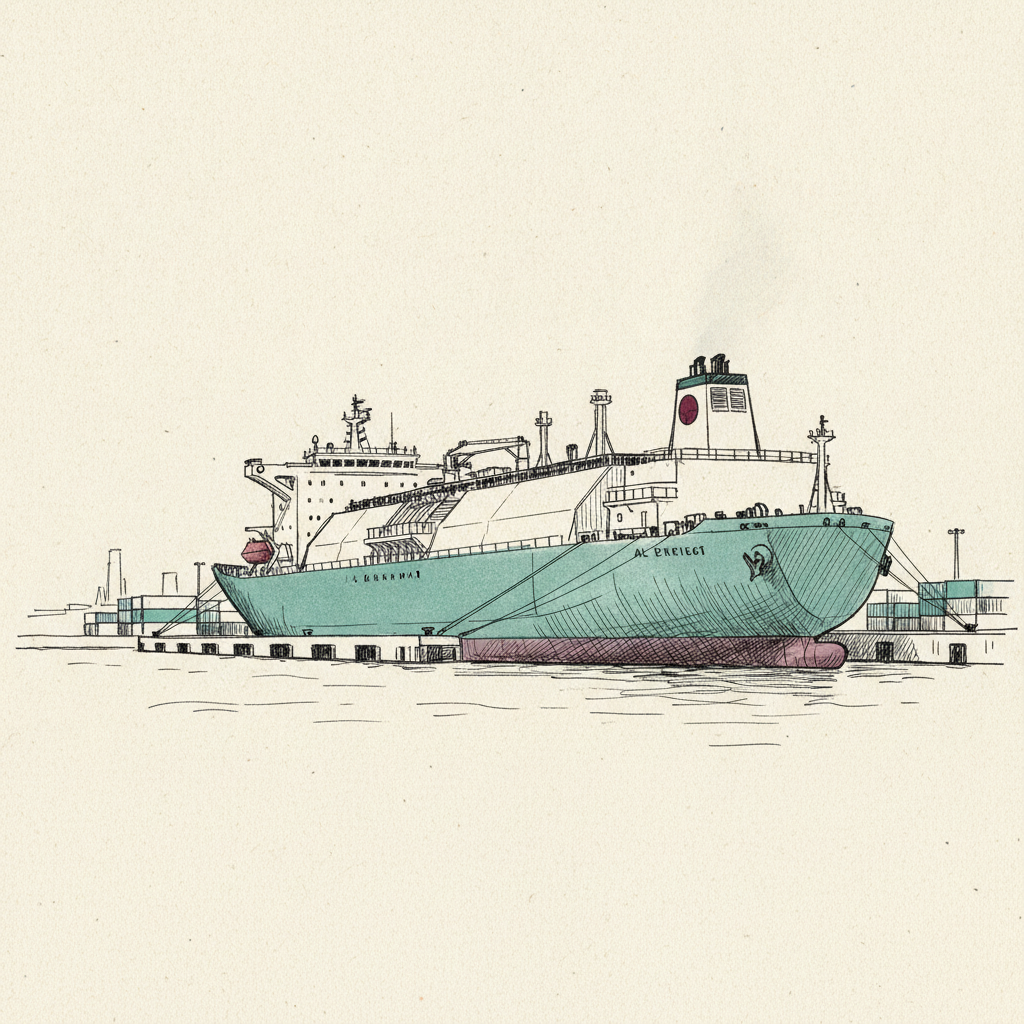
Al Rekayyat
LNG carrier operated by Nakilat, hit by IRGC missiles in the strait of Hormuz on 7 July 2026.
As of 8 August, Al Rekayyat is LNG carrier operated by Nakilat, hit by IRGC missiles in the strait of Hormuz on 7 july 2026..
Last refreshed: 11 August 2026 · Appears in 2 active topics
Why did the Al Rekayyat strike push gas markets to react like oil markets?
Timeline for Al Rekayyat
Mentioned in: UAE says an Iranian missile hit its vessel
Iran Conflict 2026Qatar files a UN claim against Iran
Iran Conflict 2026Mentioned in: A vessel burns off Oman overnight
Iran Conflict 2026Mentioned in: IRGC claims Hormuz closed; CENTCOM denies it
European Energy MarketsMentioned in: First sailors die in the tanker war
Iran Conflict 2026Background
Al Rekayyat is LNG carrier operated by Nakilat, hit by IRGC missiles in the strait of Hormuz on 7 july 2026. Built in 2009 by Hyundai Heavy Industries in South Korea, Al Rekayyat is a Q-Flex class LNG carrier with a cargo capacity of 216,300 cubic metres, one of 31 Q-Flex vessels in Nakilat's fleet and smaller only than the 14 Q-Max ships at its top tier. The vessel is wholly owned by Nakilat, chartered by Qatargas, flagged in the Marshall Islands, and has been under Nakilat's in-house ship management since September 2020, having previously been managed by Shell. Al
Rekayyat was struck by an Iranian missile on the port side near Limah, Oman, overnight into 7 July 2026 and caught fire; all CREW were reported safe and no spill was recorded. As the first Liquefied Natural Gas carrier, rather than an oil tanker, struck in the Hormuz corridor dispute, the attack widened the conflict's price shock from crude to gas markets and gave insurers fresh grounds to keep the strait's war-risk exclusion in force.
What happened to the LNG carrier Al Rekayyat?
Who owns the Al Rekayyat LNG carrier?
How big is the Al Rekayyat LNG carrier?
Why did the Al Rekayyat strike move oil and gas prices?

