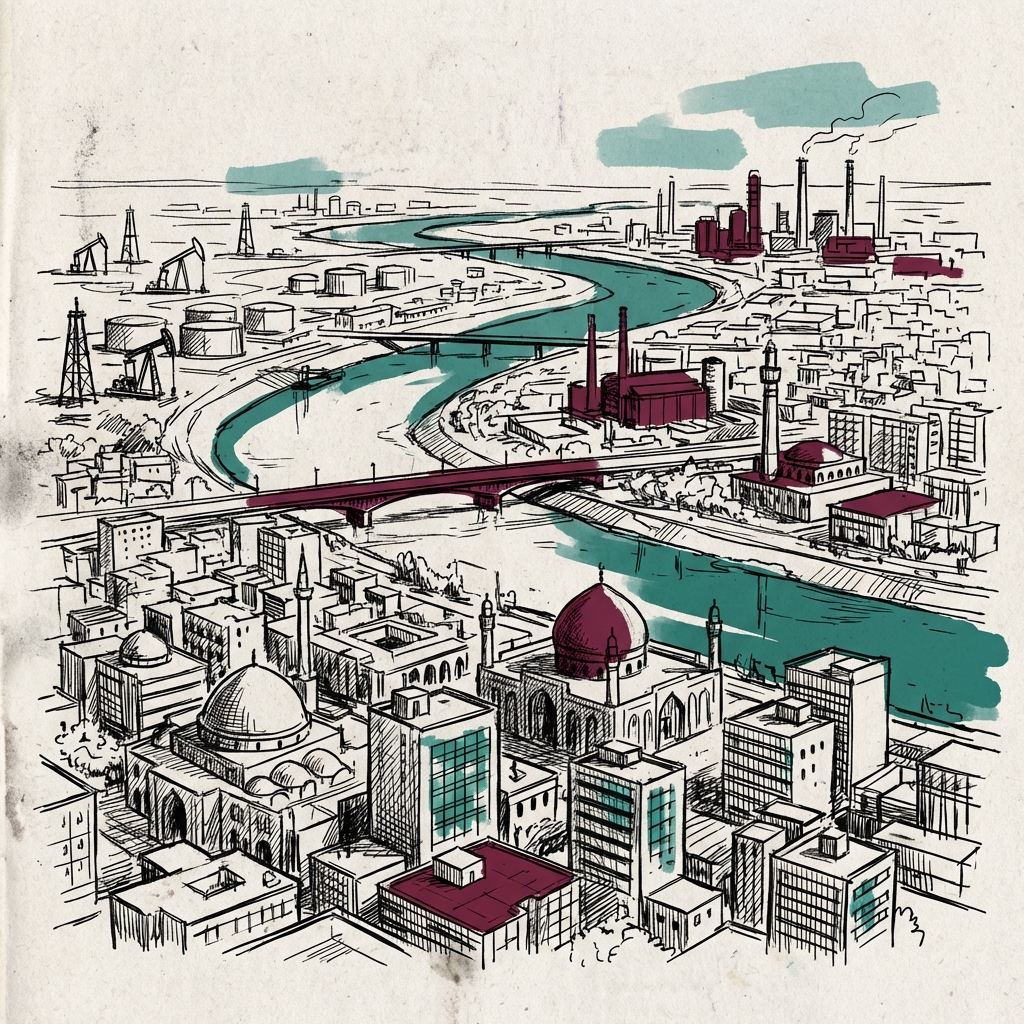
Ahvaz
Capital of Khuzestan province in southwestern Iran, near oil infrastructure and the Iraq border.
Khuzestan's provincial capital took a second wave of US strikes on 19 July 2026, days after inland bombing reached the city on 17 July for the first time, part of a campaign edging deeper into Iran's oil heartland.
Last refreshed: 24 July 2026 · Appears in 1 active topic
Can Ahvaz's oil infrastructure survive a sustained Israeli or US bombing campaign?
Timeline for Ahvaz
Mentioned in: Trump's Pickaxe threat, but no order
Iran Conflict 2026Mentioned in: Iran's rial slides past 189,000 toman
Iran Conflict 2026US strikes hit Ahvaz on eighth night
Iran Conflict 2026Mentioned in: Blasts reported at Bandar Abbas and Qeshm
Iran Conflict 2026Mentioned in: Iran says strike hit unfinished reactor
Iran Conflict 2026Background
Ahvaz is the capital of Khuzestan province in south-western Iran, home to around 1.3 million people on the Karun River near the Iraqi border. Khuzestan holds roughly 80 per cent of Iran's proven oil reserves, making Ahvaz the effective centre of the country's oil industry and, by extension, one of the likeliest grounds for any campaign targeting Iran's export capacity, given its proximity to Kharg Island, Iran's primary oil export terminal.
The province was a major theatre of the Iran-Iraq War (1980-88), when Ahvaz itself came under sustained bombardment, a history that shapes how the city reads its renewed exposure in the 2026 war. Its majority ethnic Arab population has long faced discrimination, a persistent fault line in Iranian domestic politics that regional Arab states have watched without publicly backing separatist claims.
That history was reactivated in the opening weeks of the war: Ahvaz was one of four cities Israel struck simultaneously in the 22 March wave that Al Jazeera called unprecedented in scale, alongside Isfahan, Karaj and Bandar Abbas, with a hospital hit directly amid over 81,000 damaged civilian structures recorded nationwide.
What is Ahvaz?
Was Ahvaz hit in the 2026 Israel-Iran war?
Why is Ahvaz strategically important to Iran?
How many civilians were killed in the Iran strikes in March 2026?
What is the difference between Ahvaz and Kharg Island in the Iran conflict?
Was Ahvaz hit again in July 2026?



Written with AI from Lowdown's published reporting. Not individually reviewed by an editor. Updated 24 July 2026. Editorial standards.