Skip to content
Briefings are running a touch slower this week while we rebuild the foundations.See roadmap
US Midterms 2026
6JUN

Florida map upheld; every 2026 House map locked

4 min read
12:16UTC

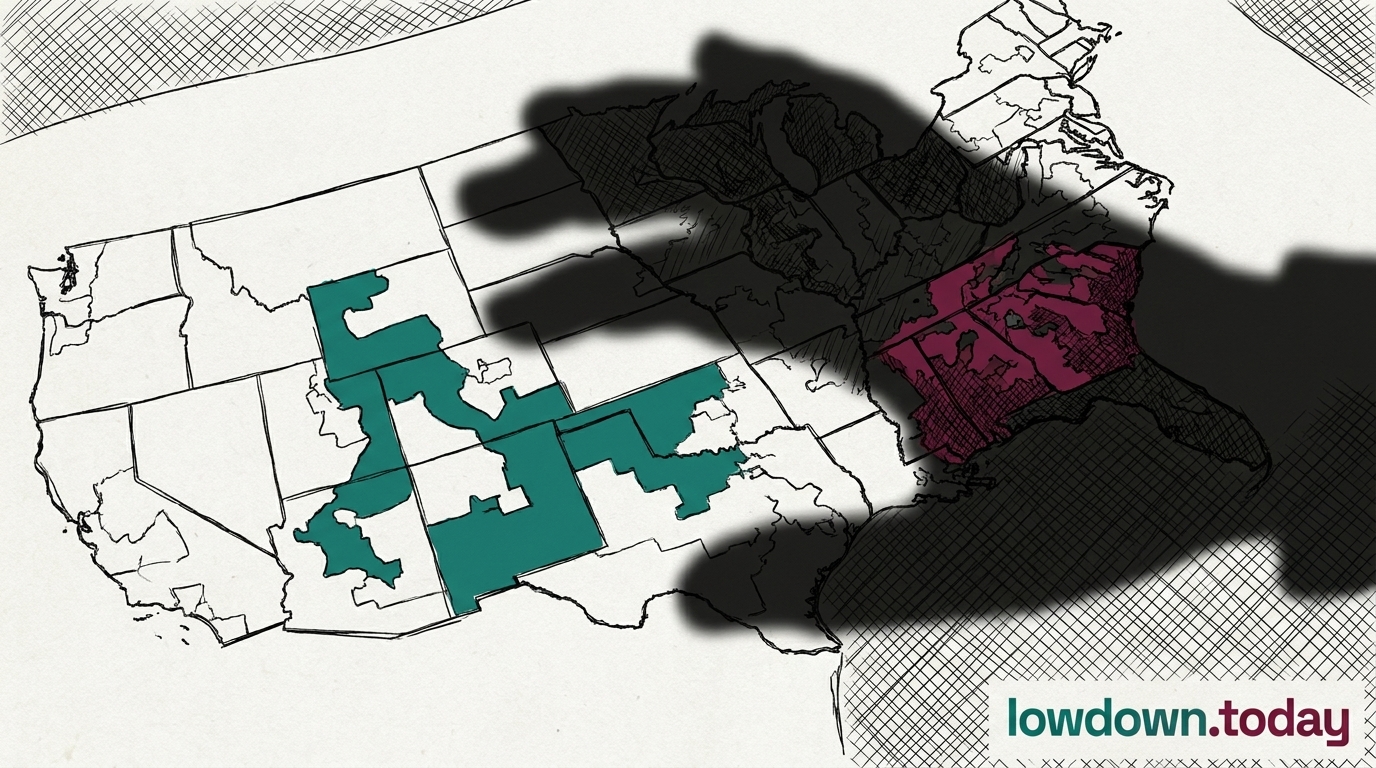
Leon County Circuit Judge Joshua Hawkes upheld Florida's 24R-4D congressional map on Tuesday, ruling the challenge is aimed at the 2028 or 2030 cycles; Virginia's candidate filing deadline passed the same day, locking every 2026 House district.

PoliticsDeveloping
Key takeaway

The Republican redistricting harvest of 12-15 House seats is now structurally locked with no Democratic offset possible before November.

Leon County Circuit Judge Joshua Hawkes, a Ron DeSantis appointee, ruled on the same Tuesday to keep Florida's 24R-4D congressional map operative while three state lawsuits proceed 1. The map draws 24 Republican-leaning districts against only four Democratic-leaning ones in a state with 30 congressional seats. Hawkes explicitly acknowledged the map's "potential partisan intent" but called it "the lesser of two evils" compared to Equal Protection concerns, and wrote that the challenge was "more geared toward the 2028 or 2030 election cycles than the 2026 election cycle" 2. Common Cause and Equal Ground Education Fund, both plaintiffs under Florida's Fair Districts constitutional amendments, filed notices of appeal immediately; no stay is in effect, and Florida's congressional qualifying deadline, set for early June, proceeds under the DeSantis-signed map .

The Hawkes ruling closed a legal track that began when plaintiffs filed the first Fair Districts challenge within hours of DeSantis signing the map in early May . Hawkes had consolidated those challenges and heard full argument on 15 and 16 May . His ruling now routes the litigation to an appellate calendar that, by his own language, cannot change a single 2026 race. The Fair Districts amendments bar partisan intent explicitly; calling that intent the lesser evil rather than a disqualifying factor is a doctrinal departure from the plain text of the 2010 constitutional provisions, giving the appellate track substantive footing. It just runs on the wrong timeline.

On the same day, Virginia's candidate filing deadline passed under the original congressional map. The Supreme Court of Virginia had already struck down the 21 April redistricting referendum by a one-vote majority earlier in May , voiding a 50.7 to 49.3 popular vote on procedural grounds, ensuring candidates would lock to lines left intact by that ruling. With Virginia closed, every Democratic redistricting track for 2026 was gone: Maryland by Senate-president veto, Virginia by that same one-vote court ruling, New York and California confirmed foreclosed in the prior fortnight . The full redistricting sequence runs from the Louisiana v. Callais ruling that removed the Voting Rights Act's majority-minority district mandate , through Florida's signing and Tennessee's signed map , to this day. Democrats must now clear a 12-15 seat Republican structural map advantage through votes alone before they win a net House seat.

Deep Analysis

In plain English

Gerrymandering means drawing electoral district boundaries to favour one party. Florida passed a constitutional amendment in 2010, called Fair Districts, specifically to stop this. Governor DeSantis signed a new congressional map in May 2026 that critics say violates that amendment by giving Republicans 24 of the state's 28 seats. Judge Hawkes, appointed by DeSantis, ruled on 26 May that the current map stays in place while lawsuits continue. He acknowledged it may have been drawn with partisan intent, but said blocking it now would cause more problems than leaving it in place until the next redistricting cycle. Candidates will file for the 2026 election under the existing map. Separately, Virginia tried to redraw its own congressional maps through a voter referendum, but the Virginia Supreme Court struck that referendum down on 8 May because of a procedural error in how the legislature passed it. Virginia's 11 congressional districts will therefore run under the 2021 bipartisan commission maps for the November 2026 election. The combined effect: every House district in the country is now fixed for November 2026. Democrats cannot gain any seats through redistricting before the election.

Deep Analysis
Root Causes

Two independent constitutional tracks converged to lock every 2026 House map simultaneously.

In Florida, DeSantis designed the redistricting session's calendar to ensure the map was signed after the original candidate filing deadline had passed. That sequencing meant any court that chose to block the map would need to reopen a closed filing window, adding an Equal Protection dimension to any injunction. Hawkes's 'lesser of two evils' language directly acknowledged this structural trap.

In Virginia, the Supreme Court of Virginia's 4-3 ruling on 8 May turned on a procedural violation in the amendment process rather than the merits of the redistricting itself, leaving no federal appeal path. The Virginia constitution's requirement that an amendment pass two sessions with an intervening election meant the procedural defect was unrepairable on any timeline compatible with November 2026.

The closure of both tracks completed the dynamic that the South Carolina and Mississippi refusals had already compressed: the Callais harvest lands at the lower end of Cook's 12-15 seat estimate.

What could happen next?
  • Consequence

    Florida's Fair Districts challenge remains alive for post-2026 adjudication; a merits ruling against DeSantis's map after the election would force a redraw before 2028, potentially eliminating several Republican seat gains.

  • Risk

    With redistricting avenues exhausted, Democrats' 2026 House majority path runs entirely through candidate quality, turnout, and the generic ballot environment; the locked-in Republican structural advantage of 12-15 seats requires a larger wave than 2018 to overcome.

First Reported In

Update #7 · Paxton wins; maps lock

Axios· 29 May 2026
Read original
Different Perspectives
EU Commission trade policy directorate
EU trade analysts note the D+6.9 generic ballot is the first reading this cycle making a Democratic House flip structurally plausible; a Ways and Means Committee under Democratic chairmanship after January 2027 would restore congressional leverage on tariff schedules, reducing the probability of locked Republican tariff posture through 2028.
Canadian USMCA trade negotiators
Ottawa trade officials tracking the 2026 Senate composition see AFP Action's Montana and Iowa deployments as confirming those seats are in play; a Senate retaining John Fleming-style MAHA senators rather than Cornyn-style trade institutionalists would narrow the bipartisan coalition on which Canada's USMCA chapter renewal relies.
V-Dem Institute (University of Gothenburg)
The V-Dem Institute's electoral integrity index flags the Callais-to-Alabama-stay sequence as completing a decade-long rollback of minority voting protections: Shelby County (2013) removed preclearance, Brnovich (2021) narrowed vote-denial claims, Callais removed the majority-minority mandate, and the stay mechanism now forecloses injunctive remedies within any single electoral cycle.
Chatham House democracy analysts
Chatham House analysts assess the Alabama stay as the point at which redistricting litigation migrated from a live 2026 variable to a post-cycle accountability mechanism; the Court's seven-day reversal window is shorter than any state election calendar, meaning judicial review now operates retrospectively rather than preventively in redistricting disputes.
Republican establishment (NRCC and Senate Leadership Fund)
The NRCC is defending Iowa Senate candidate Ashley Hinson with AFP Action's $798,000 IE while simultaneously watching MAHA knock out its own NRCC-connected Iowa governor candidate Feenstra, a split that illustrates the establishment's central 2026 problem: outside money can win Senate seats but cannot resolve the factional fracture that is consuming its gubernatorial bench.
Conservative-institutionalist dissent (WSJ editorial board)
The Wall Street Journal editorial board's warning that aggressive Republican redistricting in a D+6.9 environment risks energising the opposing base beyond what drawn-in margins absorb has gained additional force after Paxton's win converted a safe Texas seat into a contested one; the board's cross-ideological caution is the dissent the Republican consensus on Callais is not publicly engaging.
