Skip to content
Welcome, thoughtbot's Giant Robots listeners!Start here
US Midterms 2026
11NOV

DOJ voter-data dragnet narrows to one statute

3 min read
18:10UTC

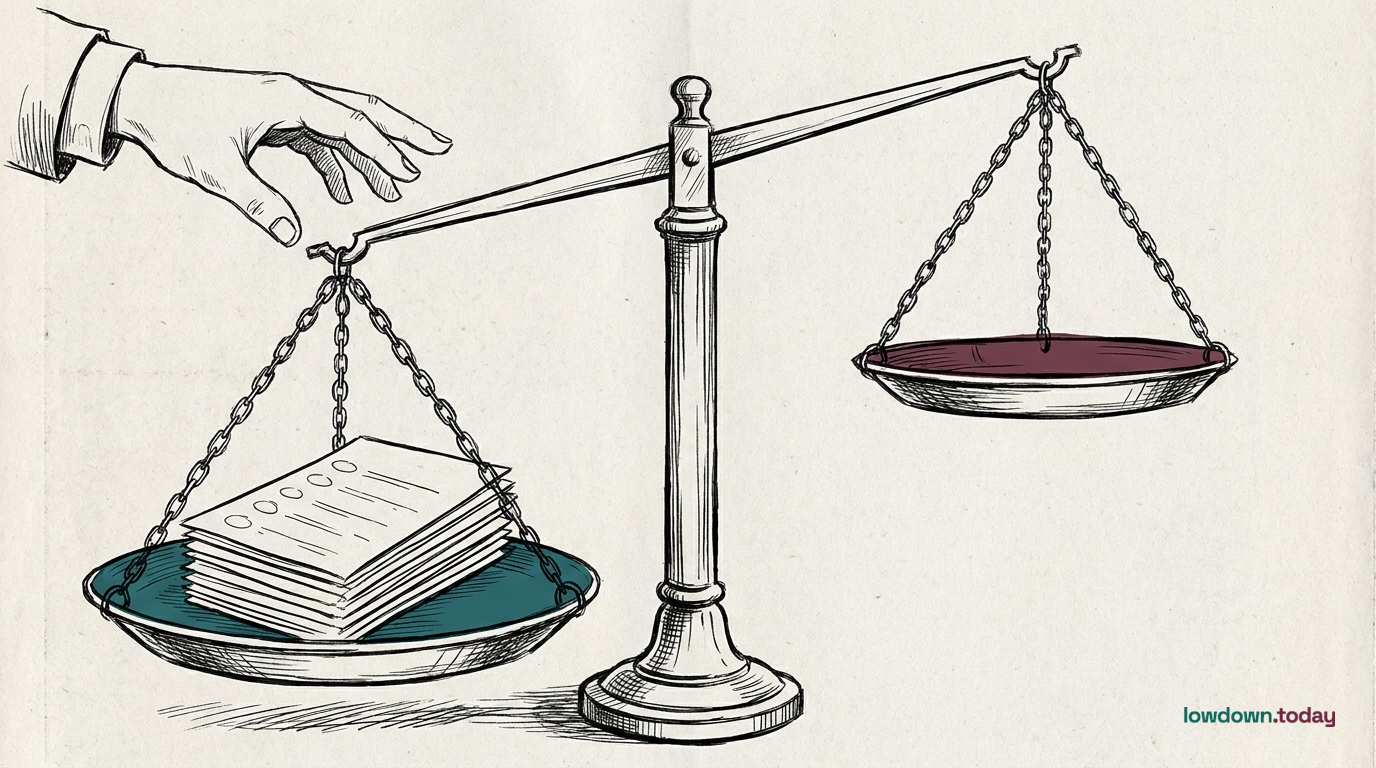
Federal courts dismissed the Department of Justice's voter-data lawsuits in both Maine and Wisconsin; across its remaining active cases the DOJ dropped its National Voter Registration Act and Help America Vote Act claims and now pursues only the 66-year-old Civil Rights Act of 1960.

PoliticsDeveloping
Key takeaway

Multiple district court defeats and dropped NVRA and HAVA claims leave the dragnet on one untested statute.

Federal courts dismissed two more Department of Justice (DOJ) voter-data lawsuits in the same week⁠1. Chief US District Judge Lance E. Walker in Maine found the complaint legally underdeveloped, ruling that states are "primary regulators and administrators of elections for federal office"; Walker applied the same portable state-sovereignty reasoning the Massachusetts court used when it dismissed the DOJ suit in April. In Wisconsin, the Court dismissed the case with prejudice on Thursday, foreclosing any refiling. Wisconsin's case had already been narrowed to the Civil Rights Act of 1960 theory alone before the Court dismissed even that.

Across its remaining 47-state active caseload, the DOJ has now dropped its National Voter Registration Act (NVRA) and Help America Vote Act (HAVA) claims entirely⁠2. The NVRA, passed in 1993, established the federal voter registration framework; HAVA, passed in 2002, modernised election administration after the 2000 Florida recount. States use the NVRA and HAVA frameworks to register voters, administer polling, and maintain voter lists. Dropping both leaves the department relying solely on the Civil Rights Act of 1960, a provision designed to address systematic disenfranchisement of Black voters in the South before computerised voter files existed, and which no court has applied to compel a state to hand over a digitalised voter database to a federal agency.

The 9th Circuit Oregon appeal, argued on 19 May, remains the first appellate test of whether the pattern of district court dismissals holds at circuit level; no ruling has been issued as of 29 May. An adverse circuit ruling would set precedent for roughly 23 active cases in that circuit alone. Two of the administration's three original legal hooks are now gone from the active cases.

Deep Analysis

In plain English

Starting in early 2026, the Department of Justice sent letters to 48 states asking for complete voter registration records: names, addresses, birth dates, citizenship status, and voting history. Many states refused, saying the federal government had no legal right to demand this data. The DOJ then sued those states. Multiple federal courts have since dismissed these cases, ruling that states, not the federal government, are the primary managers of their own elections. In Maine, the judge called the DOJ's legal arguments 'underdeveloped'. In Wisconsin, the case was dismissed 'with prejudice', meaning the DOJ cannot refile even with a revised complaint. The DOJ originally relied on three laws for its legal authority: the National Voter Registration Act, the Help America Vote Act, and the Civil Rights Act of 1960. After losing multiple cases, it has dropped the first two and is now only arguing under the 1960 act, which was originally designed to fight racial disenfranchisement in the South during the civil rights era.

First Reported In

Update #7 · Paxton wins; maps lock

All About Lawyer· 29 May 2026
Read original →
Different Perspectives
University of Florida Election Lab
The lab, run by Michael McDonald, estimates about 124.3 million ballots, a raw midterm record, and turnout of about 49.4% of eligible voters, second to 2018's 50.05%. The raw record reflects population growth more than a record rate, so the late count is working through a near-2018 electorate.
Thune's critics on the right, including Senator Ron Johnson
Ron Johnson backed the failed 31-15 motion to delay Thune's re-election, after activists such as Mike Cernovich blamed the leader for the defeat. Their complaint is that Republicans could have passed the SAVE Act; in January it meets a Democratic Senate instead.
Senator John Thune
Senator John Thune
Thune was re-elected Senate Republican leader by acclamation on 10 November after a motion to delay failed 31-15. He kept the filibuster that stopped the SAVE Act, the choice his critics on the right blame for the defeat.
House Republicans under Jim Jordan
House Republicans elected Jordan minority leader by 106 votes to 73 over Steve Scalise on 10 November, after Speaker Mike Johnson declined to run. They replaced the leadership that lost the majority, while Senate Republicans kept theirs.
Donald Trump
Donald Trump
Trump asked on Truth Social on 9 November whether anybody believed the election "was honest" and blamed the machines, having told The New York Times on polling night he would accept the results. No Republican campaign had sued over a 2026 result by 10 November, so the claim has no case behind it.
Judge David O. Carter
Carter closed the Justice Department's suit over about 20,000 California mail ballots on 10 November after the department withdrew it, writing that the suit "attempted to disrupt an ongoing election". The closure leaves the department with no court order touching a 2026 California ballot.

Written with AI from Lowdown's published reporting. Not individually reviewed by an editor. Editorial standards.
