United States v. Oregon
DOJ voter-data lawsuit against Oregon; 9th Circuit oral argument held 19 May 2026.
Last refreshed: 19 May 2026 · Appears in 1 active topic
Will the 9th Circuit's Oregon ruling collapse 23 pending DOJ voter-data lawsuits before November?
Timeline for United States v. Oregon
Mentioned in: Ticket subpoena meets a healed market
2026 FIFA World CupMentioned in: DOJ voter-data dragnet narrows to one statute
US Midterms 2026Mentioned in: 9th Circuit hears first DOJ voter-data appeal
US Midterms 2026Background
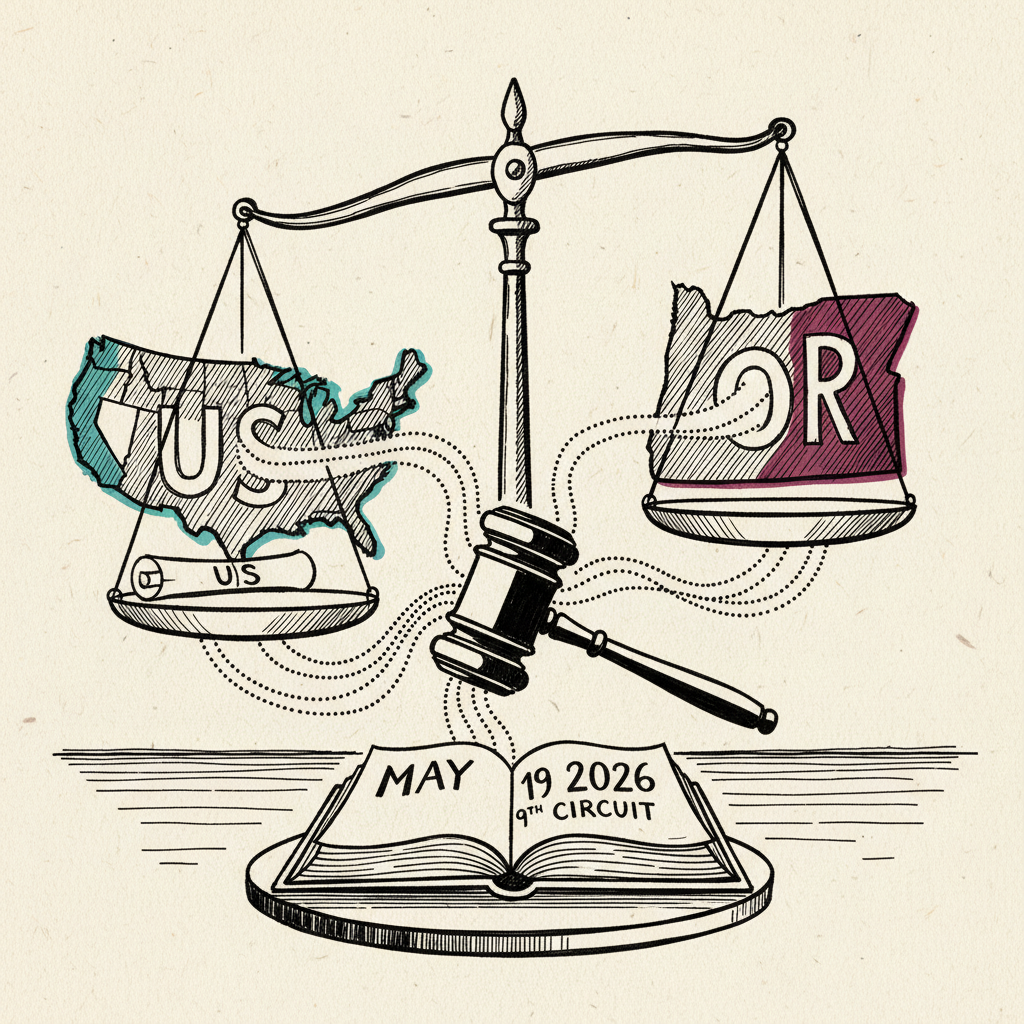
United States v. Oregon is a federal lawsuit filed by the Department of Justice demanding complete voter registration files from Oregon's secretary of state. Oregon's district court dismissed the complaint in January 2026, adopting reasoning first developed in the Massachusetts dismissal: the DOJ complaint failed to specify which statutory authority empowered it to demand the voter data. The DOJ appealed in February 2026, and the 9th Circuit expedited the case on 17 March 2026, with oral argument heard on 19 May 2026 — making it the first appellate-level test of whether the Massachusetts portable dismissal reasoning holds at circuit level.
The case sits within a broader DOJ campaign of 30 state voter-data lawsuits filed in early 2026 as part of an effort to obtain complete voter registration files from state election authorities. By 19 May 2026, six states had obtained dismissals and one had settled, leaving 23 active cases. Arizona was dismissed on 28 April 2026. The DOJ has also appealed the California and Michigan dismissals, but the Oregon appeal is the first to reach oral argument, giving the 9th Circuit the first opportunity to either validate or overturn the district court reasoning.
A ruling upholding Oregon's dismissal would convert the district court reasoning into binding 9th Circuit precedent across all federal courts in the circuit — effectively collapsing the remaining active cases in California, Oregon, and potentially aligned states. A reversal would let the DOJ refile complaints with corrected statutory grounding, reopening the voter-data demands across the dismissed states. The outcome will determine the trajectory of the full 30-state litigation campaign before the November 2026 elections.