Skip to content
Welcome, thoughtbot's Giant Robots listeners!Start here
US Midterms 2026
27OCT

Supreme Court keeps parties' ad discount

3 min read
13:20UTC

The Supreme Court on 14 October kept FCC guidance that lets party committees buying airtime in concert with candidates pay the candidates' discounted rate.

PoliticsAssessed
Key takeaway

Party committees buying with candidates keep the candidates' discounted broadcast rate through 3 November.

The Supreme Court on 14 October kept in force guidance from the Federal Communications Commission (FCC) that lets party committees buying airtime in concert with candidates pay the candidates' discounted rate⁠1. The order puts on hold a judgment of the 4th Circuit, the federal appeals court for Maryland, Virginia, West Virginia and the Carolinas, in FCC v. Brown (26A476). Justices Sonia Sotomayor and Ketanji Brown Jackson would have refused.

The 4th Circuit had ruled 2-1 on 7 October, with Judge J. Harvie Wilkinson dissenting, that the FCC must decide a challenge to its March guidance by noon on 9 October. Chief Justice John Roberts paused that order the next day, and the full Court has now kept the pause in place⁠2.

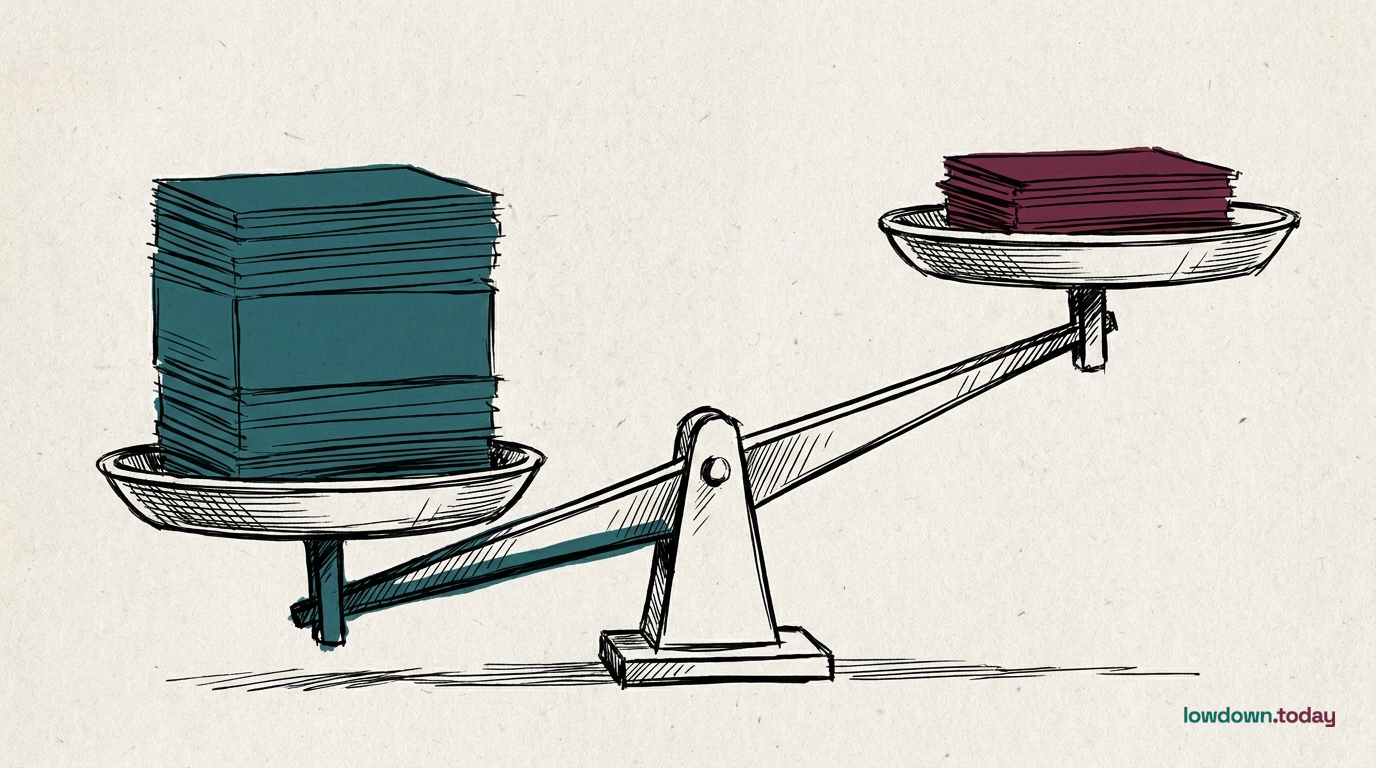
The FCC guidance turns on the Lowest Unit Charge. In the 60 days before a general election, broadcasters must sell candidates airtime at the lowest price they give their best commercial customer for the same slot; party committees and super PACs otherwise pay market rates, which climb in October. Parties may spend without limit in concert with their candidates since the Court struck those limits in June. According to the Supreme Court docket, the FCC guidance extends the candidate rate to party committees and joint fundraising committees (shared accounts that raise money for a candidate and a party together) when they buy alongside a candidate. The National Republican Senatorial Committee (NRSC) spent $45.92m in concert with its candidates in August, and buys like those now get more airtime per dollar than a Super PAC's.

Four Democrats brought the challenge: Sherrod Brown of Ohio, Jon Ossoff of Georgia, Roy Cooper of North Carolina and House candidate Kristen McDonald Rivet of Michigan. The guidance now stands through 3 November, which settles the price of party advertising run with candidates for the rest of the campaign.


Deep Analysis

In plain English

By law, TV and radio stations must sell airtime to candidates at their cheapest rate in the weeks before an election. Other buyers, such as party committees and super PACs, usually pay the full price, which rises in October. The FCC, which regulates broadcasters, said in March that party committees working with candidates can also get the cheap rate. the Supreme Court has kept that rule in place until the election.

Deep Analysis
Root Causes

The Communications Act requires broadcasters to sell candidates time at the Lowest Unit Charge in the 45 days before a primary and 60 before a general election. It is silent on party committees acting with candidates, leaving the FCC to fill the gap.

The June ruling lifting limits on party spending with candidates made party buys far larger. A pricing rule that once touched small sums now governs tens of millions of dollars.

What could happen next?
  • Consequence

    Party committees gain a pricing edge over super PACs for the final three weeks of the campaign.

  • Precedent

    The case will likely return after the election, when a ruling on the merits could settle the rule for 2028.

First Reported In

Update #20 · SLF's gifts to Texas PAC match Musk's to SLF

Supreme Court of the United States· 17 Oct 2026
Read original →
Different Perspectives
Department of Justice (DOJ)
DOJ appealed to the 9th Circuit after Judge David O. Carter did not rule by a noon deadline on 22 October that DOJ itself had set, seeking to have California set aside mail ballots from more than 20,000 listed voters. Its case is that ineligible votes cancel lawful ones; the panel dismissed the appeal 2-1 on 26 October.
Lower Costs Now
Lower Costs Now
Lower Costs Now reported $7.37m in Kansas on 24 and 25 October, part of $65.65m in Senate races since its first independent expenditure on 1 October, including $17.21m for Josh Turek in Iowa. Its FEC filings show $50.18m raised by 14 October.
MAGA Inc
MAGA Inc
MAGA Inc, the super PAC aligned with Donald Trump, filed $7.20m against James Talarico on 22 October, taking its Texas spending to $37.65m. Of that, $30.12m is against Talarico and $7.53m is for Ken Paxton, the Republican nominee.
Senate Majority PAC (SMP)
SMP's pre-general report shows it spent $108.70m from 1 to 14 October, including $65.0m to WinSenate and $10.0m to Texas Forever, and ended with $32.72m. Texas Forever has reported $19.40m against Ken Paxton since 1 October.
Senate Leadership Fund (SLF)
SLF's pre-general report shows $88.42m in cash on 14 October and $18.98m raised in the fortnight, none of it from Elon Musk. It has since reported $12.07m against Sherrod Brown in Ohio, and its $2.7m to Plains PAC preceded that committee's first Kansas buy on 25 October.
National Republican Senatorial Committee (NRSC)
The NRSC's pre-general report shows nothing spent with Ashley Hinson in Iowa, or with its nominees in six other states, from 1 to 14 October, after $5.54m with Hinson in September. It took no new loan and ended the fortnight with $25.20m in cash and $20m of debt.

Written with AI from Lowdown's published reporting. Not individually reviewed by an editor. Editorial standards.