Skip to content
Welcome, thoughtbot's Giant Robots listeners!Start here
US Midterms 2026
24SEP

NRSC spends $45.9m, DSCC takes cash lead

3 min read
11:45UTC

The NRSC spent $45.92m coordinating with Senate candidates in August and ended the month with $18.7m in cash, against the DSCC's $37.6m.

PoliticsAssessed
Key takeaway

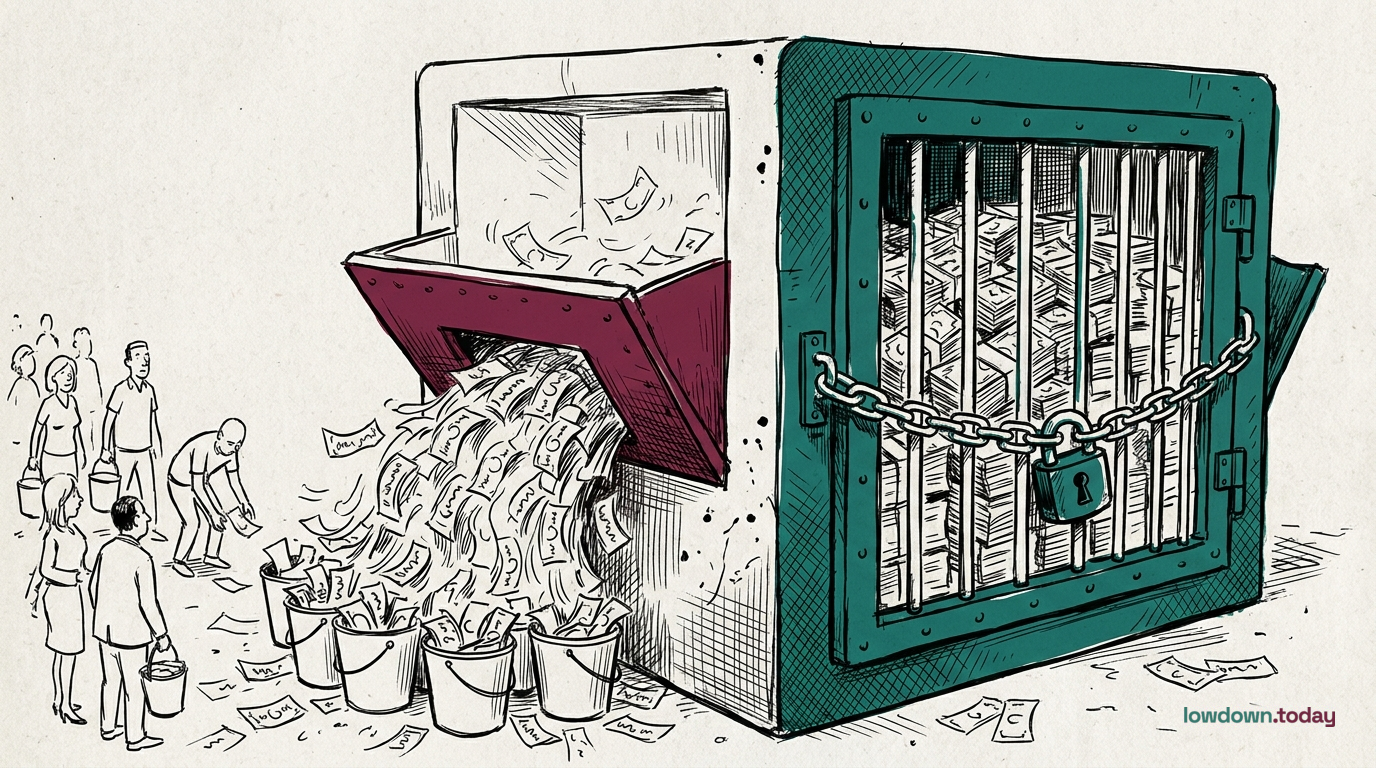
Republicans spent their Senate committee cash lead in August; Democrats now hold twice as much.

The Democratic Senatorial Campaign Committee (DSCC) ended August with $37.6m in cash against $18.7m for the National Republican Senatorial Committee (NRSC). Both figures come from the September Monthly reports the committees filed with the Federal Election Commission (FEC) on 20 September⁠12. The two committees are the parties' official Senate campaign arms. On 1 August the NRSC had led by $16.3m; by 31 August it trailed by $18.9m.

The NRSC's own spending explains the reversal. It reported $45.92m of coordinated expenditures with its Senate candidates in August, against $1.00m from the DSCC. A coordinated expenditure is party money spent on a candidate's advertising in consultation with the campaign. the Supreme Court removed the ceiling on it in June, and July's filings already showed the NRSC moving first. August turned that head start into a 46-to-1 gap.

The NRSC started the month with $56.2m and paid out $50.3m against receipts of $12.8m; the DSCC went from $39.9m to its closing balance. Five candidates took most of the Republican money: Jon Husted in Ohio ($10.03m), Ashley Hinson in Iowa ($8.24m), Michael Whatley in North Carolina ($7.96m), John E. Sununu in New Hampshire ($5.18m) and Mike Rogers in Michigan ($4.43m). The DSCC's largest cheques went to Troy Jackson in Maine ($366,000) and Abdul El-Sayed in Michigan ($329,000). What the NRSC has left is less than half of what it spent coordinating in August alone, so matching that pace in October depends on new receipts or on allied super PACs.

Republicans have a case for spending early. Airtime booked in August costs less than airtime bought in October, and race ratings follow polls rather than budgets. Cook Political Report moved New Hampshire, where Sununu received $5.18m, towards Republicans this month. What the filings establish is sequence and cash position: on 31 August the Senate committee with money left for October was the Democratic one.

Deep Analysis

In plain English

Every two years the two parties run national committees whose job is raising and spending money to help their own candidates win Senate seats. Right now Republicans' committee, the NRSC, has less cash left in the bank than Democrats' DSCC, but it has spent 46 times more on a specific kind of spending called 'coordinated' money, meaning the party works directly with a candidate's own campaign on adverts. Congress caps how much of this coordinated money a party can spend per race, to stop the party becoming a backdoor for unlimited campaign cash. A Supreme Court case now under way could remove that cap before November.

Deep Analysis
Root Causes

The coordinated-spending gap traces to FECA's per-race caps, which currently run from roughly $61,800 to $3.7m depending on the state and office. Both committees operate against the same ceiling.

The NRSC's near-exhaustion of that ceiling while the DSCC spent almost nothing is a choice about timing, not capacity: money saved now can still be deployed as coordinated spending once the caps are fixed for the cycle. If NRSC v. FEC strikes the caps instead, saved cash converts into a much larger tool later than an equivalent sum spent today.

What could happen next?
  • Consequence

    If the Supreme Court lifts FECA's coordinated-spending caps before November, the NRSC's larger unspent allowance converts into candidate-level advertising rather than parallel independent-expenditure campaigns run by outside groups.

  • Risk

    The DSCC's near-zero coordinated spend leaves it exposed if the ruling comes late or not at all this cycle, since money held back against a possible cap lift cannot be recovered if the caps survive to November unchanged.

First Reported In

Update #18 · Republicans spend first, Democrats hold cash

Federal Election Commission· 24 Sept 2026
Read original
Different Perspectives
Missouri and Secretary of State Denny Hoskins
Missouri and Hoskins, held in contempt by the state's own supreme court on 10 September for prematurely reverting to HB 1, filed against a pause of the 8th Circuit's order restoring the same 2025 map.
Richard von Glahn and People Not Politicians
Von Glahn and People Not Politicians filed emergency application 26A388 on 22 September asking Justice Kavanaugh to pause the 8th Circuit's order restoring the 2025 map, days after Missouri mailed overseas ballots under the 2022 lines. A refusal to pause it would leave those ballots carrying the wrong districts.
Harmeet Dhillon, Justice Department
Dhillon said the department will send about 1,000 election monitors to Nevada, Pennsylvania and Rhode Island in November, calling it "the biggest DOJ election observer effort in history" and citing "67 election-related indictments and convictions" against 13 under the Biden administration.
National Association for the Advancement of Colored People and co-plaintiffs
The NAACP and eight other groups sued DHS in Washington on 18 September to keep ICE away from polling places, citing federal statutes barring armed officers and troops at elections. The suit follows a released 2025 DHS email listing non-English-language voting jurisdictions beside a Justice Department prosecution checklist.
Cook Political Report
Cook wrote that "the amount of money national Republicans have dedicated to this race is a flashing red light for Democrats" when it moved New Hampshire from Lean Democrat to Toss Up on 15 September, citing the NRSC's $5.18m for Sununu. It is the one state where Republican spending and the rating move the same direction.
Democratic Senate strategists
Strategists note the DSCC held a $37.6m cash lead over the NRSC's $18.7m at the end of August, after coordinating just $1.00m of spending itself. One reading holds the committee is banking that cash for the campaign's final weeks rather than matching Republican spending dollar-for-dollar in August.