Skip to content
Welcome, thoughtbot's Giant Robots listeners!Start here
US Midterms 2026
24SEP

Texas PAC's only donor got Musk's sums

4 min read
11:45UTC

Texas PAC's 15 October report names one donor, the Senate Leadership Fund. SLF's own filing shows Elon Musk giving it the same two sums, each a day before SLF paid Texas PAC.

PoliticsAssessed
Key takeaway

Musk's two gifts to SLF match its two TEXAS PAC payments in amount, each one day earlier.

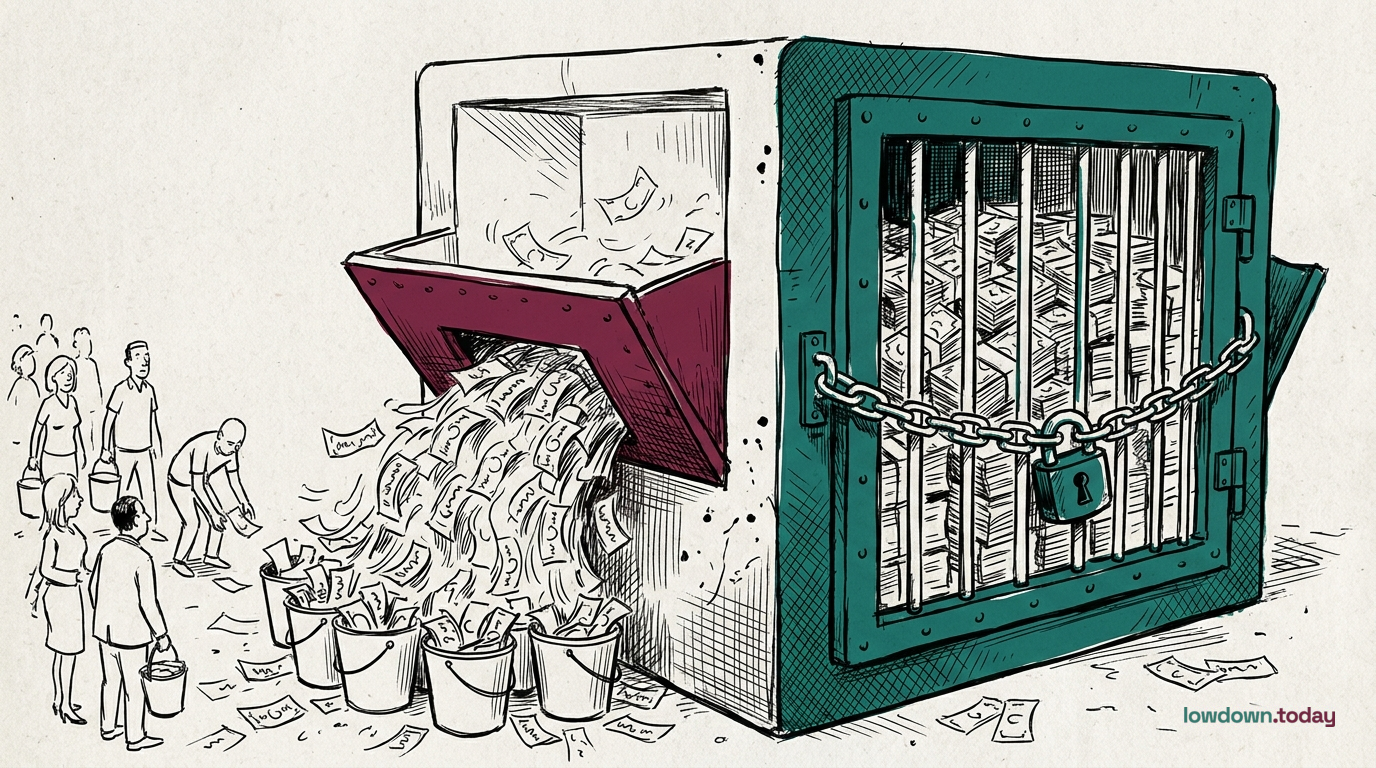
TEXAS PAC, which has spent $131.5m in Texas's Senate race, named its donors on 15 October, and there is only one. TEXAS PAC is a super PAC, a committee that can raise and spend without limit provided it acts independently of candidates and parties. The Senate Leadership Fund (SLF), the Senate Republican leadership's super PAC, which files as SLF PAC, gave it $75m on 10 September and $83m on 24 September⁠1. SLF's own report to the Federal Election Commission (FEC) shows Elon Musk giving SLF $75m on 9 September and $83m on 23 September⁠2. The amounts and the dates match: each Musk gift reached SLF, to the dollar, the day before SLF sent TEXAS PAC the same sum.

Nothing in either filing ties the two transactions together beyond those dates and sums. TEXAS PAC's ads ran with no donor on record from September; the report now names SLF as that donor. The New York Times reported Musk's $158m to SLF around 12 October⁠3, before either quarterly report was public.

Musk money also reached the race directly. The Elon Musk Revocable Trust, which holds Musk's personal assets, gave $10m on 21 August to Lone Star Liberty, which also took $5m from SLF⁠4. Lone Star Liberty spent $13.89m against Democrat James Talarico and $3.59m for Republican Ken Paxton, the state's attorney general, who ousted Senator John Cornyn in the 26 May primary runoff. America PAC, Musk's own super PAC, reported $88.87m of receipts in the quarter, all of it given by or attributed to Musk, and spent $6.4m against Talarico⁠5. It had already mailed voters in other Senate races. Across the three committees, money given by or attributed to Musk between July and September comes to about $257m.

Talarico's campaign raised $56.34m in the quarter to Paxton's $10.17m, about 5.5 to 1⁠6⁠7. TEXAS PAC alone outspent Talarico's campaign by more than two to one, $131.5m to $63.14m. Talarico has been off the trail since 30 September with what his campaign calls flu; Donald Trump posted on 7 October that he should "immediately report to a debate stage"⁠8. A YouGov poll released on 8 October put Talarico six points ahead, a single survey, and Texas early voting opens on Monday 19 October.

SLF spent $356.2m in the quarter and ended it with $155.4m, down from $238.6m on 30 June⁠9. Musk supplied about 58% of its $272.9m of receipts, and TEXAS PAC took about 44% of its spending. SLF also led Republican outside spending in 2022, so a leadership super PAC carrying the party's Senate candidates has precedent.

Deep Analysis

In plain English

A super PAC is a political committee that can raise and spend unlimited money, as long as it does not work hand in hand with a candidate. It must report its donors to the Federal Election Commission, the agency that polices campaign money. Here, one super PAC (TEXAS PAC) gets all its money from another (the Senate Leadership Fund). The Senate Leadership Fund's own report shows Elon Musk giving the same sums a day earlier. Voters only see this by reading both reports side by side.

Deep Analysis
Root Causes

Federal law sets no limit on what one super PAC may give another, so a leadership committee can fund a single-race committee in any amount. The receiving committee then reports only its immediate donor.

The filing calendar adds a lag. Committees that file quarterly report September receipts on 15 October, so ads paid for in September air for weeks before any donor appears on the record.

Candidate fundraising is capped at $3,500 a donor per election, while super PAC gifts are not. A campaign that raises five times its rival can still be outspent on television by one committee.

What could happen next?
  • Precedent

    A leadership super PAC can fund a single-state committee in any amount, so the donor named on that committee's ads can differ from the donor named one filing upstream.

    Long term · Assessed
  • Risk

    Complaints to the FEC are possible, but the commission rarely resolves a complaint before the election it concerns.

    Short term · Assessed
  • Consequence

    Paxton's campaign relies on outside committees for most of its television, so late messaging on his side sits largely outside his own control.

    Immediate · Assessed
First Reported In

Update #20 · SLF's gifts to Texas PAC match Musk's to SLF

Federal Election Commission· 17 Oct 2026
Read original →
Different Perspectives
University of Florida Election Lab
The lab, run by Michael McDonald, estimates about 124.3 million ballots, a raw midterm record, and turnout of about 49.4% of eligible voters, second to 2018's 50.05%. The raw record reflects population growth more than a record rate, so the late count is working through a near-2018 electorate.
Thune's critics on the right, including Senator Ron Johnson
Ron Johnson backed the failed 31-15 motion to delay Thune's re-election, after activists such as Mike Cernovich blamed the leader for the defeat. Their complaint is that Republicans could have passed the SAVE Act; in January it meets a Democratic Senate instead.
Senator John Thune
Senator John Thune
Thune was re-elected Senate Republican leader by acclamation on 10 November after a motion to delay failed 31-15. He kept the filibuster that stopped the SAVE Act, the choice his critics on the right blame for the defeat.
House Republicans under Jim Jordan
House Republicans elected Jordan minority leader by 106 votes to 73 over Steve Scalise on 10 November, after Speaker Mike Johnson declined to run. They replaced the leadership that lost the majority, while Senate Republicans kept theirs.
Donald Trump
Donald Trump
Trump asked on Truth Social on 9 November whether anybody believed the election "was honest" and blamed the machines, having told The New York Times on polling night he would accept the results. No Republican campaign had sued over a 2026 result by 10 November, so the claim has no case behind it.
Judge David O. Carter
Carter closed the Justice Department's suit over about 20,000 California mail ballots on 10 November after the department withdrew it, writing that the suit "attempted to disrupt an ongoing election". The closure leaves the department with no court order touching a 2026 California ballot.

Written with AI from Lowdown's published reporting. Not individually reviewed by an editor. Editorial standards.
