Skip to content
Welcome, thoughtbot's Giant Robots listeners!Start here
US Midterms 2026
24SEP

Maryland map dies as Senate session ends

3 min read
11:45UTC

Governor Wes Moore's plan to eliminate Maryland's single Republican congressional seat died on 14 April when Senate President Bill Ferguson ended the session without bringing the bill to a vote.

PoliticsDeveloping
Key takeaway

Maryland Democratic redistricting is dead for 2026 because a Democratic Senate president refused to schedule the vote.

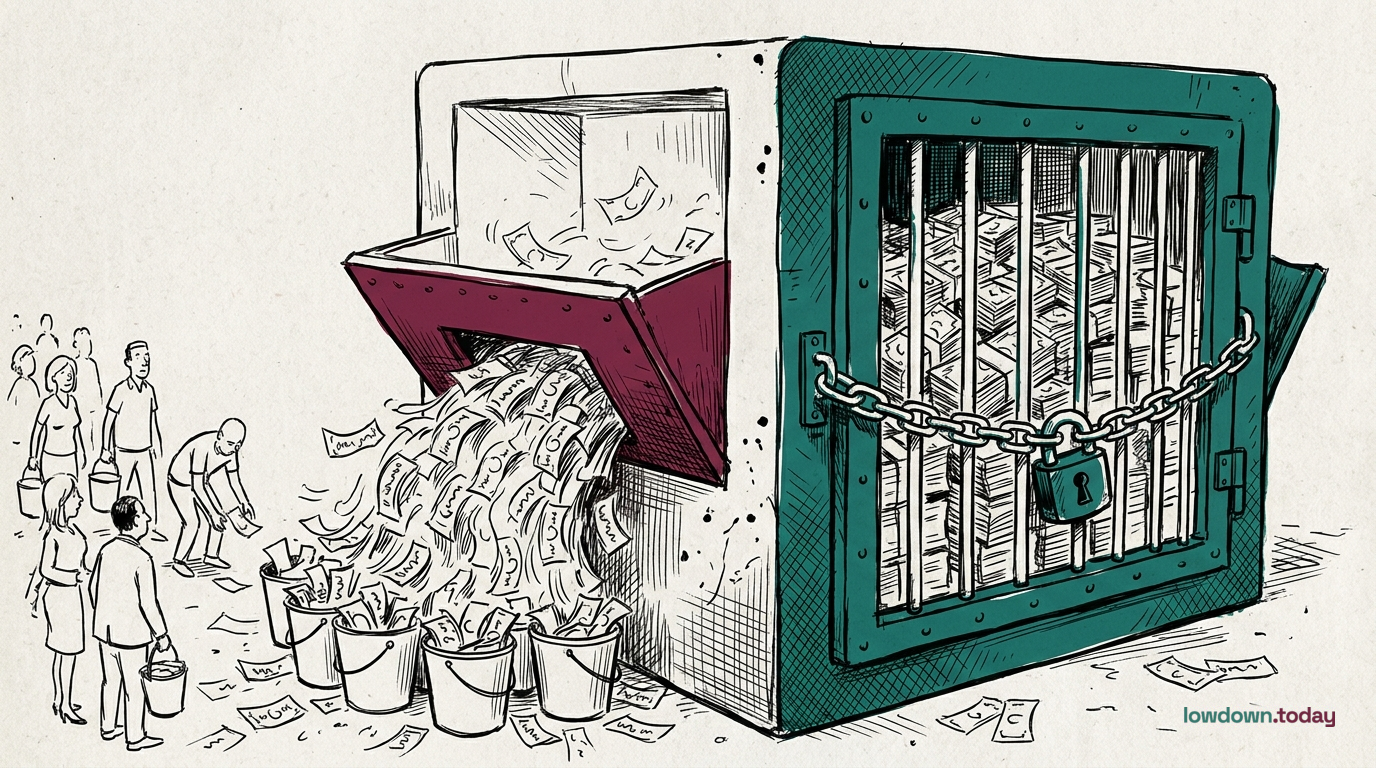
Maryland's mid-decade redistricting bill died in committee on 14 April 2026 when the Democratic-led state Senate ended its session without acting on Governor Wes Moore's plan to eliminate the state's single Republican congressional seat⁠1. The House had already passed an all-Democratic map 99-37 on 2 February. Senate President Bill Ferguson declined to bring the bill to a floor vote, and the session adjourned with the bill still in committee.

The collapse is a Democratic-on-Democratic procedural kill, not a Republican defeat. Ferguson holds procedural control of the Senate calendar: a bill that the president refuses to schedule does not reach a vote regardless of the numerical majority that would pass it. That makes this the cleanest illustration of the asymmetry between the two parties' mid-decade redistricting programmes. Republican efforts in Texas and Missouri moved through governors' offices and legislative majorities on executive timetables. Democratic efforts in Maryland, Virginia and California require either party-leader unanimity, popular referendum, or an independent commission, each of which introduces a veto point the Republican track does not carry.

Democratic mid-decade redistricting for 2026 now depends on Virginia's 21 April referendum and whatever emerges from the Florida session on 28 April. Of the three Democratic states initially mapped to mid-decade action, one is now definitively out. The institutional architecture that forced this outcome, a state Senate president with calendar control and no compulsion to bring a bill to the floor, will still be in place when the next cycle opens.

Deep Analysis

In plain English

US congressional district maps are drawn by state legislatures every ten years after a census. Some states are now attempting to redraw maps in the middle of the decade, not because of new census data, but because one party controls the state government and wants to improve its position before the 2026 elections. In Maryland, the state House of Representatives (which Democrats control) passed a new map designed to give Democrats all eight of Maryland's seats in Congress. But the state Senate President, also a Democrat, blocked that map from even coming to a vote in the Senate. When the legislative session ended without a vote, the map died. The result is that Maryland, which Democrats control entirely, will continue to hold one Republican congressional seat, which could have been eliminated.

Deep Analysis
Root Causes

Maryland's redistricting failure has a structural cause that predates this session: the state's prior congressional map was already the product of a 2022 remediation order, making any new aggressive gerrymander subject to immediate legal challenge by the same plaintiff groups. Ferguson's Senate chamber contains incumbents whose district relationships, constituent service, local fundraising, campaign infrastructure, are tied to the existing geographic boundaries.

The deeper structural problem is that mid-decade redistricting requires unanimous party discipline across both chambers. The House passed the map 99-37. The Senate President exercised a unilateral procedural veto. Democratic redistricting strategy in states without independent commissions now has a single-actor failure mode whenever a chamber leader's personal interests diverge from the party's national interest.

What could happen next?
  • Consequence

    Maryland's failure removes one potential Democratic seat from the 2026 gain column, leaving Virginia as the sole remaining mid-decade redistricting opportunity that could deliver new Democratic seats before November.

    Short term · 0.92
  • Precedent

    Ferguson's veto demonstrates that intra-party chamber control is a reliable blocking mechanism against mid-decade redistricting, giving Republican legal teams a template for lobbying Republican-controlled state Senate presidents in other states to resist Democratic court-ordered remediation.

    Medium term · 0.7
  • Risk

    If the Virginia referendum fails on 21 April, Democrats will have lost both major mid-decade redistricting opportunities in April, shifting their entire map-improvement strategy to federal litigation.

    Short term · 0.75
First Reported In

Update #3 · Tariff shock reads in GDP. Senate map moves.

KCFJ· 16 Apr 2026
Read original →
Different Perspectives
Missouri and Secretary of State Denny Hoskins
Missouri and Hoskins, held in contempt by the state's own supreme court on 10 September for prematurely reverting to HB 1, filed against a pause of the 8th Circuit's order restoring the same 2025 map.
Richard von Glahn and People Not Politicians
Von Glahn and People Not Politicians filed emergency application 26A388 on 22 September asking Justice Kavanaugh to pause the 8th Circuit's order restoring the 2025 map, days after Missouri mailed overseas ballots under the 2022 lines. A refusal to pause it would leave those ballots carrying the wrong districts.
Harmeet Dhillon, Justice Department
Dhillon said the department will send about 1,000 election monitors to Nevada, Pennsylvania and Rhode Island in November, calling it "the biggest DOJ election observer effort in history" and citing "67 election-related indictments and convictions" against 13 under the Biden administration.
National Association for the Advancement of Colored People and co-plaintiffs
The NAACP and eight other groups sued DHS in Washington on 18 September to keep ICE away from polling places, citing federal statutes barring armed officers and troops at elections. The suit follows a released 2025 DHS email listing non-English-language voting jurisdictions beside a Justice Department prosecution checklist.
Cook Political Report
Cook wrote that "the amount of money national Republicans have dedicated to this race is a flashing red light for Democrats" when it moved New Hampshire from Lean Democrat to Toss Up on 15 September, citing the NRSC's $5.18m for Sununu. It is the one state where Republican spending and the rating move the same direction.
Democratic Senate strategists
Strategists note the DSCC held a $37.6m cash lead over the NRSC's $18.7m at the end of August, after coordinating just $1.00m of spending itself. One reading holds the committee is banking that cash for the campaign's final weeks rather than matching Republican spending dollar-for-dollar in August.