Skip to content
Welcome, thoughtbot's Giant Robots listeners!Start here
US Midterms 2026
24SEP

Every Democratic 2026 redistricting track is closed

4 min read
11:45UTC

Maryland died in April, Virginia died on 8 May, New York is constitutionally foreclosed before 2028, and California's Prop 50 maps face a SCOTUS-bound challenge; no Democratic counter-map delivers seats by November.

PoliticsDeveloping
Key takeaway

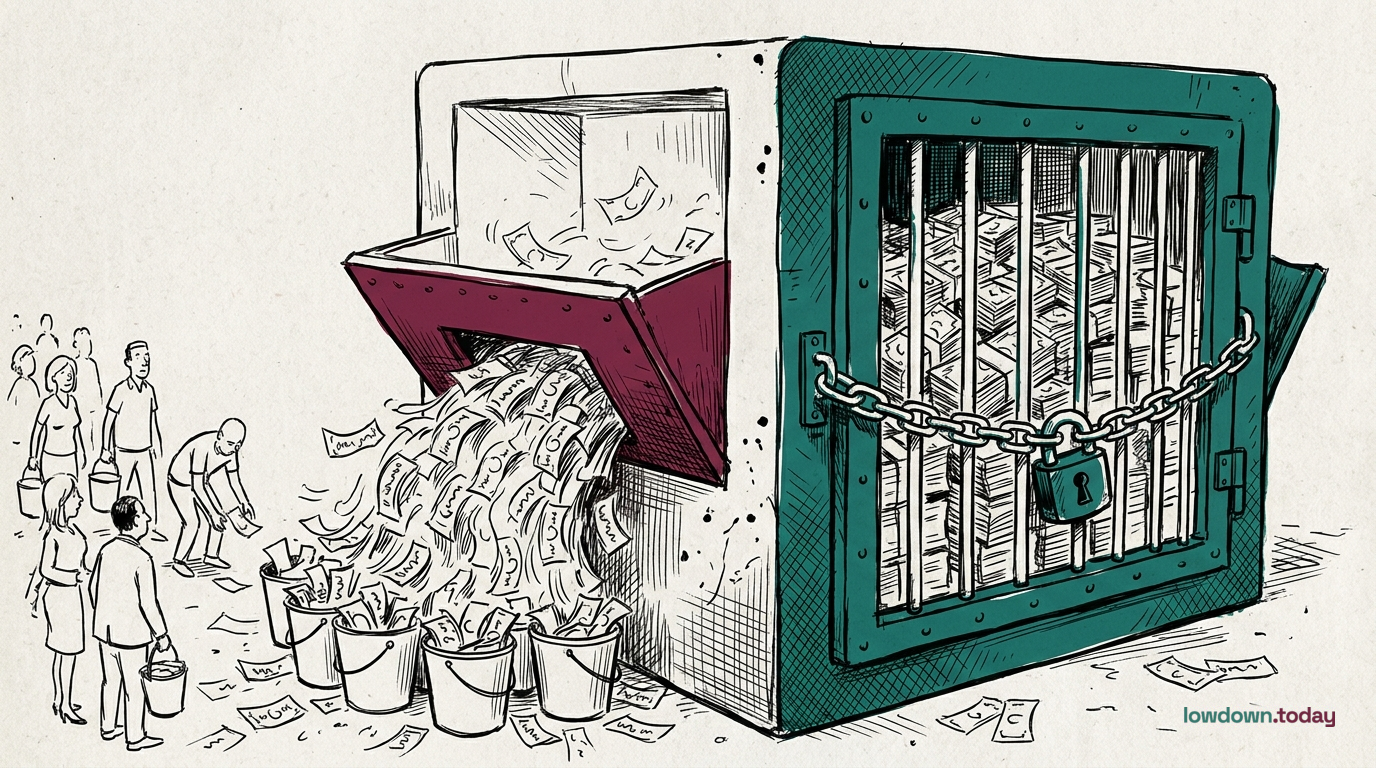
The Democratic 2026 retaliation map exists only in California and Albany; neither delivers seats by November.

Every Democratic mid-decade redistricting track for 2026 is now closed. Maryland died in April when Senate President Bill Ferguson blocked the chamber's vote on the House map. Virginia died on 8 May via the SCOVA 4-3 ruling. New York is constitutionally foreclosed: any amendment to the 2014 independent commission structure requires passage by two separately elected legislatures plus a voter referendum, with the earliest possible effect in 2028⁠1.

Minority Leader Hakeem Jeffries dispatched Representative Joseph Morelle to Albany on Monday 4 May with a three-week deadline; on the New York constitutional timeline, that deadline is a 2028 setup move, not a 2026 fix. The state's two-legislature requirement means a redraw fast-tracked today reaches voters in November 2027 at the earliest, with the new districts effective for the 2028 cycle. California's Proposition 50 maps remain in use but are heading toward the Supreme Court on racial gerrymandering grounds. Tangipa v. Newsom argues that the Callais ruling reframes the constitutional question⁠2. The 9th Circuit upheld the maps 2-1 in January 2026, with Judge Kenneth Lee dissenting in terms that echo Callais.

The Democratic retaliation map exists on paper in California and as intent in Albany. Neither delivers seats in November 2026. Election Law at Ohio State director Steven Huefner called the asymmetry between the two parties' redistricting toolkits the central institutional fact of the cycle: Republican states move on governors' calendars, Democratic states move on referendum, supermajority or commission calendars. Brennan Center vice president Wendy Weiser pushes back: the Democratic mechanisms exist precisely to slow mid-decade redistricting and have done their constitutional job; the political cost is a separate question from the institutional design.

The practical result is that the 2026 House baseline is set by the Republican Callais harvest before any 2026 campaign begins. The remaining variables for November are the wave-strength question, captured in the D+5.3-5.9 generic ballot range, and the three court hinges still pending: Hawkes in Florida, the 9th Circuit on Oregon, and Watson v. RNC at SCOTUS.

Deep Analysis

In plain English

In the US, the party that controls a state government can often draw congressional districts to give itself an advantage. After the 2010 census, Republicans did this very aggressively in many states. In response, several Democrat-leaning states passed laws creating independent commissions or requiring public referendums to approve new district maps. The idea was to make gerrymandering harder for everyone. But those same rules are now preventing Democrats from responding to a wave of Republican redistricting that followed the Supreme Court's April 2026 ruling. In Maryland, the Democratic-controlled Senate blocked a retaliatory map. In Virginia, the Court threw out an attempt to redraw districts on a procedural technicality. In New York, the state's constitution requires a lengthy two-step process that cannot be completed before 2028. In California, an independent commission draws the maps and a court challenge is the only available route. The result is that Republicans have added seats before the 2026 election through rapid redistricting, and Democrats have no equivalent fast-moving tool. This is partly because of laws Democrats themselves helped pass after 2010 to make redistricting fairer. Those laws worked as intended; the political consequence is that they also removed Democratic flexibility in 2026.

What could happen next?
  • Consequence

    The Democratic 2026 House baseline is set by the Republican Callais harvest before any campaign begins. The remaining variables for November are wave strength (currently D+5.3-5.9 generic ballot) and three pending court hinges: Hawkes in Florida, the 9th Circuit on Oregon, and Watson v. RNC.

    Immediate · 0.88
  • Risk

    Tangipa v. Newsom, the SCOTUS-bound challenge to California's Proposition 50 maps on post-Callais racial gerrymandering grounds, could open California's maps to Republican challenge and further erode the Democratic House baseline if the Court grants certiorari.

    Medium term · 0.42
  • Opportunity

    The New York two-legislature sequence, if initiated now, completes in time for the 2028 cycle with the earliest possible referendum in November 2027. Jeffries's Morelle mission to Albany on 4 May sets up that timeline rather than delivering 2026 seats.

    Long term · 0.72
  • Consequence

    If Democrats hold or gain the House majority in 2026 despite the Callais map, the case for retaining slower redistricting mechanisms strengthens: wave magnitude overwhelmed the structural deficit. If Republicans hold the House by a margin traceable to Callais-harvested seats, pressure to dismantle commission and referendum structures in Democratic states will intensify.

    Long term · 0.68
First Reported In

Update #6 · A primary nullified mid-vote

amNewYork· 19 May 2026
Read original →
Different Perspectives
Missouri and Secretary of State Denny Hoskins
Missouri and Hoskins, held in contempt by the state's own supreme court on 10 September for prematurely reverting to HB 1, filed against a pause of the 8th Circuit's order restoring the same 2025 map.
Richard von Glahn and People Not Politicians
Von Glahn and People Not Politicians filed emergency application 26A388 on 22 September asking Justice Kavanaugh to pause the 8th Circuit's order restoring the 2025 map, days after Missouri mailed overseas ballots under the 2022 lines. A refusal to pause it would leave those ballots carrying the wrong districts.
Harmeet Dhillon, Justice Department
Dhillon said the department will send about 1,000 election monitors to Nevada, Pennsylvania and Rhode Island in November, calling it "the biggest DOJ election observer effort in history" and citing "67 election-related indictments and convictions" against 13 under the Biden administration.
National Association for the Advancement of Colored People and co-plaintiffs
The NAACP and eight other groups sued DHS in Washington on 18 September to keep ICE away from polling places, citing federal statutes barring armed officers and troops at elections. The suit follows a released 2025 DHS email listing non-English-language voting jurisdictions beside a Justice Department prosecution checklist.
Cook Political Report
Cook wrote that "the amount of money national Republicans have dedicated to this race is a flashing red light for Democrats" when it moved New Hampshire from Lean Democrat to Toss Up on 15 September, citing the NRSC's $5.18m for Sununu. It is the one state where Republican spending and the rating move the same direction.
Democratic Senate strategists
Strategists note the DSCC held a $37.6m cash lead over the NRSC's $18.7m at the end of August, after coordinating just $1.00m of spending itself. One reading holds the committee is banking that cash for the campaign's final weeks rather than matching Republican spending dollar-for-dollar in August.