Skip to content
Welcome, thoughtbot's Giant Robots listeners!Start here
UK Local Elections 2026
12AUG

RPA Bill stranded, FCA review without probe

4 min read
14:07UTC

The Representation of the People Bill was excluded from the four-bill wash-up before prorogation on Wednesday 29 April 2026, leaving the campaign-finance regime Parliament intended to be in force not in force on polling day.

PoliticsDeveloping
Key takeaway

The RPA Bill stalled in wash-up before prorogation on Wednesday 29 April 2026, freezing Reform's £12m crypto donations.

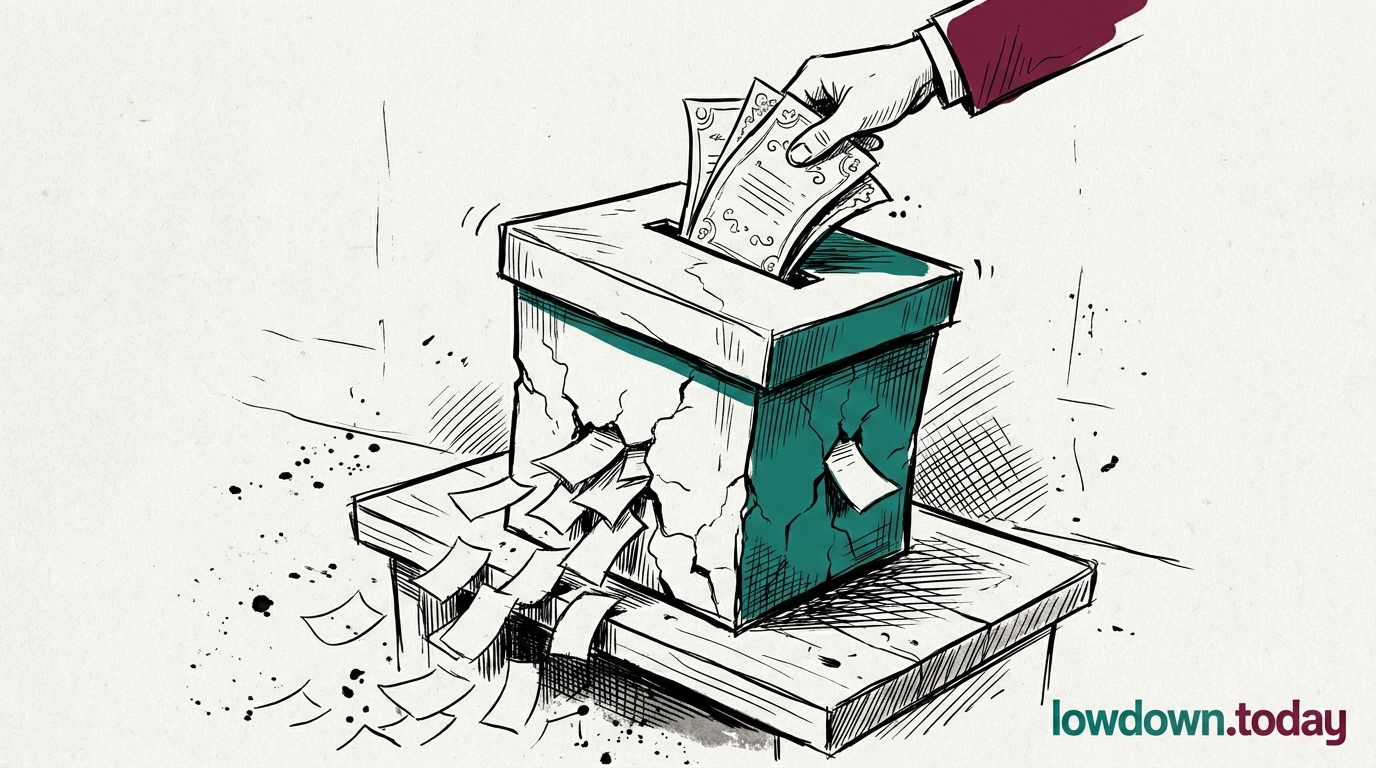
Parliament excluded the Representation of the People Bill from the four-bill wash-up before prorogation on Wednesday 29 April 2026, which means the bill that would have required Reform UK to return Christopher Harborne's £12 million in cryptocurrency donations within 30 days of Royal Assent is not law on polling day. The Financial Conduct Authority has acknowledged the Liberal Democrat complaint about Farage's £215,000 personal stake in Stack BTC without opening an investigation. The single Section 106 RPA conviction of the cycle remains the Cambridgeshire Reform councillor Andy Osborn, fined £1,800 and his seat vacated for a false Facebook post about a Conservative rival.

The statutory architecture holding the contest together rests on four pillars: Section 30 of the Scotland Act 1998, which governs whether Holyrood can hold a binding independence referendum; Section 66A of the Representation of the People Act 1983, which criminalises pre-22:00 publication of exit-poll material; Section 106 of the same Act, which criminalises false statements of fact about a candidate's personal character; and Section 114 of the Local Government Finance Act 1988, which restricts authorities that cannot set a balanced budget for the year ahead.

On 7 May 2026 three of the four are misaligned. Wes Streeting has prospectively denied any Holyrood request, regardless of the result. Section 66A is the only pillar fully in force; no exit-poll material exists yet. Section 106 has produced one conviction in 12 months across roughly 4,000 standing candidates. Section 114 reaches deep into the LGA's 22% Exceptional Financial Support finding (the subject of the next event). Westminster did not deliver the settlement under which 5,000 council seats will be contested tomorrow.

Voters will mark ballots tomorrow under rules Westminster decided not to fix in time, which means the donation, exit-poll and defamation regimes the country thought were active are partially active at most.

Deep Analysis

In plain English

Several laws were supposed to be in place by the time Britain voted on 7 May 2026. The most significant was a bill that would have forced Reform UK to return £12 million in cryptocurrency donations from its main backer, Christopher Harborne, within 30 days of the law passing. Parliament was supposed to pass it before dissolving for the election. Instead, the government excluded it from the legislation rushed through in the final days before Parliament closed. A complaint about Nigel Farage's personal financial stake in a cryptocurrency company sits with the Financial Conduct Authority, which acknowledged it but has not opened a formal investigation. The only election-law conviction in the entire 2026 campaign is a Reform UK councillor in Cambridgeshire, Andy Osborn, who was fined £1,800 for posting a false claim about a rival candidate. Voters on Thursday are choosing their representatives under rules that Parliament intended to strengthen but ran out of time to fix.

Deep Analysis
Root Causes

1. **Labour's parliamentary scheduling priorities.** The government's legislative programme for 2025/26 prioritised the NHS investment framework, the Planning and Infrastructure Bill, and the Employment Rights Bill. The Representation of the People Bill was introduced in the third session and reached only its ninth Commons committee sitting before prorogation. Electoral law Reform has not been a first-rank Labour priority in the 2024 Parliament.

2. **Opposition party calculations on RPA timing.** Conservative and Liberal Democrat negotiators in the wash-up had structural reasons to prevent the cryptocurrency donation provisions becoming law before 7 May: the Conservatives retain donors who use similar vehicles, and the Lib Dems' complaint against Farage's Stack BTC stake would have been overtaken by the new law. No opposition party publicly supported an emergency wash-up passage.

3. **The Electoral Commission's limited candidate-vetting remit.** The Electoral Commission cannot verify cryptocurrency wallet ownership or cross-reference donation sources with overseas beneficial ownership registers. This gap preceded the RPA Bill and would not have been closed by it: the bill addressed the return obligation (forcing Reform to repay Harborne's donation) not the verification infrastructure.

4. **The four-pillar architecture misalignment.** The financial substrate of the councils being elected, with 22% on Treasury EFS (event 7), sits under the same statutory architecture as the regulatory void. Section 114 councils cannot set their own budgets without Treasury approval; the RPA Bill's absence means donation rules operate under a pre-Reform framework on the same day council finances operate under emergency waivers.

What could happen next?
  • Consequence

    Reform UK retains the Harborne £12 million donation with no statutory return obligation; the campaign finance advantage persists into the post-election period and any future by-elections.

    Immediate · 0.9
  • Risk

    The FCA complaint about Farage's £215,000 Stack BTC stake sits without a resolution deadline; if the FCA eventually rules against him post-election, the political consequences arrive in a different news cycle from the polling day context that motivated the complaint.

    Medium term · 0.55
  • Precedent

    Excluding election-integrity legislation from the wash-up during the same cycle it was designed to regulate sets a parliamentary precedent that any future government can invoke; Spotlight on Corruption has flagged this as a structural gap in the wash-up convention.

    Long term · 0.7
First Reported In

Update #6 · 1 Days to Go: D'Hondt squeezes Welsh Greens

PollCheck· 6 May 2026
Read original →
Different Perspectives
Lancashire County Council
Lancashire filed in the Administrative Court before the 16 October limit, and its full council called for a legally binding referendum before any reorganisation. Ministers withdrew the Lancashire decision on 29 October, so the Reform-run county council keeps its current structure for now.
Kent County Council
Kent County Council
Kent announced judicial review proceedings before the 16 October limit against splitting Kent and Medway into four unitary councils. Ministers withdrew the Kent and Medway decision on 29 October, so the Reform-run county council keeps its current structure for now.
Conservative Party / Donald Walmsley
Walmsley, an East Sussex county councillor, left Reform UK in November and joined the Conservatives, citing ITV's undercover footage of Reform councillors and the leadership's response. His move came as the Conservatives gained four council seats from 22 October to 12 November and lost none.
UK Government / Jim McMahon (MHCLG) and Lord Wilson of Sedgefield
MHCLG said on 29 October it is "minded to" create unitary councils in five English areas from 2029, and McMahon argues no area will want two tiers back once they exist. In the Lords on 2 November, Lord Wilson refused to put a deadline for automatic registration into the Representation of the People Bill.
Huw Irranca-Davies, Llywydd of the Senedd
Irranca-Davies ruled on 10 November that Joe Martin's request for a statement on the "demographic replacement of white British people" was discriminatory and offensive. Martin will not be called to speak until he apologises to the chamber, and Reform's free-speech motion of 18 November cannot overturn the ruling.
Reform UK / Nigel Farage and Helen Jenner
Reform's 33 Members of the Senedd left their benches empty at Plenary on 17 November over the Llywydd's ruling on Joe Martin, which Farage called "ridiculous and outrageous". Welsh leader Helen Jenner says meaningful debate and scrutiny cannot happen until the Presiding Officer reverses his decision.

Written with AI from Lowdown's published reporting. Not individually reviewed by an editor. Editorial standards.