Skip to content
Welcome, thoughtbot's Giant Robots listeners!Start here
UK Local Elections 2026
12AUG

IFS sweep: five of five Holyrood parties

3 min read
14:07UTC

Lowdown

PoliticsAssessed
Key takeaway

Five-of-five Holyrood dismissals in one cycle strips fiscal credibility from the campaign and pushes the argument to constitution.

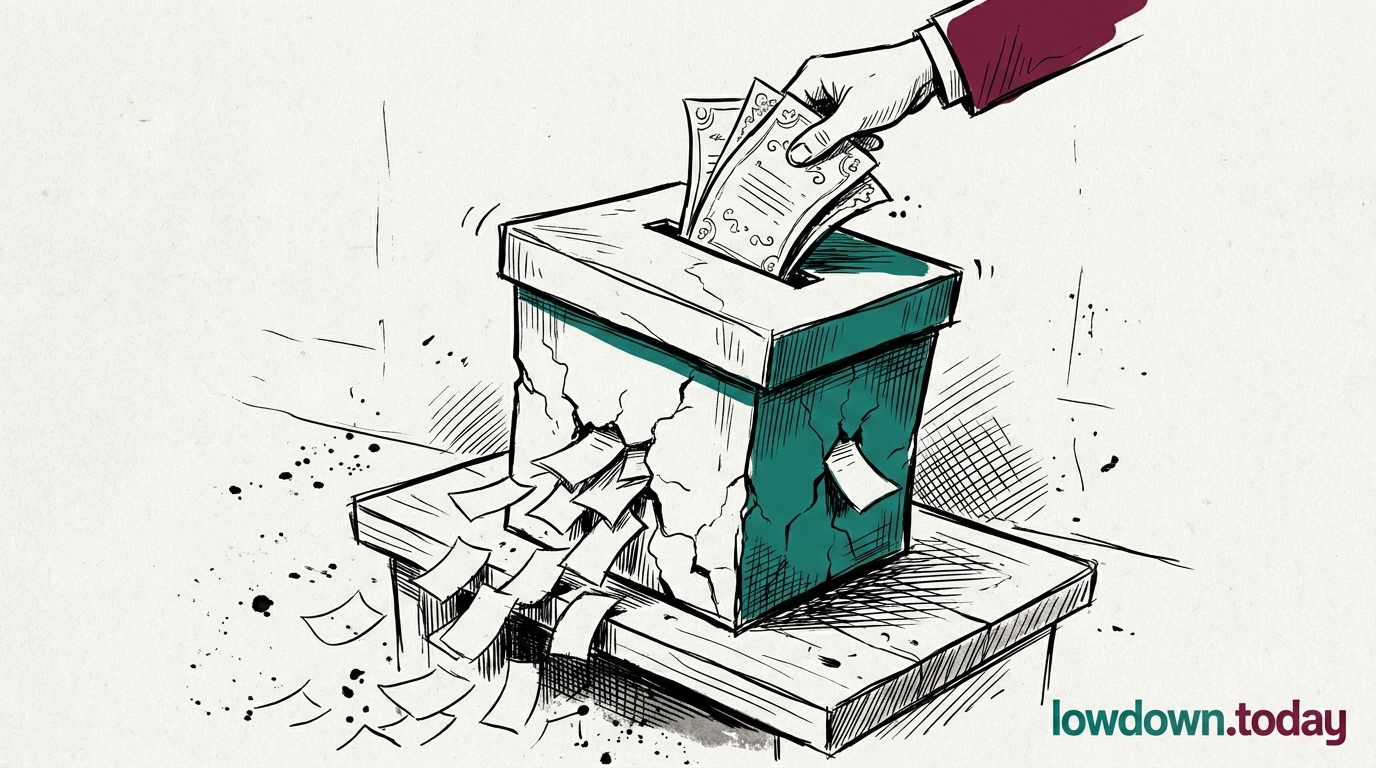
The Institute for Fiscal Studies completed a full sweep of the 2026 Holyrood contest on 14 April, having now individually rejected the manifestos of the SNP, Scottish Conservatives, Reform UK and Scottish Labour, alongside its collective verdict on all four.⁠1 Five of five parties have been found fiscally incredible in the same cycle.

Twenty-seven years of devolution have not produced this outcome before. Previous Holyrood campaigns have seen the IFS pick individual weaknesses, flag specific costings, or endorse one platform against another. No prior cycle has ended with every manifesto failing the same test inside a fortnight. The editorial weight sits on the completion rather than any single verdict within it; the earlier Scottish Conservative and Reform UK dismissals on 8 April set the pattern, and the Scottish Labour rejection on 14 April closed it.

What the sweep removes is the fiscal question as a differentiator. When one or two parties fail the test, opponents use that failure. When all five fail the same test in the same cycle, the test stops working as a campaign tool. Look at the next manifesto slot: the SNP has sequenced its launch for Wednesday in Edinburgh Park, with independence as the lead commitment. Constitutional choice is the one claim the IFS cannot referee on fiscal arithmetic.

Deep Analysis

In plain English

The Institute for Fiscal Studies (IFS) is widely respected as the UK's most authoritative independent organisation for checking whether political promises can actually be paid for. During this Scottish election campaign, it checked every major party's spending plans. In 27 years of elections for the Scottish Parliament, the IFS has never dismissed every single party's fiscal plan in one cycle. In 2026, it has now done exactly that: all five major Scottish parties have had their plans found wanting. This does not mean every party is equally dishonest. It means that under the rules of Scottish devolution, genuinely ambitious spending programmes cannot be fully funded without income tax rises most parties are unwilling to specify publicly. The IFS test is revealing the limits of the system as much as the dishonesty of individual parties.

Deep Analysis
Root Causes

The structural root cause is a 27-year accumulation of fiscal ambiguity in Scottish devolution that has never been tested.

The Barnett formula (the mechanism by which Scotland receives a population-based share of UK spending increases) has insulated Scottish politicians from the full consequence of underfunded promises: if a commitment cannot be met from existing Scottish Government resources, the gap is addressed via supplementary budget estimates negotiated with HM Treasury. This has reduced the electoral cost of fiscal imprecision.

A secondary cause is the absence of a functioning Scottish equivalent to the UK's Office for Budget Responsibility. The Scottish Fiscal Commission has a narrower mandate than the OBR and does not pre-score party manifestos. Without a government-mandated independent scorer, parties can claim their plans are affordable and outsource the credibility test to the IFS, which has no formal statutory role in Scottish elections.

What could happen next?
  • Precedent

    The five-of-five sweep is a devolution-era first that removes fiscal credibility as a meaningful campaign differentiator, leaving the SNP's independence offer as the only policy platform the IFS cannot audit arithmetically.

    Immediate · 0.85
  • Risk

    Normalising IFS dismissals across all parties may erode the IFS's authority as an electoral institution, reducing the influence of independent fiscal scrutiny in future Scottish elections.

    Long term · 0.62
  • Consequence

    The sweep validates Patrick Harvie's on-record statement that the 'fully funded manifesto' concept is misleading, potentially opening space for more honest public conversations about Scottish tax and spend trade-offs after the election.

    Medium term · 0.55
First Reported In

Update #4 · 22 Days to Go: Greens Take a Reform Seat in Kent

Institute for Fiscal Studies· 15 Apr 2026
Read original →
Causes and effects
This Event
IFS sweep: five of five Holyrood parties
The IFS has now individually dismissed every contesting Holyrood party's fiscal plan in the same election cycle, a devolution-era first.
Different Perspectives
Lancashire County Council
Lancashire filed in the Administrative Court before the 16 October limit, and its full council called for a legally binding referendum before any reorganisation. Ministers withdrew the Lancashire decision on 29 October, so the Reform-run county council keeps its current structure for now.
Kent County Council
Kent County Council
Kent announced judicial review proceedings before the 16 October limit against splitting Kent and Medway into four unitary councils. Ministers withdrew the Kent and Medway decision on 29 October, so the Reform-run county council keeps its current structure for now.
Conservative Party / Donald Walmsley
Walmsley, an East Sussex county councillor, left Reform UK in November and joined the Conservatives, citing ITV's undercover footage of Reform councillors and the leadership's response. His move came as the Conservatives gained four council seats from 22 October to 12 November and lost none.
UK Government / Jim McMahon (MHCLG) and Lord Wilson of Sedgefield
MHCLG said on 29 October it is "minded to" create unitary councils in five English areas from 2029, and McMahon argues no area will want two tiers back once they exist. In the Lords on 2 November, Lord Wilson refused to put a deadline for automatic registration into the Representation of the People Bill.
Huw Irranca-Davies, Llywydd of the Senedd
Irranca-Davies ruled on 10 November that Joe Martin's request for a statement on the "demographic replacement of white British people" was discriminatory and offensive. Martin will not be called to speak until he apologises to the chamber, and Reform's free-speech motion of 18 November cannot overturn the ruling.
Reform UK / Nigel Farage and Helen Jenner
Reform's 33 Members of the Senedd left their benches empty at Plenary on 17 November over the Llywydd's ruling on Joe Martin, which Farage called "ridiculous and outrageous". Welsh leader Helen Jenner says meaningful debate and scrutiny cannot happen until the Presiding Officer reverses his decision.

Written with AI from Lowdown's published reporting. Not individually reviewed by an editor. Editorial standards.