Skip to content
Briefings are running a touch slower this week while we rebuild the foundations.See roadmap
Russia-Ukraine War 2026
1APR

Sanctioned LNG tanker sunk off Libya

4 min read
16:30UTC

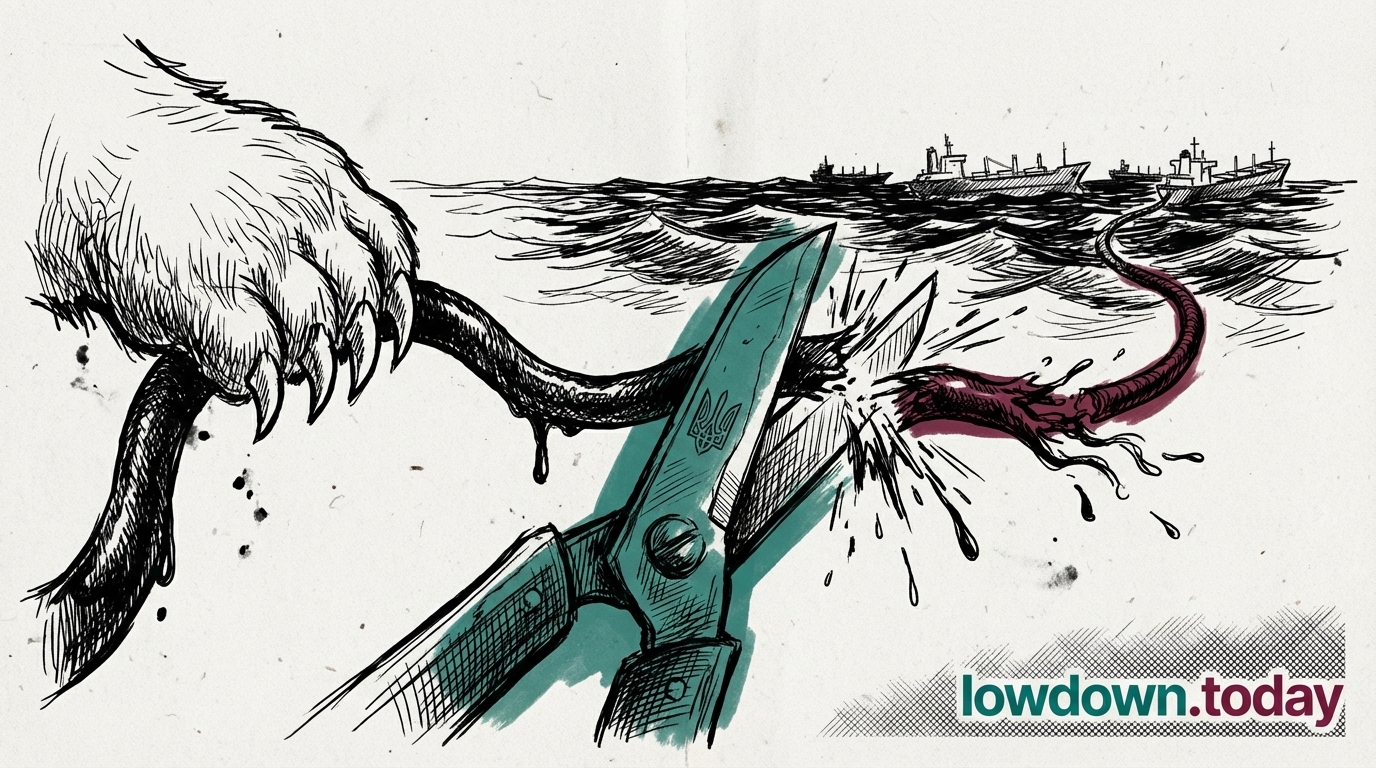
The sanctioned Russian carrier Arctic Metagaz was destroyed off Libya on 3 March, the first LNG tanker lost in modern conflict. If shadow fleet tankers can be sunk at sea, the economics of Russia's sanctions-evasion energy trade face a threat no waiver or discount can offset.

ConflictDeveloping
Key takeaway

Shadow fleet economics unravel if maritime insurance risk exceeds cargo value regardless of further strikes.

Multiple explosions struck the 277-metre sanctioned Russian LNG carrier Arctic Metagaz between Malta and the port of Sirte around 04:00 local time on 3 March 1. All 30 crew were evacuated alive 2. The vessel had departed Murmansk carrying cargo from Novatek's Arctic LNG 2 project — a facility under US, EU, and UK sanctions — and operated as part of Russia's shadow fleet, the tanker network that sails outside Western insurance, classification, and port-state inspection systems. It is the first confirmed destruction of an LNG carrier in any modern conflict.

Attribution remains unresolved. Russia's TASS attributed the attack to Ukrainian sea drones launched from positions off the Libyan coast 3. Ukraine's military has neither confirmed nor denied involvement. Ukrainian naval drones have operated as far as the Bosphorus; if Ukrainian, this strike would extend their documented operational range by roughly 1,000 km, placing much of the Mediterranean within reach.

The shadow fleet's defining characteristic — its separation from Western maritime infrastructure — doubles as its vulnerability. These vessels carry no Protection & Indemnity club insurance, receive no port-state inspections, and travel without naval escort. They evade sanctions by operating outside the system; that same isolation leaves them unprotected when someone decides to target them.

The sinking compounds an already severe revenue crisis. Russian oil and gas revenues fell 65% year-on-year in January, with Urals Crude at $38 against Brent at $62.50 . Arctic LNG 2 was the hedge — Asian demand replacing European buyers ahead of the EU's phased LNG ban beginning 25 April . That logic now faces a physical constraint. If shadow fleet tankers cannot safely transit the Mediterranean, the freight and security calculus for Chinese and Indian importers changes. The cargo discount on sanctioned Russian LNG may no longer compensate for the risk premium of a Mediterranean passage.

Deep Analysis

In plain English

Russia built a workaround fleet of old tankers — operating without Western insurance or tracking — to keep selling oil and gas despite sanctions. One of those ships, carrying Arctic gas to buyers outside Europe, was blown up near Libya, probably by Ukrainian underwater drones. LNG (liquefied natural gas) is stored at -162°C and is extremely flammable. That the vessel sank without a catastrophic cargo explosion is itself operationally significant. The attack means Russia's physical workaround for energy sanctions is now under threat. Even without further strikes, the demonstrated capability forces up war risk costs for every shadow fleet voyage through the Mediterranean.

Deep Analysis
Synthesis

This is the first live test of whether maritime interdiction can function as a sustained sanctions enforcement mechanism. Individual cargo destruction is economically marginal relative to Russia's total export revenues. The strategic value is in demonstrated capability: if Ukraine can credibly threaten shadow fleet vessels across the Mediterranean, war risk premiums spike fleet-wide. Russia's energy export costs rise without any further military action required.

Root Causes

The shadow fleet emerged from a structural gap in G7 price cap enforcement. Western classification societies and P&I clubs withdrew from Russian vessels in 2022, but no enforcement mechanism covered replacement registrars in Palau, Gabon, and Tanzania that absorbed the resulting demand. That vacuum was predictable; maritime interdiction risk was never priced into shadow fleet operating models.

Escalation

Russia faces a dilemma: retaliating against Ukrainian maritime assets risks escalating into NATO-adjacent waters, while inaction signals shadow fleet vessels are legitimate targets. Ukraine faces the mirror dilemma — claiming the strike maximises deterrence but forfeits deniability for future operations. Neither side holds a dominant de-escalation strategy, which makes further maritime operations more probable than a negotiated stand-down.

What could happen next?
  • Precedent

    First confirmed destruction of an LNG tanker in conflict establishes maritime energy infrastructure as a reachable military target, changing risk calculus for all shadow fleet operators globally.

    Immediate · Assessed
  • Risk

    Shadow fleet operators may suspend Mediterranean transits pending threat reassessment, directly disrupting Arctic LNG 2 delivery schedules before the EU's 25 April LNG ban takes effect.

    Short term · Assessed
  • Consequence

    Asian LNG buyers dependent on Russian Arctic supply must now price maritime war risk into procurement decisions, potentially accelerating diversification toward US or Qatari LNG.

    Medium term · Assessed
  • Opportunity

    US LNG exporters and Qatar could capture Arctic LNG 2 market share if Russia's supply reliability is structurally degraded by sustained maritime threat.

    Medium term · Suggested
First Reported In

Update #2 · Shadow fleet tanker sunk, talks seek venue

TASS· 5 Mar 2026
Read original
Different Perspectives
North Korea / DPRK
North Korea / DPRK
ISW confirmed the first mounting of DPRK Type-75 MLRS on Russian autonomous UGVs near Kharkiv on 7 June, the latest step in a supply axis that escalated from shells in 2023 to troops in 2024. Pyongyang gains live battlefield data on its ordnance and on Russia's uncrewed-systems programme.
IAEA / Rafael Grossi
Grossi confirmed Chornobyl structural damage with nuclear material metres away and could not attribute the ZNPP 15-hour blackout during the agreed repair window. Six ceasefires brokered and broken at ZNPP, compounded by Rosatom's May attack on IAEA neutrality, have eroded his ability to enforce the windows he negotiates.
Emmanuel Macron / France
Macron co-signed the E3 framework whose line-of-contact baseline marks Europe's first formal acceptance that 1991 borders are not the opening position. France's role carries weight because Macron had previously proposed a European force for Ukraine, and the framework's multinational force point is the vehicle for that.
Keir Starmer / E3
Keir Starmer / E3
Starmer, Macron and Merz met Zelenskyy on 7 June and backed a five-point framework taking the line of contact as the talks baseline, conceding roughly one fifth of Ukraine in exchange for a multinational force and frozen assets. With US mediation ended, the NATO Ankara summit on 7-8 July is the next test.
Vladimir Putin / Kremlin
Putin used SPIEF to reject Zelenskyy's summit letter, citing 'elements of rudeness', and repeated the pre-agreed treaty precondition that has frozen every diplomatic round since May. The SPIEF platform's message of investor confidence was punctured by naval fires visible from St Petersburg, which Moscow declined to dispute in scale.
Ukraine / Unmanned Systems Forces
Commander Brovdi confirmed USF units tracked and set fire to Boikyi at Kronstadt, while Code 9.2 struck the Chonhar Bridge the following day. Ukraine is sequencing strikes for rear-area interdiction and political timing rather than ground gains, trading the Baltic Fleet's home base for the logistics squeeze Russia cannot absorb without rationing its own occupied territory.
