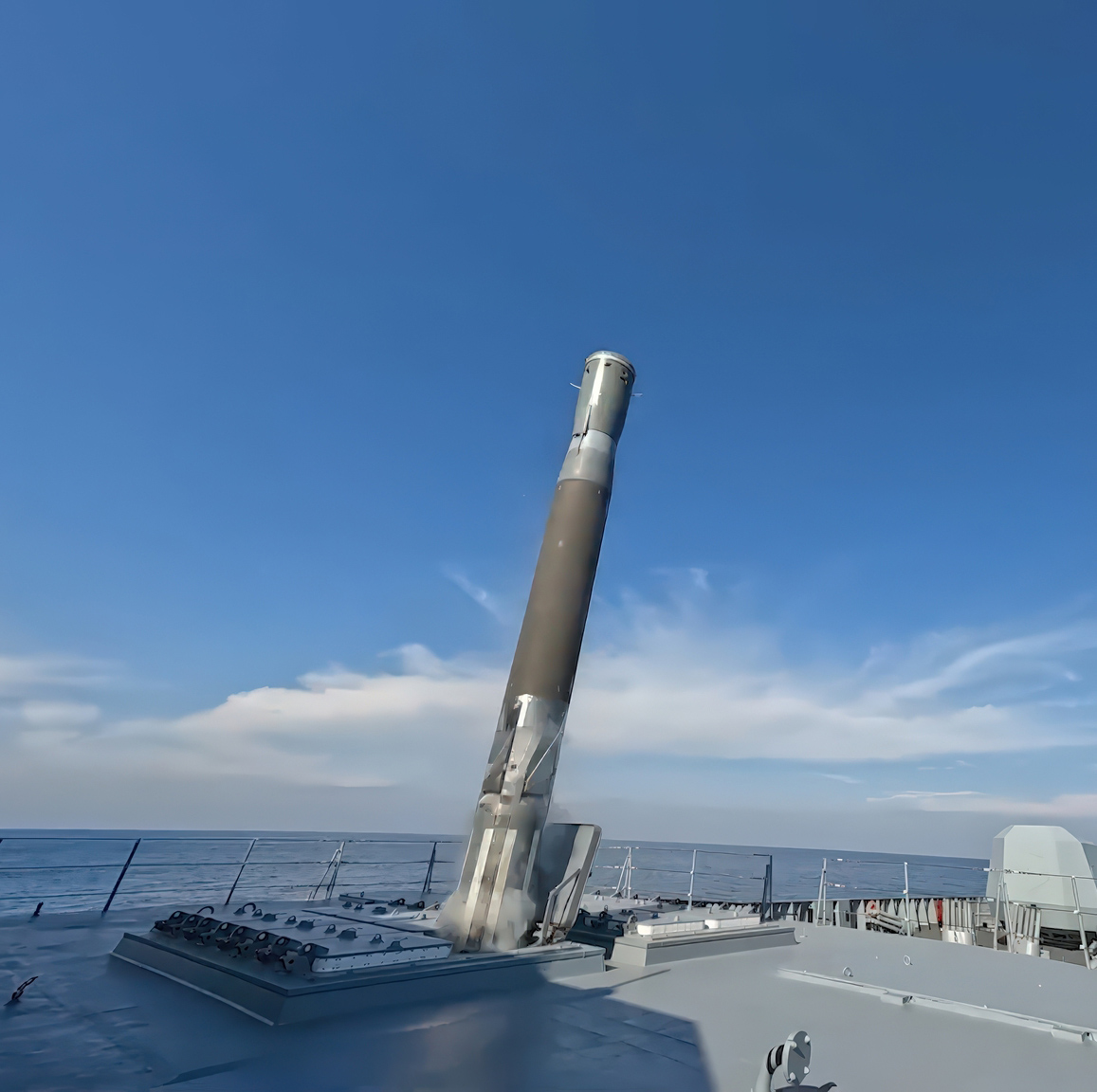
Zirkon
Russia's sea-launched hypersonic missile; Mach 8+, designed to be uninterceptable. Used sparingly in Ukraine.
Last refreshed: 13 April 2026
Russia has a missile too fast to intercept; why does it barely use it?
Timeline for Zirkon
Mentioned in: 430 drones and 68 missiles — one night
Russia-Ukraine War 2026- What is the Zirkon missile?
- Russia's hypersonic anti-ship and land-attack missile, capable of exceeding Mach 8 with a range of 1,000-1,500 km. Launched from frigates and submarines, it is designed to defeat naval air defences.
- How fast is the Zirkon missile?
- The Zirkon exceeds Mach 8, approximately 9,800 km/h. At that speed, it is designed to arrive too fast for current interceptor systems to react, making it theoretically uninterceptable.
- Can Ukraine shoot down the Zirkon?
- Current air defence systems including Patriot are not designed to intercept missiles travelling at Mach 8+. However, Russia has used the Zirkon only sparingly, limiting its practical impact.
- Why doesn't Russia use more Zirkons?
- Russia fired only one Zirkon in its heaviest combined barrage (13-14 March 2026, 68 missiles total). Limited use suggests stockpile constraints, high unit cost, or restricted production capacity.Source: Ukrainian Air Force
- What is the difference between Zirkon and Kalibr?
- The Zirkon is hypersonic (Mach 8+) and nearly uninterceptable but used sparingly. The Kalibr is subsonic, cheaper, fired in volleys of 25+, but vulnerable to Ukrainian air defences and electronic warfare jamming.
- What ships carry the Zirkon?
- The Zirkon is launched from Admiral Gorshkov-class frigates and Yasen-M class submarines. Russia claimed it entered service in January 2023 aboard the frigate Admiral Gorshkov.
Background
The Zirkon (NATO reporting name SS-N-33) is Russia's flagship hypersonic anti-ship and land-attack missile, capable of speeds exceeding Mach 8 (approximately 9,800 km/h) with a reported range of 1,000-1,500 km. Launched from frigates and submarines, it was designed primarily to defeat Western naval air defences by arriving too fast for interceptor systems to react. Russia claimed it entered service in January 2023 aboard the frigate Admiral Gorshkov.
In the 13-14 March 2026 barrage, Russia fired one Zirkon alongside 25 Kalibrs, 24 Kh-101s, 7 Iskander-Ms, and 430 drones. Its inclusion in the war's heaviest combined assault was notable but its rarity is telling: Russia has used the Zirkon only sparingly against Ukraine, suggesting limited stockpiles, high unit cost, or both. By contrast, the Kalibr and Kh-101 are fired in volleys of dozens.
The Zirkon's hypersonic speed theoretically makes it nearly impossible to intercept with current air defence systems, including Patriot. However, its practical impact in Ukraine has been limited by small numbers rather than capability. Western analysts debate whether the weapon performs as advertised at scale or whether Russia's limited industrial capacity constrains production to single-digit monthly output. Its primary strategic value may be as a naval deterrent rather than a land-attack weapon.

