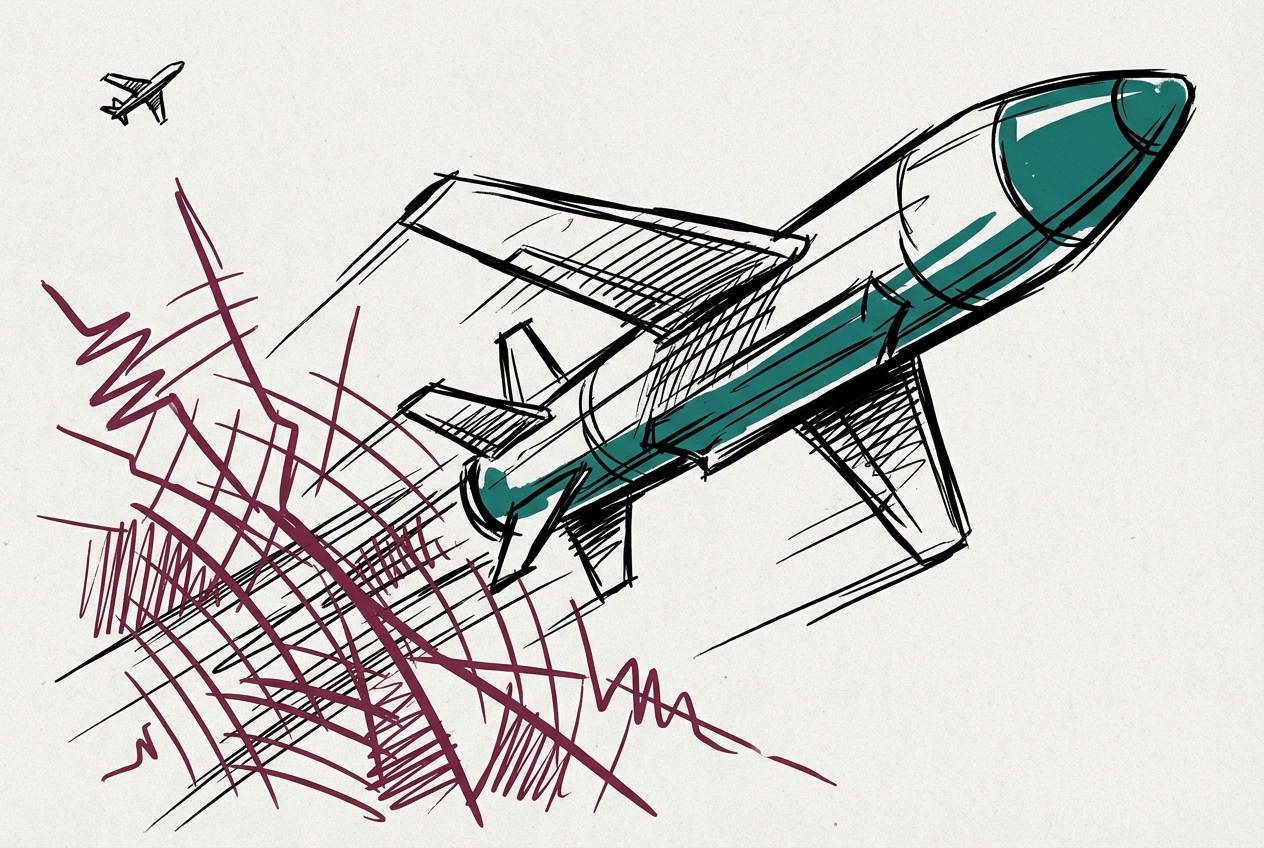
Kh-101
Russia's primary air-launched cruise missile; vulnerable to Ukrainian GPS jamming the Izdeliye-30 was built to solve.
Last refreshed: 13 April 2026 · Appears in 1 active topic
Ukraine can jam the Kh-101; so why does Russia keep firing them?
Timeline for Kh-101
Mentioned in: Russia fires a Zirkon in its heaviest barrage
Russia-Ukraine War 2026Background
The Kh-101 is Russia's primary air-launched cruise missile, carried by Tu-95MS and Tu-160 strategic bombers. It has a reported range of 4,500-5,500 km and uses GPS/GLONASS satellite guidance combined with terrain-following radar for precision strikes. Manufactured by the Raduga Design Bureau, it entered service around 2012 and has been used extensively in both the Syrian and Ukrainian campaigns.
In the Russia-Ukraine war, the Kh-101 has been a mainstay of Russia's long-range strike campaigns against Energy infrastructure and civilian targets. In the 13-14 March 2026 barrage, Russia fired 24 Kh-101s alongside 25 Kalibr Cruise Missiles, 7 Iskander-M ballistics, and 430 drones in the war's heaviest combined assault. Ukrainian air defences intercepted 58 of 68 missiles launched that night, an 85% interception rate.
However, the Kh-101's critical vulnerability is its GPS guidance. Ukraine's electronic warfare capability has proven able to jam GPS signals and divert Kh-101s from their targets, giving cities a degree of protection that physical interceptors alone could not match. This vulnerability drove Russia to develop the Izdeliye-30, a newer cruise missile with jam-resistant satellite navigation designed specifically to defeat Ukrainian electronic warfare. The Kh-101 remains in heavy use, but its role as Russia's precision strike weapon is being supplemented by a missile built to overcome the countermeasure that made it unreliable.

