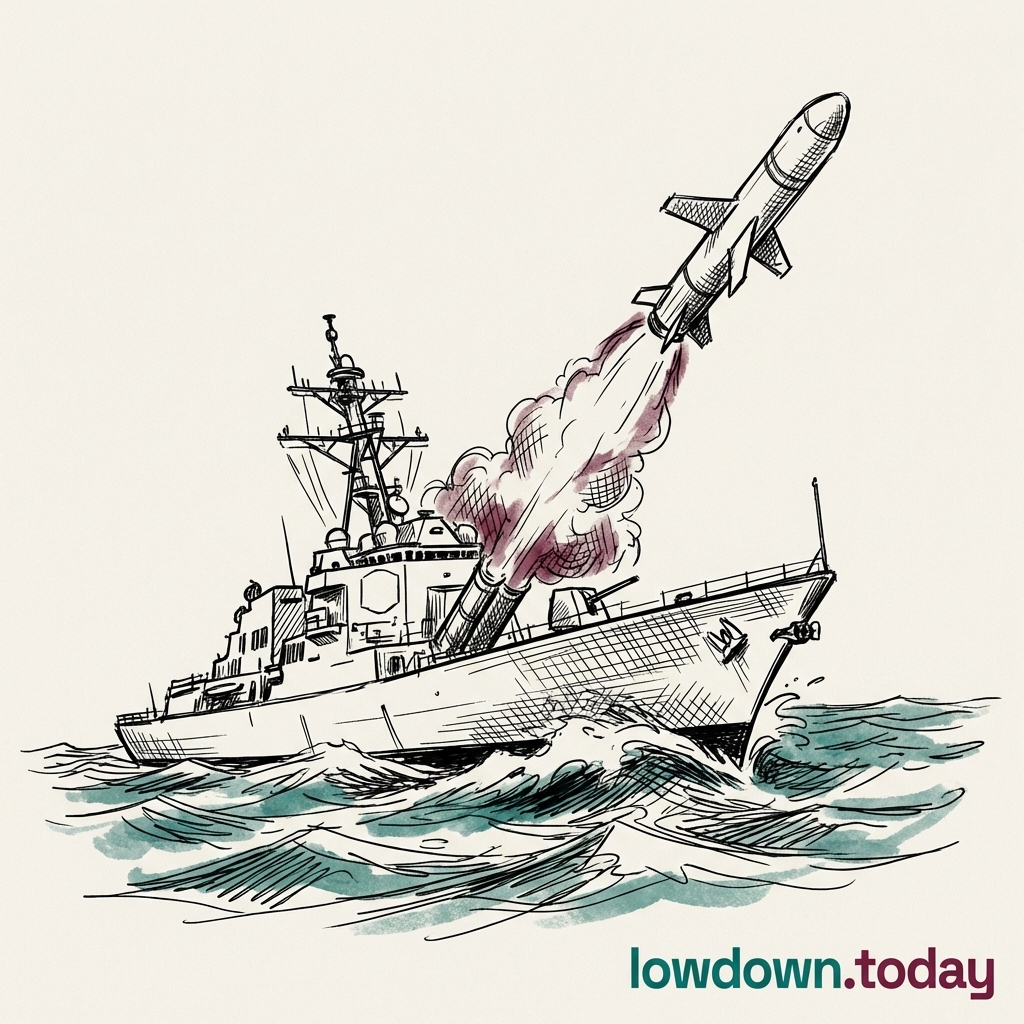
Kalibr
Russia's SEA- and submarine-launched cruise missile; workhorse of long-range strikes on Ukrainian infrastructure.
Last refreshed: 9 June 2026
Can Russia keep firing Kalibr barrages as Ukraine strikes the fleets that launch them?
Timeline for Kalibr
Mentioned in: Ukraine hits Baltic Fleet at Kronstadt
Russia-Ukraine War 2026Mentioned in: Russia fires a Zirkon in its heaviest barrage
Russia-Ukraine War 2026Background
The Kalibr (NATO reporting name SS-N-30A) is Russia's primary SEA-launched cruise missile, fired from surface warships and submarines in the Black Sea and Caspian Sea, with a reported range of 1,500-2,500 km depending on variant. It has been one of the most frequently used weapons in Russia's long-range strikes against Ukraine since 2022, targeting Energy infrastructure, military facilities and civilian buildings.
Like the Kh-101, the Kalibr relies on GPS/GLONASS satellite guidance for terminal accuracy, making it vulnerable to Ukrainian electronic-warfare jamming. That shared vulnerability drove Russia to develop the jam-resistant Izdeliye-30. The Kalibr remains in heavy use because Russia holds large stockpiles and can launch from dispersed naval platforms: in the 13-14 March 2026 barrage it fired 25 Kalibrs alongside Kh-101s, Iskander-Ms and a Zirkon hypersonic in the war's heaviest combined assault, with Ukrainian air defences intercepting 58 of 68 missiles that night.
Russia's missile-and-drone campaign intensified in early June 2026, with 73 missiles fired alongside 656 drones in the largest combined barrage of the window overnight into 2 June, collapsing an apartment block in Dnipro. Kalibr remains a core component of these mixed salvos, fired from the naval platforms Ukraine is now hunting.
Those launch platforms came under direct attack on 6 June, when more than 400 Ukrainian drones struck the Baltic Fleet's home base at Kronstadt outside St Petersburg, hitting the missile corvette Boikyi in the first confirmed Ukrainian naval strike in the Baltic Sea. The strike targets the very surface vessels from which Kalibr volleys are launched.

