Skip to content
You can now search across every topic, entity and event.What's new
Russia-Ukraine War 2026
9MAR

Deal bans the Hormuz toll, licenses its replacement

3 min read
06:08UTC

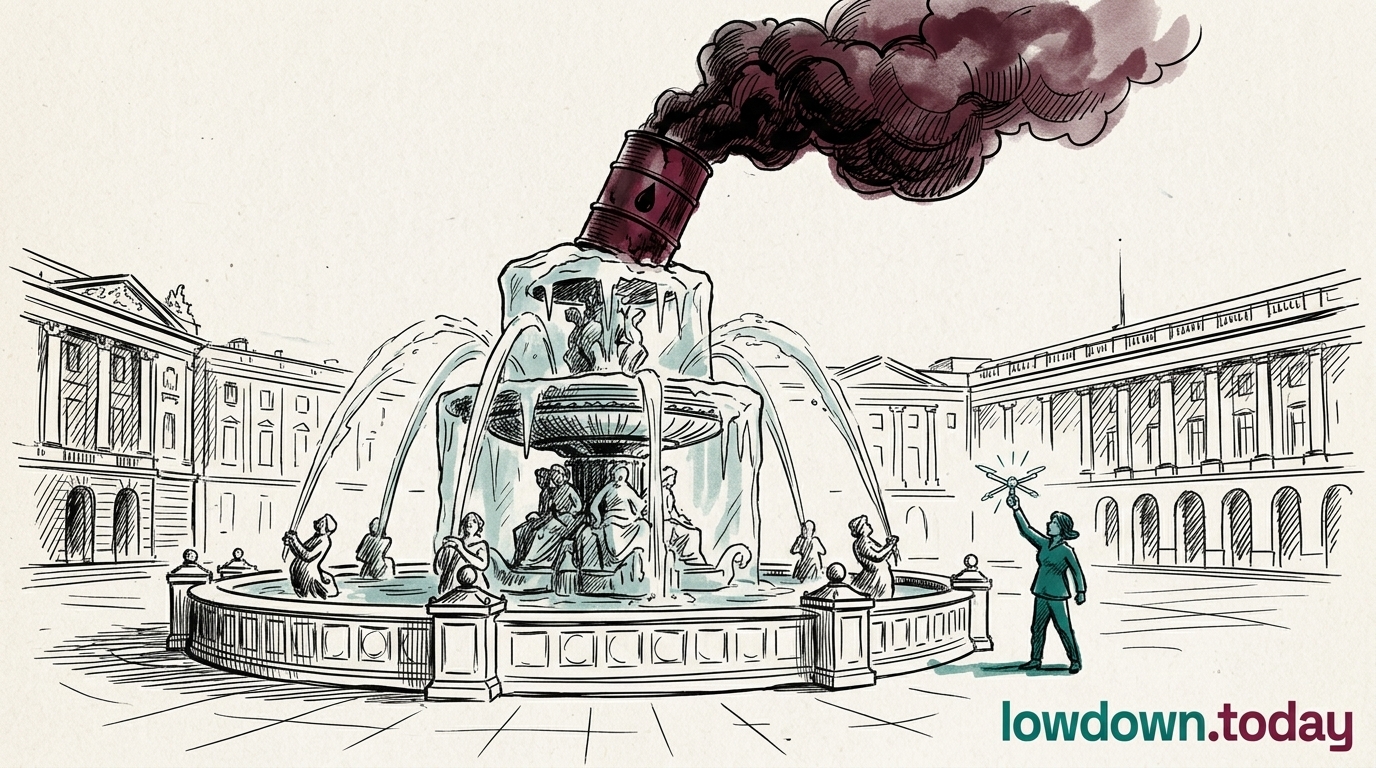
The published memorandum bans tolls on Hormuz passage, then invokes UNCLOS Article 26(2) to recast the IRGC's toll body as an Iran-Oman provider of maritime services, with a charge-free window of only 60 days.

ConflictDeveloping
Key takeaway

Iran agreed to drop the toll for 60 days and kept the legal machinery to switch it back on.

The Islamabad Memorandum of Understanding (MoU) text, published 17 June, bans "tolls" on Strait of Hormuz passage, then invokes the UN Convention on the Law of the Sea (UNCLOS), Article 26(2), to recast the charges as "maritime navigation services" 1. That article forbids fees on innocent passage but permits charges for specific services rendered to a ship, so a renamed toll becomes lawful revenue. Management is handed jointly to Iran and Oman, and the charge-free window runs 60 days only.

The body collecting the money does not go away. The Persian Gulf Strait Authority (PGSA), the body Iran's Revolutionary Guard (IRGC) created on 5 May that levied up to $2 million per tanker , is not dissolved under the deal. It survives under a quieter label, the 60-day clock counting down to the charge's return. Iran asserted Hormuz sovereignty and collected paid passage as early as 15 June, foreshadowing the framing the text now formalises .

Iran's foreign minister Abbas Araghchi put it plainly: "Charges for services provided will be collected," naming navigation, environmental protection and insurance. Counting from a signing date of roughly 15-16 June, the fees could resume as early as mid-August. The party with the largest exposure to those fees, Saudi Arabia, holds no seat in the Iran-Oman mechanism that will set them.

Deep Analysis

In plain English

The ceasefire deal said Iran would stop charging ships to pass through the Strait of Hormuz. But it only said so for 60 days. After that, Iran can restart the charges under a different name. Instead of calling them 'tolls' , a word the deal bans , Iran will call them 'maritime navigation services fees', citing a section of international maritime law. Think of it as a motorway toll renamed a 'road maintenance contribution.' The underlying charge is the same; the label has changed. The legal argument is questionable, but Iran has 60 days before it matters. By then, the deal will either be extended or collapsed on other grounds.

What could happen next?
  • Precedent

    The UNCLOS Article 26(2) rebranding, if unchallenged, sets a template for any state controlling a maritime chokepoint to levy transit charges under a services-fee framing that avoids the political label of 'toll.'

    Medium term · Reported
  • Risk

    Saudi Arabia's four idle supergiant fields face annual fee liability of up to $2 billion once the 60-day window closes, with no voice in the fee-setting mechanism. Riyadh's 26-day public silence on the MOU may break as the mid-August charge-resumption date approaches.

    Medium term · Reported
  • Opportunity

    The 60-day grace period gives shipping companies, P&I clubs, and international maritime lawyers a window to file UNCLOS arbitration claims testing the services-fee framing before charges resume.

    Medium term · Suggested
First Reported In

Update #131 · Iran deal's first death tests the text

Al Jazeera· 18 Jun 2026
Read original
Different Perspectives
Turkey
Turkey
Turkey, a major buyer of Russian diesel cargoes, loses that access under Moscow's first producer-binding export ban, in force from 8 July to 31 July. Ankara hosted the same week's NATO summit pledging EUR 70bn to Ukraine, sitting on both sides of the fuel-and-alliance ledger.
NATO
NATO
NATO leaders meeting in Ankara on 7 and 8 July pledged EUR 70bn in equipment, assistance and training for Ukraine across 2026, with a 2027 sustainment commitment and a $40bn Drone Edge counter-drone initiative. European allies now fund the vast majority of that package, filling the gap left by Washington's idled crude waiver.
India
India
India's state refiners continued buying discounted Urals crude as June's price fell to $63.18 a barrel, insulating New Delhi from the OFAC waiver gap still constraining Western buyers. Indian refiners could pick up diesel-export share as Russia's producer-binding ban shuts out its former customers.
China
China
China's independent refiners kept importing discounted Urals crude through June as the price fell to $63.18 a barrel, down 26% month-on-month per CREA. Beijing has said nothing on Moscow's new diesel ban, leaving Chinese refiners a likely beneficiary if Turkish and Brazilian buyers seek replacement cargoes.
United States
United States
No successor licence has been issued since General License 134C lapsed on 17 June, leaving a 26-day gap, the longest of the war, in the Russian crude waiver. Washington's silence is tightening the channel without any stated decision, as Treasury weighs whether to let it die.
Ukraine
Ukraine
Ukraine's long-range strike campaign shifted from refineries to seaborne fuel tankers crossing the Sea of Azov, cutting tracked vessel traffic 55% between 30 June and 11 July, per Starboard Maritime Intelligence. The shift targets Russia's export revenue directly rather than just domestic supply, adding pressure alongside the collapsing Urals price.
