Skip to content
You can now search across every topic, entity and event.What's new
Russia-Ukraine War 2026
3AUG

Trump's pen demands Iran destroy HEU

3 min read
10:16UTC

Trump hand-edited the draft MOU on 31 May and sent it to Tehran via Pakistan, demanding Iran physically destroy its 60%-enriched uranium; Iran's blend-down counter never reached paper.

ConflictDeveloping
Key takeaway

Trump's most concrete instrument of the war still carries no signature, and the one demand it turns on went unanswered.

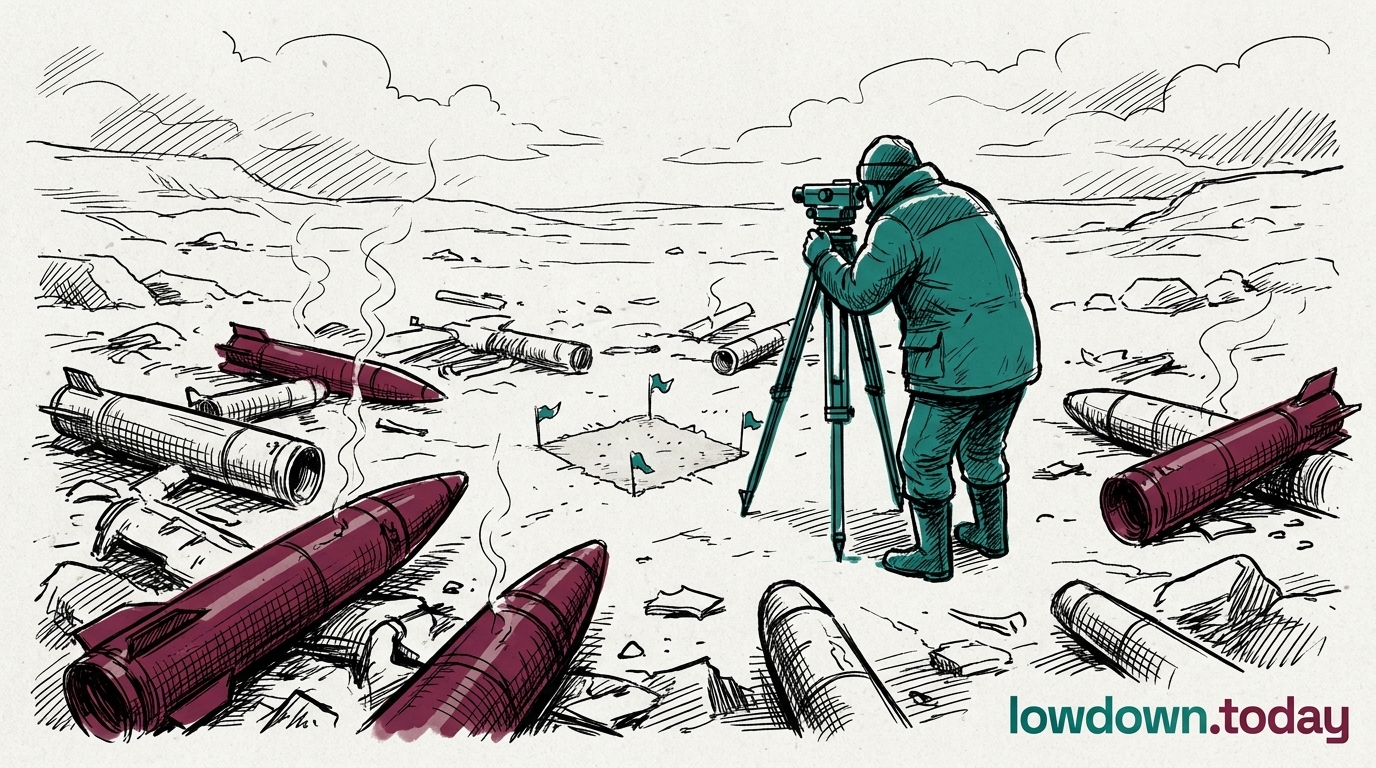
Donald Trump personally hand-edited the MOU text on Sunday 31 May, a source with knowledge of the talks told CBS News, concentrating his edits on Strait of Hormuz reopening terms and uranium removal 1. The MOU is the unsigned Iran-US ceasefire and nuclear memorandum under negotiation since May. Trump transmitted the revised draft to Tehran through Pakistan on 1 June, demanding Iran physically unearth and destroy its stockpile of 60%-enriched uranium, the highly enriched uranium (HEU) at the heart of the war . Weapons-grade is 90%, putting Iran two-thirds of the way there at 60%.

Iran's only counter never reached paper. The Arms Control Association, a non-partisan US group that tracks nuclear talks, reported on 1 June that Tehran's position is to blend the HEU down to lower enrichment inside Iran, neither shipping it abroad nor destroying it 2. The counter was floated informally and never formally delivered, because the suspension froze the channel first. Blending 60% material to reactor grade is chemically reversible with centrifuges Iran retains; destruction is not. Every prior US text had asked for export or blend-down, both reversible. Destruction was a demand no prior US text had made.

Supreme Leader Mojtaba Khamenei had not responded to either the latest proposal or the prior MOU as of 31 May, and the day before, Iran's Supreme National Security Council (SNSC) had cast the unsigned text as a 10-point Iranian victory . The single unbridged sentence of the whole war, destroy the HEU, remains unbridged, and the walkout means it was never even formally tabled.


Deep Analysis

In plain English

Iran holds around 440 kg of uranium enriched to 60% purity. Weapons-grade uranium needs to be above 90% enriched, so Iran's stockpile is not ready for a bomb but is about two-thirds of the way there. It could be converted to weapons-grade uranium within a few weeks if Iran chose to do so. Trump edited the draft agreement on 31 May to demand that Iran physically destroy this stockpile. Iran's position, shared informally, was that it would instead dilute the material down to a much lower enrichment level, keeping it inside Iran. Blended-down uranium can be re-enriched in a matter of weeks if a country restarts its centrifuges. Physically destroyed material cannot be reconstituted. This is why the two positions are not technically compatible. Pakistan carried Trump's edited version to Tehran on 1 June, but Iran suspended talks before any formal Iranian response could be issued.

Deep Analysis
Root Causes

The HEU stockpile impasse has a specific structural origin: Trump's 27 May Cabinet decision to bar both Russia and China as custodians eliminated the one mechanism that had bridged the destruction-versus-retention gap.

Russia's offer to hold the material in third-country storage would have been physically outside Iran (satisfying the US no-reconstitution demand) while not destroyed (satisfying Iran's sovereignty claim). With that bridge removed, the two positions are logically incompatible: Iran demands the material stay on Iranian soil in some form; Trump demands it be physically eliminated from that soil.

The second structural driver is that Mojtaba Khamenei's 21 May directive declaring uranium retention a sovereignty matter was issued publicly, making any subsequent concession by Iran's negotiators politically impossible without a direct Supreme Leader reversal. Araghchi cannot deliver what Khamenei has publicly blocked.

What could happen next?
  • Risk

    If talks resume, the destruction-versus-blend-down gap will need a bridging mechanism; most likely a third-country escrow arrangement; but Trump has already barred Russia and China, the two states with the storage capacity and political relationship to hold it.

  • Consequence

    The longer the 440 kg stockpile remains un-addressed, the shorter Iran's theoretical breakout time: the IAEA estimated in February 2026 that Iran could produce enough weapons-grade uranium for one device in approximately two weeks from the 60% base.

First Reported In

Update #115 · Iran moves first, Trump moves by phone

CBS News· 2 Jun 2026
Read original
Different Perspectives
Belarus
Belarus
Minsk announced completion of its own 37th Separate Airborne Assault Brigade near Gomel, under plans dating to August 2025 rather than a response to any single frontline event this window, keeping its hedge of hosting the war without formally joining Russia's mobilisation drive.
European Union / Operation IRINI states
Italy, Greece and Poland boarded the sanctioned tanker Toa Payoh off Pantelleria under a standing EU mandate rather than a national decision, extending enforcement from the Channel and Baltic and the Black Sea and Azov into the Mediterranean. Italian Defence Minister Guido Crosetto praised the crew; the captain's refusal to produce documentation left detention unconfirmed.
Poland and the NATO eastern flank
Warsaw's Coordination Team said explicitly its forces tracked the 30 July missile incursion and were ready to shoot it down, then flew air cover for an EU tanker interdiction three days later. Poland is simultaneously the war's nearest spillover victim and a contributor to enforcing sanctions against the state causing that spillover.
Ukraine (government, defence establishment and civilians)
Kyiv runs its manpower crisis through acting Defence Minister Yevhen Khmara, whose formal appointment waits for parliament's 18 August return, and a fortnight-old Commander-in-Chief, Mykhailo Drapatyi. Reported attacks on enlistment officers rose from 5 cases in 2022 to 341 in 2025, reaching Odesa's Territorial Recruitment Centre staff directly on 2 August.
Kremlin and Russian domestic economic voices
Moscow has not addressed July's advance-rate collapse or Sberbank's OFZ warning; Novak's diary ran to OPEC+ quota diplomacy with no diesel item logged since 15 July. Economist Nikolai Korzhenevsky calls the Central Bank's RUB 2.3tn in bank lending effectively deficit monetisation, a framing Sberbank's Skvortsov, with his own institutional interest, has not disputed.
IAEA (Rafael Grossi)
IAEA inspectors logged Zaporizhzhia's 22nd loss of off-site power, ten of them in the last three months, after a thunderstorm knocked out the plant's sole surviving backup line. Grossi reads the accelerating frequency, not any single outage, as the safety signal now that the plant's redundancy is exhausted.


